
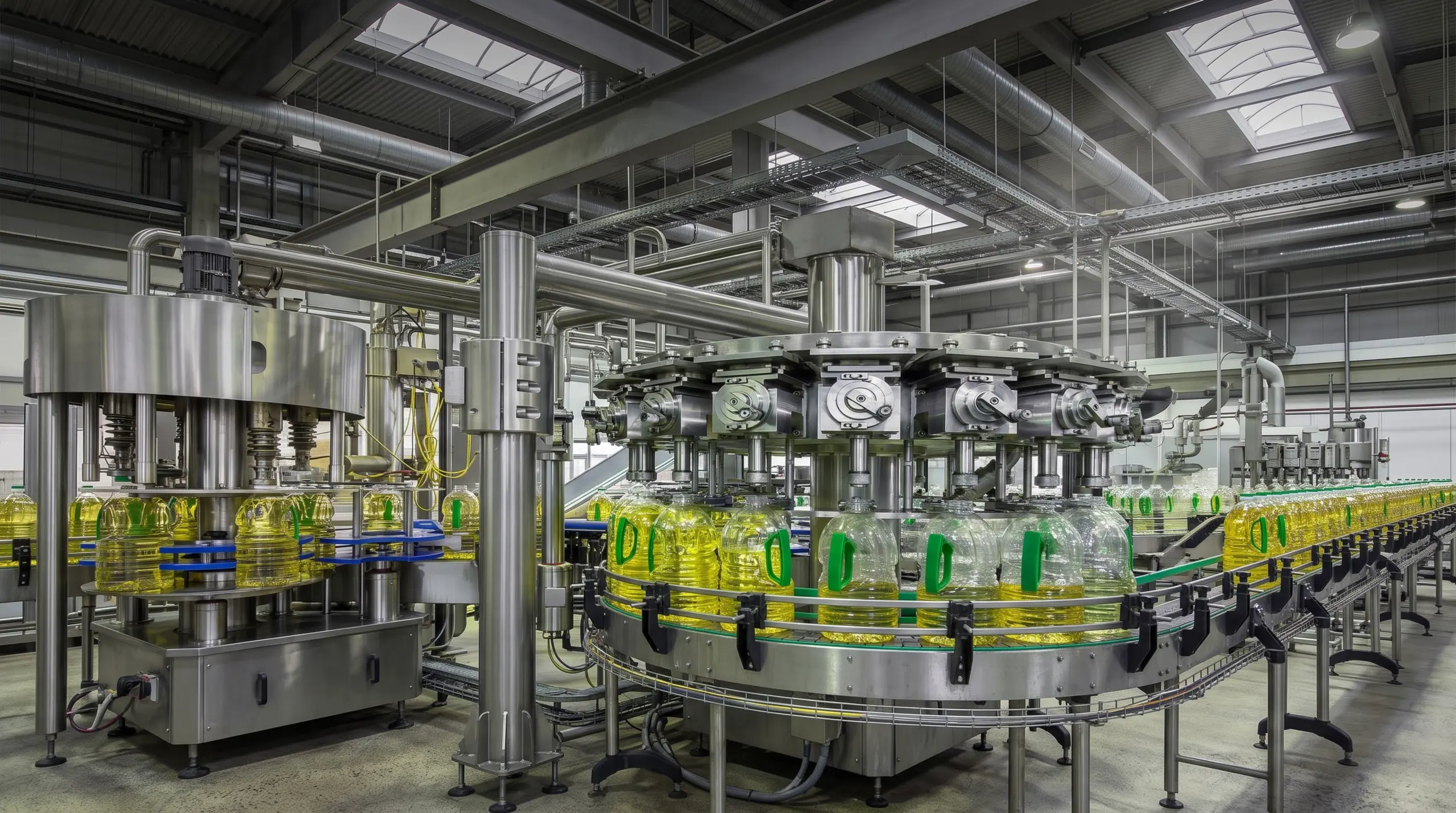
Ligne de remplissage d'huile alimentaire
Modern Machinery fournit des lignes de remplissage d'huile alimentaire pour l'huile d'olive, l'huile de cuisson et l'huile végétale. Des capteurs de haute précision permettent un pesage dynamique en ligne pendant le cycle de remplissage. Cette technologie garantit un remplissage précis, indépendamment des changements de mousse, de température ou de densité. La ligne prend en charge les bouteilles en verre et en PET de 250 ml à 5 L.
Qu'est-ce qu'une ligne de remplissage d'huile alimentaire ?
Une ligne de remplissage d'huile alimentaire est un système de production qui remplit, scelle, étiquette et emballe l'huile de cuisson, l'huile d'olive ou l'huile végétale dans des bouteilles en verre ou en PET pour la distribution au détail et en gros.
Modern Machinery conçoit des lignes d'huile alimentaire intégrant plusieurs technologies de remplissage dans une seule machine. Le système prend en charge le remplissage par vanne mécanique, par vanne volumétrique et par débitmètre. Des cellules de pesée de haute précision permettent un pesage dynamique en ligne. La machine pèse chaque bouteille pendant le mouvement de remplissage. Cette méthode annule l'effet de la mousse, de la température et de la densité de l'huile sur le volume de remplissage. Le résultat est une précision de remplissage constante pour chaque bouteille. La ligne gère des tailles de bouteilles de 250 ml à 5 L. Elle fonctionne aussi bien avec des bouteilles en verre qu'avec des bouteilles en PET. Des pièces à changement rapide permettent de passer rapidement d'un format de bouteille à l'autre.
Disposition de la ligne d'embouteillage d'huile alimentaire – 10 machines en séquence
Le dessin ci-dessous montre l'agencement standard d'une ligne d'embouteillage d'huile alimentaire Modern Machinery. Chaque machine alimente la suivante via un convoyeur.
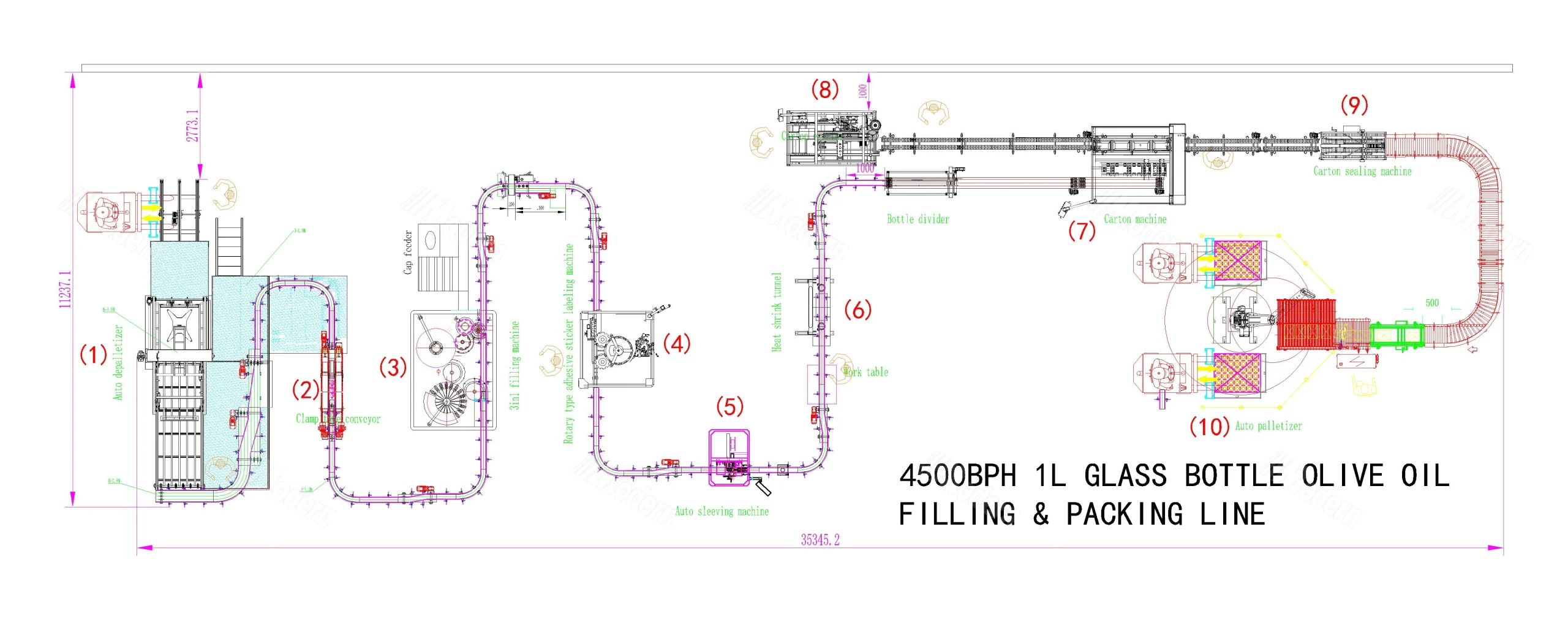
Machines clés d'une ligne de production d'huile
Dépalettiseur de bouteilles vides
Convoyeur à pinces
Machine de remplissage d'huile alimentaire
Étiqueteuse rotative auto-adhésive
Manchonneuse automatique
Tunnel de rétraction électrique
Encaisseuse automatique
Formeuse de cartons automatique
Fermeuse de caisses automatique
Palettiseur robotisé automatique
Spécifications clés pour votre ligne d'huile alimentaire
Fournissez ces paramètres à notre équipe d'ingénieurs. Nous dimensionnerons la ligne pour qu'elle corresponde à votre type de produit, au format de vos bouteilles et à vos objectifs de production quotidienne.
| Type de produit | Huile d'olive, huile de cuisson, huile végétale, huile de tournesol, huile de palme et autres huiles alimentaires. |
|---|---|
| Matériaux des contenants | Bouteilles en verre et bouteilles en PET |
| Plage de volume des bouteilles | 250 ml à 5 L (standard) ; tailles personnalisées disponibles sur demande |
| Plage de diamètre des bouteilles | 50 mm à 120 mm |
| Plage de hauteur des bouteilles | 100 mm à 350 mm |
| Capacité de production | 1 000 à 18 000 bouteilles/heure, selon la taille de la bouteille, le volume de remplissage et le modèle choisi |
| Technologies de remplissage | Valve mécanique, valve volumétrique et valve à débitmètre (intégrées dans une seule machine) |
| Technologie de pesage | Pesage dynamique en ligne avec cellules de charge de haute précision |
| Précision de remplissage | ±0,1 % à ±0,2 % du poids de remplissage cible (selon les caractéristiques du produit et les dimensions de la bouteille) |
| Types d'étiquetage | Étiquettes auto-adhésives (sensibles à la pression) et manchons rétractables |
| Options de bouchage | Bouchons à vis, bouchons à pression et fermetures à clapet |
| Matériau des pièces en contact | Acier inoxydable 304 et 316. Les joints d'étanchéité sont de qualité alimentaire |
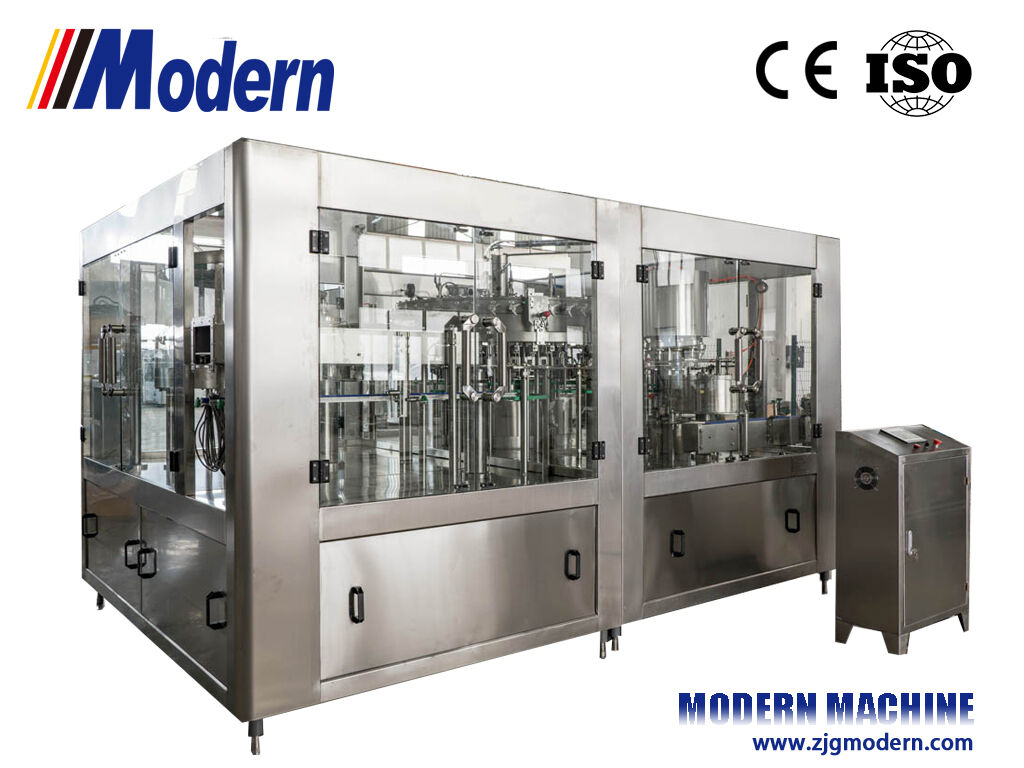
Caractéristiques de la machine de remplissage d'huile alimentaire
La machine de remplissage prend en charge les valves mécaniques, volumétriques et à débitmètre. L'opérateur sélectionne le type de valve en fonction de la viscosité du produit et de la taille de la bouteille. Cette flexibilité permet à la même machine de traiter différents types d'huile sans changement de matériel.
Des cellules de charge de haute précision mesurent le poids de remplissage pendant que la bouteille se déplace dans le cycle de remplissage. Le système lit le poids en temps réel et ajuste le point de fermeture de la valve. Cette méthode permet un remplissage précis et élimine l'effet de la mousse, de la température et de la densité de l'huile sur le volume de remplissage.
Le système de pesage comprend des algorithmes de compensation dynamique. L'automate (PLC) lit la température de l'huile et ajuste la valeur de densité pendant le remplissage. Cette fonctionnalité maintient la précision stable dans différentes conditions ambiantes et pour différents grades d'huile.
Chaque poste de remplissage est équipé d'un capteur de proximité. Le capteur vérifie la présence d'une bouteille avant l'ouverture de la valve. Si une bouteille est manquante, la valve reste fermée. Cette action évite les déversements d'huile et réduit le gaspillage de produit.
Les buses de remplissage incluent un mécanisme d'arrêt anti-goutte. La buse se ferme immédiatement après chaque cycle de remplissage. Cette conception empêche l'huile de goutter sur la bouteille ou le convoyeur, gardant ainsi la machine propre.
Modern Machinery fournit des kits de changement pour différentes hauteurs et diamètres de bouteilles. Les opérateurs remplacent les pinces à bouteilles, les étoiles et la course de la buse de remplissage. Le changement complet prend moins de 60 minutes.
Le convoyeur et les pinces supportent à la fois les bouteilles en verre (rigides) et en PET (flexibles). La machine ajuste la pression des pinces pour éviter de casser le verre ou d'écraser le PET. La hauteur de la buse de remplissage s'ajuste aux différents profils de goulot de bouteille.
Le bol de remplissage, les tuyaux et les collecteurs de valves disposent de connexions NEP. Les opérateurs effectuent un cycle à l'eau chaude et au détergent caustique entre les changements de produit. Cette conception réduit le temps de nettoyage manuel et évite le transfert de saveur entre les types d'huile.
Flux de travail du projet, de la formule à l'installation
Spécifications du produit et de la bouteille
Modern Machinery examine votre type d'huile (viscosité, densité, température), le matériau de la bouteille (verre ou PET), les dimensions de la bouteille et le type de bouchon. Nous confirmons le type de valve de remplissage et les paramètres d'étalonnage du pesage.
Élaboration du plan d'usine
Notre département CAO élabore l'agencement de l'usine. Le plan indique les 10 positions de la machine, les longueurs de convoyeur et les raccordements techniques (air comprimé, alimentation électrique et drainage).
Assemblage et test de réception en usine (FAT)
Nous assemblons la ligne dans notre usine. Nous vous invitons à tester vos bouteilles et échantillons d'huile réels. Lors du FAT (test d'acceptation en usine), nous mesurons la précision de remplissage, le placement des étiquettes, la qualité de rétraction des manchons et la vitesse globale de la ligne.
Installation et formation
Notre équipe de service sur site gère l'installation mécanique et le raccordement électrique à votre emplacement. Nous démarrons ensuite la ligne, étalonnons le système de pesage, formons vos opérateurs et fournissons la documentation de maintenance.
Vidéos réelles de lignes de remplissage d'huile
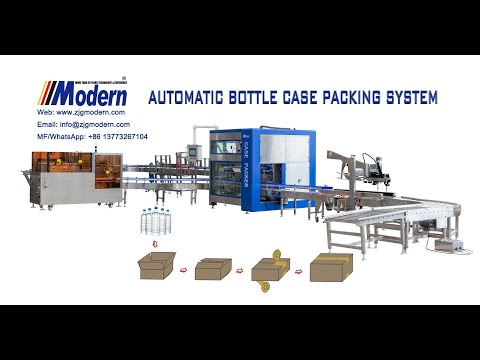
Encaisseuse pour produits chimiques en Australie
Un système automatique de formage de caisses, d'encaissage de bouteilles et de scellage de cartons développé pour un projet de liquides chimiques en Australie. Le système en SS316 traite des bouteilles en PEHD de 5L et réalise le formage des cartons, le chargement des bouteilles et le scellage des caisses à une cadence de 14 caisses par minute.

Étiqueteuse OPP haute vitesse
Une étiqueteuse rotative haute vitesse à colle thermofusible OPP pour bouteilles d'eau en PET de 500 ml.

Souffleuse de bouteilles PET
Une souffleuse automatique de bouteilles en PET à six cavités pour la production de bouteilles de boisson de 500 ml à une cadence de 8 000 bouteilles par heure.
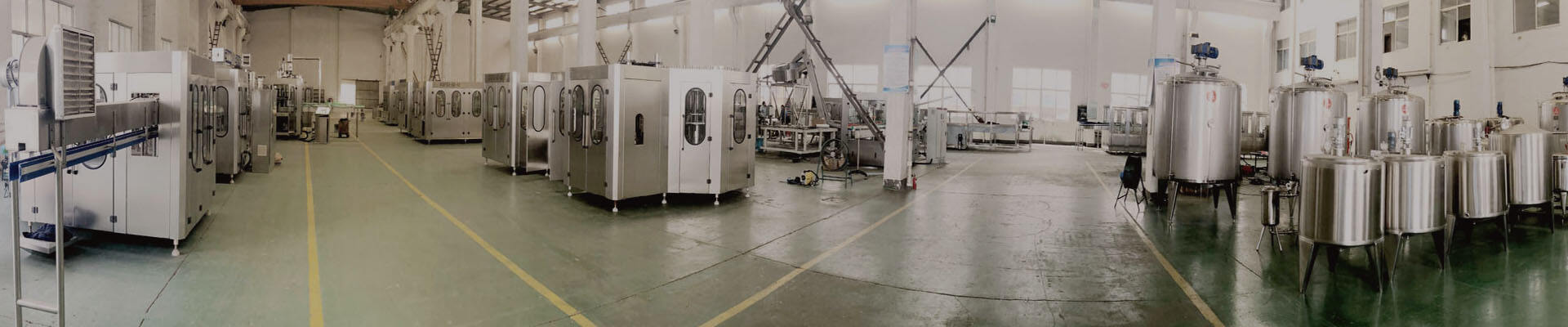
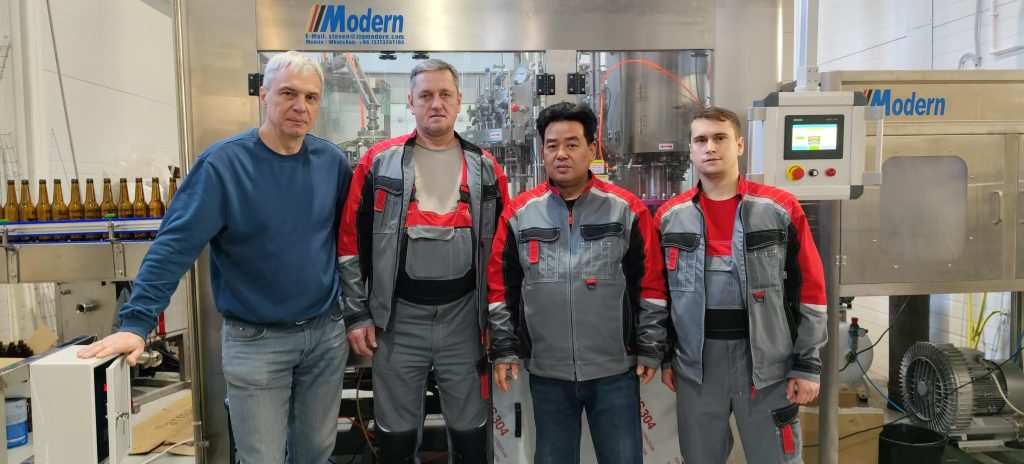
Découvrez nos projets de lignes de remplissage d'huile terminés
Sélectionnez votre ligne d'huile alimentaire par taille de bouteille, rendement et type d'huile
Par volume de bouteille
- 250 ml – 1 L – Standard pour l'huile d'olive de détail et les huiles de cuisson premium. Utilisez des bouteilles en verre pour un positionnement haut de gamme ou du PET pour la rentabilité.
- 1 L – 5 L – Standard pour l'huile de cuisson familiale et la vente en gros. Les bouteilles en PET sont courantes dans cette gamme pour une manipulation légère.
Par rendement horaire
- 1 000 – 4 000 bouteilles/heure – Pour les petits producteurs et les marques de distributeur.
- 5 000 – 10 000 bouteilles/heure – Pour les distributeurs régionaux et les huileries de taille moyenne.
- 10 000 – 18 000 bouteilles/heure – Pour les raffineries d'huile alimentaire à grande échelle et les usines orientées vers l'exportation.
Technologie de remplissage
- Valve mécanique – Adaptée aux huiles à faible viscosité avec des caractéristiques d'écoulement constantes.
- Valve volumétrique – Adaptée aux huiles à viscosité moyenne nécessitant des remplissages à volume fixe.
- Valve à débitmètre – Adaptée aux huiles à haute viscosité et aux applications nécessitant un remplissage à haute vitesse avec mesure numérique.
Questions fréquemment posées
Qu'est-ce que le pesage dynamique en ligne et pourquoi est-ce important pour l'huile alimentaire ?
Le pesage dynamique en ligne mesure le poids de chaque bouteille pendant que la buse de remplissage est encore active. Des capteurs de pesage de haute précision lisent le poids en temps réel et envoient le signal à l'automate (PLC). L'automate ajuste le point de fermeture de la valve pendant le cycle de remplissage. Cette méthode est importante pour l'huile alimentaire car la densité de l'huile change avec la température. Une remplisseuse basée sur le volume entraînerait un sur-remplissage ou un sous-remplissage à mesure que l'huile se réchauffe ou se refroidit. Le pesage dynamique remplit au poids, et non au volume, de sorte que les changements de température n'affectent pas la précision.
Quelle est la différence entre une valve mécanique, une valve volumétrique et une valve à débitmètre ?
La vanne mécanique utilise une course fixe pour distribuer un volume défini. Elle est simple, durable et fonctionne bien pour les huiles à faible viscosité.
La vanne volumétrique utilise un piston ou une chambre pour mesurer chaque remplissage. Elle offre une meilleure précision que les vannes mécaniques pour les huiles à viscosité moyenne.
La vanne à débitmètre utilise un débitmètre magnétique ou massique pour mesurer le liquide qui la traverse. Elle fournit des lectures numériques et convient parfaitement aux huiles à haute viscosité et aux lignes à haute vitesse.
MD intègre les trois types dans une seule machine, vous permettant ainsi de choisir la méthode la mieux adaptée à votre huile.
Comment la machine de remplissage gère-t-elle les différentes formes de bouteilles (rondes, carrées, ovales) ?
La machine de remplissage utilise des pinces à bouteilles et des étoiles de transfert réglables. Les pinces maintiennent la bouteille par le goulot ou le corps, selon la conception. La buse de remplissage s'abaisse à la hauteur correcte pour chaque profil de bouteille. Pour les bouteilles carrées ou ovales, nous fournissons des pinces personnalisées qui correspondent au contour de la bouteille. Le changement prend moins de 60 minutes avec le kit de changement rapide.
La ligne prend-elle en charge à la fois les bouteilles en verre et en PET le même jour ?
Oui. La ligne prend en charge les deux matériaux. Passer du verre au PET nécessite de modifier les réglages de pression des pinces (le verre nécessite une prise ferme, le PET nécessite une prise plus légère) et d'ajuster la hauteur de la buse de remplissage. Nous recommandons un cycle de nettoyage NEP (CIP) entre les changements de matériau pour éliminer tout résidu d'huile. Le changement complet prend environ 60 à 90 minutes.
Quelle est la précision de remplissage du système de pesage dynamique ?
Le système de pesage dynamique offre une précision de remplissage de ±0,1 % à ±0,2 % du poids de remplissage cible. Pour une bouteille de 1 L (environ 920 g d'huile), cela signifie une erreur inférieure à ±2 g par bouteille. La précision exacte dépend de la viscosité de l'huile, de la vitesse de remplissage et de la régularité des bouteilles.