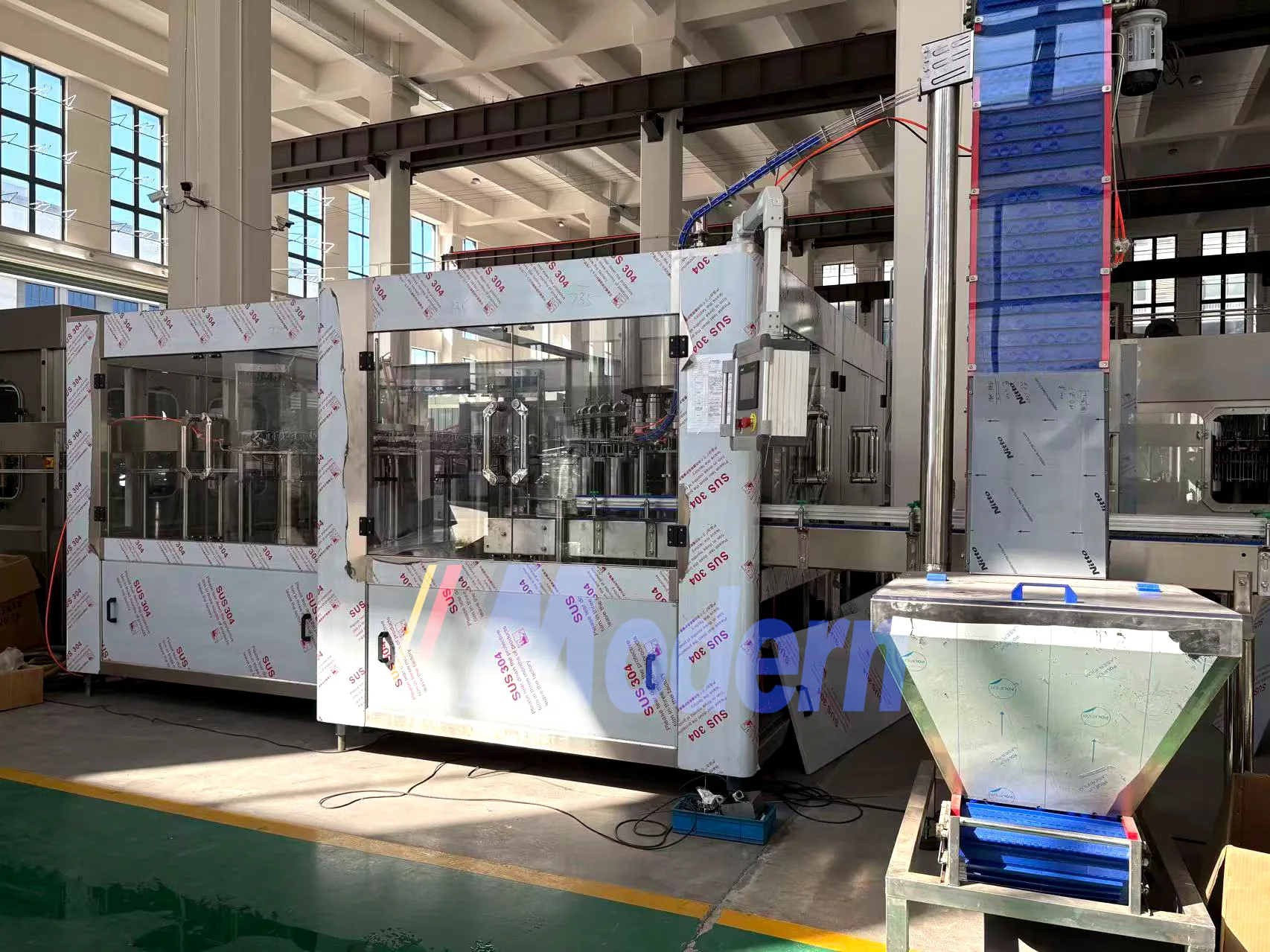
Filling is a major source of product loss in edible oil, sauce, and high-viscosity liquid production. Small overfills accumulate quickly across a full shift. Traditional piston fillers work, but servo-driven filling is increasingly adopted because it delivers a positive return. This article gives five practical reasons why.
1. Higher Fill Accuracy Means Less Product Waste
Servo-driven filling systems achieve fill accuracy of ±0.2% to ±0.5%, compared to ±1.0% for traditional piston fillers. This difference directly affects profitability.
The consequences on a typical line are as follows:
- Overfill results in product giveaway. Product is given away to customers.
- Underfill creates compliance risk. In many markets, underfilled bottles can be rejected or fined.
A servo motor controls piston or pump movement electronically rather than mechanically. Fill volume is set by programmable parameters, not by the physical wear of a cam or gear. The result is consistent, repeatable fills bottle after bottle, shift after shift.
For a 1L olive oil bottle running at 6,000 BPH, reducing overfill from 1% to 0.3% saves about 42 liters per hour. Calculation basis: 10 ml overfill per bottle at 1%, reduced to 3 ml per bottle at 0.3%, across 6,000 bottles per hour. Even a small accuracy improvement pays for itself quickly.
2: Lower Maintenance Costs and Less Downtime
Servo-driven lines have fewer mechanical parts, so fewer components fail and fewer spare parts need to be imported.
Brushless servo motors eliminate gears, cams, and gearboxes from the drive system. There is no mechanical wear on these components because motion is controlled electronically. The result is a simpler, more reliable machine that is easier to maintain.
For manufacturers in emerging markets, this is particularly important. Key advantages include:
- Fewer spare parts to stock or import
- Less dependence on specialized technicians
- Longer equipment life cycle
- Lower energy consumption, since there is no compressed air system to maintain
Pneumatic systems rely on compressed air, which increases utility costs and introduces pressure inconsistencies over time. Servo systems use electric motors. These motors are cleaner, quieter, and more consistent.
Converting a single intermittent piston filler from pneumatic actuation to servo drive typically reduces the filling-station energy draw by 30% to 60% for the motion and control portion.
3. Faster Changeovers for Multi-Product Lines
A servo-driven filler can switch bottle sizes and product types in seconds because recipes are stored digitally and recalled from the HMI touchscreen.
Modern production lines rarely run a single product. A typical schedule might include 500ml sunflower oil in the morning, 1L olive oil in the afternoon, and 5L containers the next day. Each changeover on a traditional piston filler requires manual adjustment of mechanical stops and cams.
With servo control, the operator selects a recipe from the touchscreen. The machine adjusts itself. No tools or manual adjustment are required, and downtime is minimal.
For manufacturers running multiple SKUs, faster changeovers mean more production time. More production time means higher output from the same line.
4. Smarter Speed Control for Different Viscosities
Servo motors allow programmable acceleration and deceleration. Fill speed can be segmented: fast first, then slow near the end to prevent splashing and foaming.
Different liquids behave differently during filling:
- Thin liquids such as sunflower oil or mineral oil can fill at high speed.
- Thick liquids such as honey, paste, or sauce need controlled acceleration to avoid splashing.
- Foaming products such as detergent or certain syrups require a slow initial fill with ramp-up control.
A traditional piston filler uses a fixed mechanical stroke. It cannot adjust speed mid-fill. A servo system can. This flexibility allows one machine to handle a wider range of products without mechanical modification.
5. Better Data, Traceability and Long-Term Cost Savings
Servo-driven systems collect real-time data on fill accuracy, cycle times, output efficiency, and fault codes. This data can integrate with production monitoring systems or ERP software.
The cost-control implications are as follows:
- Traceability: documented evidence of proper filling and sealing for every bottle. Important for export markets and quality audits.
- Predictive maintenance: fault codes and performance trends help fix issues before they cause unplanned downtime.
- Production reporting: real-time data helps managers identify bottlenecks and optimize line performance.
Servo systems may have a slightly higher upfront cost than basic piston fillers. However, the long-term savings, which include reduced product waste, lower maintenance, less downtime, and better energy efficiency, typically deliver payback within 12 to 18 months.
Quick Comparison: Servo-Driven vs. Traditional Filling
| Feature | Servo-Driven | Traditional (Piston/Pneumatic) |
|---|---|---|
| Fill Accuracy | ±0.2% to ±0.5% | ±1.0% |
| Maintenance | Low, no gears or cams | Higher, mechanical wear |
| Changeover | Seconds, recipe recall | Minutes, manual adjustment |
| Viscosity Handling | Programmable | Limited |
| Energy Use | Lower, electric | Higher, compressed air |
| Data Integration | Strong | Minimal |
Having covered the technical differences, let us address some common questions manufacturers ask before making the switch.
Conclusion
Servo-driven filling is not a luxury upgrade. It is a practical investment that reduces waste, lowers maintenance costs, and improves fill accuracy.
The five reasons covered here are accuracy, maintenance, changeover speed, viscosity control, and data integration. All point to the same conclusion: servo technology pays for itself.
If you run an edible oil, sauce, or high-viscosity liquid line and want to explore whether servo-driven filling is right for your operation, we can help.
Contact Modern Machinery today to discuss your production goals and request a free layout and quote.
FAQ
Q1: Is servo-driven filling only for large factories?
No. Servo systems are increasingly adopted by small and medium-sized producers. The maintenance savings and waste reduction make them cost-effective even at lower production volumes.
Q2: Can servo filling handle edible oil and high-viscosity liquids?
Yes. Servo systems are ideal for oil, sauce, syrup, honey, and other viscous products. The programmable speed control prevents splashing and ensures accurate fills.
Q3: What is the typical payback period for upgrading to servo filling?
Most manufacturers see payback within 12 to 18 months through reduced waste, lower maintenance, and higher output.
Q4: Is servo filling more expensive upfront?
Slightly higher than basic piston fillers. However, the total cost of ownership, including energy, maintenance, and product waste, is lower over time.
Q5: Can servo filling integrate with existing capping and labeling equipment?
Yes. Servo systems can integrate with capping, labeling, and conveyor systems. The HMI can synchronize filling with downstream equipment for smooth line operation.