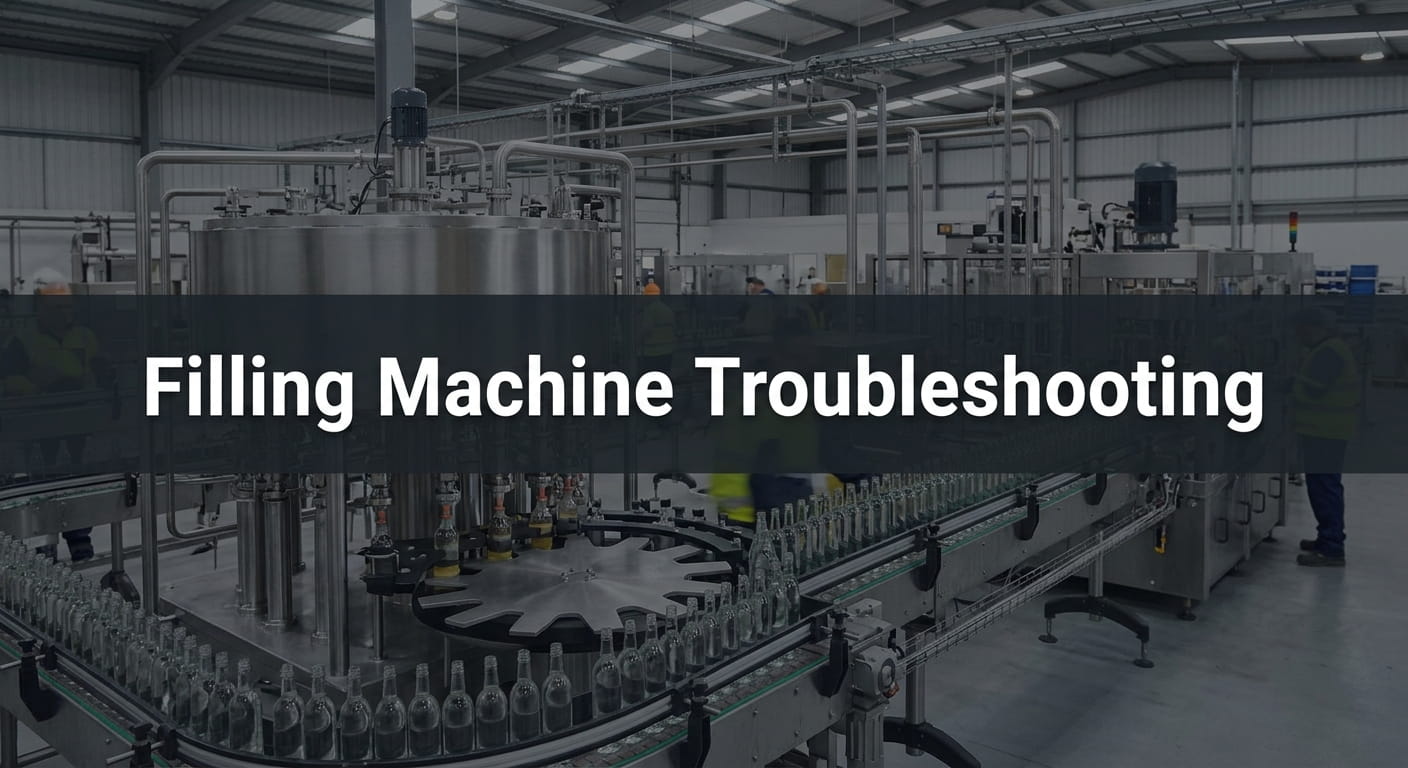
Filling machine problems disrupt production quickly. A minor nozzle drip or a slight fill level drift can escalate into costly waste, compliance risks, and unplanned downtime.
This guide covers the most common issues operators face across beverage and liquid food production lines. For each problem, you will find the root cause, step by step solutions, and prevention strategies to keep your line running.
Filling Machine Troubleshooting: Quick Answer
The most common filling machine problems include inconsistent fill levels, nozzle dripping, foaming, pump pressure issues, container jams, and sensor errors. Most issues trace back to worn seals, air pockets in the product line, incorrect calibration, or lack of maintenance. Start with basic checks such as power supply, air pressure, and nozzle alignment, then move to component level inspection.
Quick Reference: Symptoms, Causes, and Solutions
| Symptom | Likely Cause | Quick Fix |
|---|---|---|
| Inconsistent fill levels | Air pockets, worn seals, viscosity changes | Purge air, replace seals, recalibrate |
| Nozzle dripping | Degraded O-rings, residual pressure | Replace seals, install anti-drip nozzles |
| Foaming | Fast fill rates, poor counter-pressure | Reduce speed, check isobaric valves |
| Slow production speed | Clogged filters, mechanical wear | Clean lines, inspect pumps |
| Pump pressure issues | Worn components, high viscosity friction | Replace worn parts, adjust pressure |
| Container jams | Misaligned conveyors, worn starwheels | Realign conveyors, replace format parts |
| Capping failures | Torque drift, worn capping heads | Recalibrate torque, inspect heads |
| Electrical failures | Poor ventilation, faulty wiring | Improve ventilation, inspect wiring |
| Sensor errors | Dirty sensors, misalignment | Clean and recalibrate sensors |
| Machine sudden stops | Tripped breakers, engaged safety interlocks | Reset switches, check PLC error codes |
Problem 1: Inconsistent Fill Levels
Inconsistent fill levels usually stem from air pockets in the supply line, worn seals, viscosity changes, or calibration drift.
The Cause
Air trapped in the product feed disrupts the uniform flow of liquid. Worn or partially clogged nozzles dispense fluid unevenly. Additionally, temperature shifts alter product viscosity. This is especially challenging in juice hot-filling (85°C) or edible oil filling, where a slight temperature drop increases oil viscosity and reduces flow rates.
The Solution
Start by purging the supply line to eliminate air. Inspect nozzles and valves for wear. For temperature-sensitive products like edible oil, maintain stable product temperature. If traditional piston fillers struggle with viscosity variations, consider upgrading to servo-driven flowmeter filling, which automatically compensates for density and viscosity changes.
Prevention
Schedule routine calibration at fixed intervals. Record proven settings for each product type and monitor liquid temperature during the shift.
Problem 2: Nozzle Dripping and Leakage
Dripping nozzles create messes, increase product loss, and raise sanitation concerns. This issue is especially common with sticky, high-viscosity oils.
The Cause
Leaks often stem from degraded O-rings and gaskets. Misaligned nozzles or residual pressure in the fluid lines can also push product out between cycles. For viscous liquids like olive oil, the product can “string” or stick to the nozzle, causing constant dripping.
The Solution
Inspect all seals and gaskets for degradation and replace them proactively. Ensure nozzles are properly aligned. For high-viscosity liquids, install anti-drip nozzles with suck-back control to pull the liquid back after the fill cycle, preventing messy strings and drips.
Prevention
Establish a daily nozzle cleaning routine. Monitor seal wear and replace them at scheduled intervals.
Problem 3: Foaming and Air Bubbles
Foam during filling leads to inaccurate volumes, slow production, and cleaning challenges. It is particularly common when handling carbonated liquids or juices.
The Cause
Excessive foaming usually results from fast fill rates, turbulent flow, or improper nozzle configuration. In carbonated soft drink (CSD) lines, foam is often caused by insufficient counter-pressure (isobaric filling). Without balanced pressure, CO₂ escapes rapidly, causing the product to foam and resulting in significant CO₂ loss.
The Solution
Slow the fill speed to reduce turbulence. Use bottom-up filling techniques or diving nozzles. For CSD production, ensure your 3-in-1 monobloc maintains a stable counter-pressure above 4 bar to keep CO₂ dissolved during the fill.
Prevention
Test filling behavior for every new product. Use product-specific parameters stored in the HMI to maintain stable isobaric conditions.
Problem 4: Slow Production Speed
When equipment fails to match expected throughput, the entire production line suffers bottlenecks.
The Cause
Slowdowns are typically tied to mechanical wear, clogged filters, or outdated control settings. Traditional pneumatic or mechanical cam systems can lose efficiency over time, limiting maximum machine speed.
The Solution
Clean lines and nozzles thoroughly to remove residue buildup. Inspect pumps for wear. Consider upgrading to servo-driven filling technology. Servo motors allow programmable acceleration and deceleration, ensuring high-speed operation without the mechanical wear associated with traditional fillers.
Prevention
Adhere to a strict preventive maintenance schedule. Monitor machine performance data to spot gradual declines in speed.
Problem 5: Pump and Pressure Issues
Inconsistent liquid flow or weak pressure often points to pump system failures.
The Cause
Pump problems arise from worn components, incorrect pressure settings, or clogs. High-viscosity liquids like edible oil increase internal friction, accelerating wear on standard centrifugal or piston pumps.
The Solution
Inspect pumps frequently and replace damaged parts. Adjust pressure systems to match the specific viscosity of your product. For oils above 300 cSt, use progressive cavity or gear pumps instead of centrifugal designs. Explore our complete edible oil filling lines for high-viscosity applications.
Prevention
Use hardened-steel components for viscous liquids. Schedule monthly seal inspections and pressure checks.
Problem 6: Container Misalignment and Jams
Misaligned containers cause spillage, uneven fills, and equipment damage. When jams occur, production stops entirely.
The Cause
Worn guide rails, misaligned conveyors, or inconsistent bottle shapes from suppliers are common culprits. In high-speed rotary machines, worn infeed starwheels can cause bottles to tip before entering the filling carousel.
The Solution
Realign conveyor systems and replace worn guide rails. Train operators on proper container loading. Replace starwheels and format parts when switching between PET and glass bottles.
Prevention
Use correct format parts for each bottle type. Verify alignment during every changeover and clean conveyor tracks regularly.
Problem 7: Capping and Sealing Failures
Loose, crooked, or improperly sealed caps risk leaks, spoilage, and consumer complaints.
The Cause
Misaligned caps, defective capping heads, and torque calibration errors are the most common causes. For oily products, residue on the cap threads can also prevent a tight seal.
The Solution
Recalibrate torque settings and inspect capping heads for wear. Verify that caps and containers are compatible. For CSD, ensure the capping head provides adequate sealing to retain carbonation.
Prevention
Perform pre-shift inspections and schedule regular torque calibration. Keep cap chutes clean to prevent oil film buildup.
Problem 8: Electrical Failures and Overheating
Electrical issues stop production abruptly and create safety risks.
The Cause
Faulty wiring, poor ventilation, or overloaded circuits typically cause overheating. Aging components may also fail under continuous load.
The Solution
Improve ventilation around motors and control panels. Inspect wiring regularly and replace outdated components. Avoid overloading circuits.
Prevention
Schedule electrical audits and keep motors free of dust or residue. Use frequency-controlled or servo motors to reduce heat and energy consumption.
Problem 9: Sensor and Detection Errors
Sensors confirm that containers are filled and processed correctly. When they fail, misreads and production stoppages become frequent.
The Cause
Dirty sensors, misalignment, or internal defects lead to faulty readings. Dust, humidity, or machine vibration can impair accuracy.
The Solution
Clean sensors regularly to remove debris or product film. Recalibrate them as part of routine maintenance and replace defective units immediately. Ensure the “No Bottle, No Fill” photoelectric sensors are perfectly aligned at the infeed starwheel.
Prevention
Use oil-resistant sensor housings. Schedule monthly calibration checks and keep spare sensors in stock.
Problem 10: Machine Not Starting or Sudden Stops
A machine that fails to start or shuts down mid-operation cripples production.
The Cause
Tripped circuit breakers, engaged safety interlocks, or loose power connections are common causes. PLC software glitches may also trigger sudden stops.
The Solution
Check the power supply, reset all safety switches, and verify that emergency stops are not stuck. Consult the PLC manual to clear error codes on the HMI touchscreen.
Prevention
Keep spare electrical components on hand. Train operators to check basic power and safety systems before calling for technical support.
Having covered the specific problems, let us look at how to approach troubleshooting systematically.
Troubleshooting Strategies for Filling Machines
Use a Systematic Approach
Start with the most straightforward checks. Confirm power supply, air pressure, and emergency stop status before moving to complex components like sensors or PLC settings. Diagnose by elimination.
Record Error Messages
Log error codes and the conditions under which they occurred. Modern HMI touchscreens often store historical alarms, which helps identify patterns and recurring issues.
Keep Spare Parts on Hand
Unplanned downtime often escalates due to waiting for parts. Maintain inventory of frequently replaced items such as gaskets, O-rings, anti-drip nozzles, and sensors.
Train Operators Regularly
Equip staff to perform basic diagnostics. Well-trained operators can quickly identify if a problem is a simple mechanical jam or a deeper processing issue.
How to Identify Filling Machine Problems Early
Early detection requires regular inspections and consistent performance monitoring before small issues escalate into major failures.
Conduct Regular Inspections
Daily walkthroughs help spot leaks, residue, or cracks. Check the CIP (Clean-in-Place) system connections to ensure sanitary conditions are maintained.
Monitor Performance Consistently
Record fill volumes, cycle times, and CO₂ levels (for CSD lines). A gradual decline in fill accuracy indicates calibration drift.
Perform Quality Control Checks
Sample filled containers regularly. For edible oil, check for stringing or dripping. For CSD, test the carbonation levels (volumes of CO₂) to ensure the isobaric filler is functioning correctly.
Leverage Data and Sensors
Modern filling lines provide real-time feedback on temperature, pressure, and performance. Set alerts for anomalies on the PLC to allow rapid response.
When to Contact an Expert for Filling Machine Repair
You should contact an expert when problems persist after basic troubleshooting, when electrical or PLC faults are suspected, or when downtime costs exceed the cost of professional repair.
Other situations include:
- Specialized upgrades, such as transitioning from mechanical to servo-driven filling, are required.
- Safety concerns exceed in-house expertise.
- The machine is due for a comprehensive performance audit or FAT (Factory Acceptance Test).
Conclusion
Most filling machine problems can be resolved with a systematic troubleshooting approach and prevented with routine maintenance. Early detection, understanding viscosity or carbonation limits, and knowing when to call an expert reduce downtime and protect product quality.
If you need help diagnosing a persistent issue, or if you want to upgrade to a more reliable system, contact Modern Machinery. We provide complete turnkey solutions, from isobaric filling for CSD to hot-filling for juice and servo-driven filling for edible oil. Our equipment is built to minimize mechanical wear and maximize production efficiency.
Contact Modern Machinery today to discuss your production requirements and request a free layout and quote.