
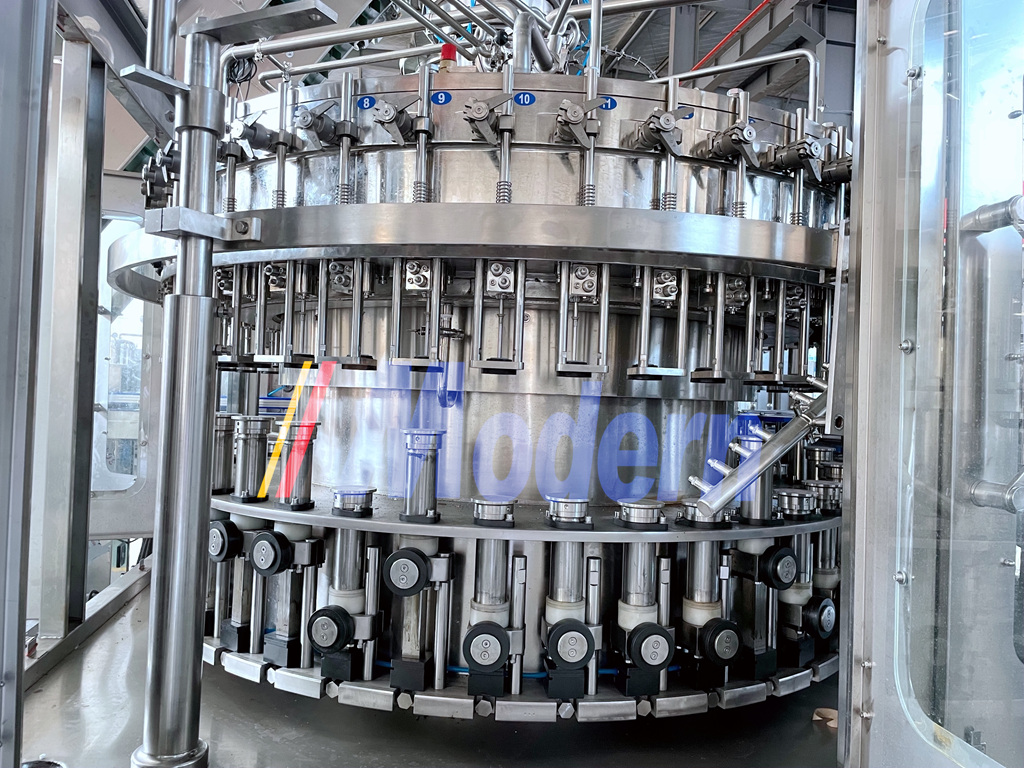
تعد المشروبات الغازية من المشروبات الشهيرة التي تحظى بشعبية واسعة حول العالم، وتتضمن عملية إنتاجها خطوات معقدة ومتنوعة لضمان الجودة والاتساق. وتعد مرحلة التعبئة أو الملء إحدى المراحل الحاسمة في إنتاج المشروبات الغازية. في هذا المقال، سوف نتعمق في مبدأ عمل آلة تعبئة المشروبات الغازية، ونستكشف وظائفها وأهميتها في صناعة المشروبات.
أهمية آلة تعبئة المشروبات الغازية
قبل الخوض في مبدأ عمل آلة تعبئة المشروبات الغازية، من الضروري فهم أهميتها في عملية الإنتاج. تلعب آلة التعبئة دوراً حاسماً في الحفاظ على جودة المشروبات ومذاقها ومستويات الكربنة فيها. فهي تضمن تعبئة كل زجاجة بدقة، مما يمنع النقص أو الزيادة في التعبئة، وهو ما قد يؤثر على تجربة المستهلك بشكل عام.
مكونات آلة تعبئة المشروبات الغازية
تتكون آلة تعبئة المشروبات الغازية من عدة مكونات رئيسية تعمل معاً بسلاسة لتعبئة الزجاجات بالمشروب الغازي. تشمل هذه المكونات:
1. نظام نقل الزجاجات
يقوم نظام نقل الزجاجات بنقل الزجاجات الفارغة إلى محطة التعبئة، حيث سيتم ملؤها بالمشروب الغازي. وهو يضمن تدفقاً سلساً ومستمراً للزجاجات خلال عملية التعبئة.
2. صمامات التعبئة
تتولى صمامات التعبئة مسؤولية توزيع المشروب الغازي بدقة داخل الزجاجات. وهي مصممة للتحكم في تدفق السائل، مما يمنع الانسكاب ويضمن مستويات تعبئة دقيقة.
3. نظام الكربنة
يعد نظام الكربنة جزءاً لا يتجزأ من آلة التعبئة، حيث يضمن احتفاظ المشروب بمستوى الكربنة المطلوب. فهو يضيف الكمية المناسبة من ثاني أكسيد الكربون إلى المشروب، مما يخلق الفوران المميز الذي يستمتع به المستهلكون.
4. آلية الإغلاق (السد)
بعد تعبئة الزجاجات بالمشروب الغازي، تقوم آلية الإغلاق بإحكام سدها لمنع أي تسرب أو تلوث. وهذا يضمن بقاء المشروبات طازجة ومكربنة حتى تصل إلى المستهلكين.
مبدأ عمل آلة تعبئة المشروبات الغازية
يتضمن مبدأ عمل آلة تعبئة المشروبات الغازية عدة خطوات متسلسلة تضمن التعبئة الدقيقة للزجاجات بالمشروب الغازي. تشمل هذه الخطوات:
الخطوة 1: وضع الزجاجات
يتم تحميل الزجاجات الفارغة على نظام نقل الزجاجات، الذي ينقلها إلى محطة التعبئة. يتم وضع الزجاجات بشكل آمن لمنع أي حركة أو ميلان أثناء عملية التعبئة.
الخطوة 2: عملية التعبئة
بمجرد وصول الزجاجات إلى محطة التعبئة، تقوم صمامات التعبئة بتوزيع الكمية الدقيقة من المشروب الغازي في كل زجاجة. صمامات التعبئة مصممة لتفتح وتغلق بسلاسة، مما يمنع أي تسرب أو انسكاب.
الخطوة 3: الكربنة
أثناء تعبئة المشروب الغازي في الزجاجات، يضمن نظام الكربنة احتفاظ المشروب بمستوى الكربنة المطلوب. فهو يضيف الكمية المناسبة من ثاني أكسيد الكربون لخلق الفوران المميز للمشروبات الغازية.
الخطوة 4: الإغلاق والسد
بعد تعبئة الزجاجات وكربنتها، تقوم آلية الإغلاق بسدها بإحكام لمنع أي تسرب أو تلوث. وتصبح الزجاجات بعد ذلك جاهزة للتغليف والتوزيع على المستهلكين.
اعتبارات رئيسية لتشغيل آلة تعبئة المشروبات الغازية
يتطلب تشغيل آلة تعبئة المشروبات الغازية الدقة والاهتمام بالتفاصيل لضمان جودة المشروبات واتساقها. إليك بعض الاعتبارات الرئيسية التي يجب وضعها في الاعتبار:
1. الصيانة الدورية
من الضروري إجراء صيانة وتنظيف دوري لآلة التعبئة لمنع أي تلوث أو أعطال. ويشمل ذلك تنظيف صمامات التعبئة، وفحص نظام الكربنة، والتحقق من آلية الإغلاق بحثاً عن أي خلل.
2. فحوصات مراقبة الجودة
يعد إجراء فحوصات مراقبة الجودة في كل مرحلة من مراحل عملية التعبئة أمراً بالغ الأهمية لضمان مطابقة المشروبات للمعايير المطلوبة. ويشمل ذلك مراقبة مستويات التعبئة، ومستويات الكربنة، وسلامة إغلاق الزجاجات.
3. تدريب الموظفين
يعد التدريب المناسب للموظفين الذين يشغلون آلة التعبئة أمراً حيوياً لمنع أي أخطاء أو حوادث أثناء عملية التعبئة. يجب أن يشمل التدريب كيفية تشغيل الآلة، واستكشاف الأخطاء الشائعة وإصلاحها، واتباع بروتوكولات النظافة والسلامة.
4. الكفاءة والإنتاجية
يمكن أن يساعد تحسين كفاءة وإنتاجية آلة التعبئة في تبسيط عملية الإنتاج وتحقيق أهداف الإنتاج. ويشمل ذلك تعديل سرعات التعبئة، وتقليل وقت التوقف عن العمل، وتعظيم الإنتاجية.
الخلاصة
في الختام، تلعب آلة تعبئة المشروبات الغازية دوراً حاسماً في إنتاج مشروبات غازية عالية الجودة. إن فهم مبدأ عمل آلة التعبئة وتطبيق أفضل الممارسات يمكن أن يساعد الشركات المصنعة على ضمان اتساق وسلامة منتجاتها. من خلال التركيز على الاعتبارات الرئيسية مثل الصيانة، ومراقبة الجودة، وتدريب الموظفين، والكفاءة، يمكن لمصنعي المشروبات تعزيز عمليات الإنتاج لديهم وتلبية طلبات المستهلكين للحصول على مشروبات غازية لذيذة ومنعشة.


