The carbonated soft drink filling machine is a vital component in the beverage production industry, designed to efficiently fill bottles or cans with carbonated drinks such as sodas, sparkling waters, and energy drinks. These machines are engineered to handle the unique challenges of filling carbonated beverages, such as maintaining carbonation and preventing foaming or spillage. In this article, we will explore the various functions, principles, and technologies behind carbonated soft drink filling machines, as well as their key role in modern soft drink manufacturing.
1. What is a Carbonated Soft Drink Filling Machine?
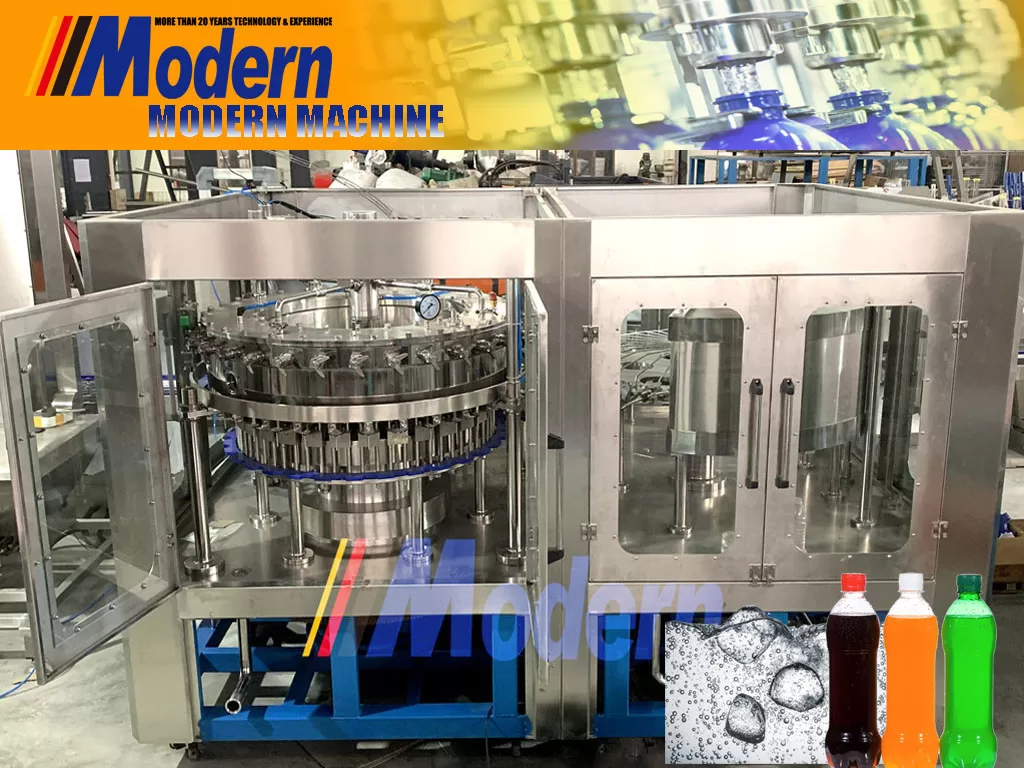
A carbonated soft drink filling machine is a specialized piece of equipment used to fill bottles or cans with carbonated beverages. The machine ensures that each container is filled with the correct amount of liquid while maintaining the carbonation of the product. This is a delicate process, as carbonated drinks contain dissolved carbon dioxide (CO2) that creates the fizz. The machine must ensure that this carbonation is preserved during the filling process to prevent the loss of bubbles and maintain product quality.
Carbonated soft drink filling machines are typically used in high-speed production lines, enabling manufacturers to fill thousands of bottles or cans per hour. These machines are equipped with advanced technologies that handle the entire filling process, from bottle preparation to sealing and labeling.
2. What is a Carbonated Beverage Filling Machine?
A carbonated beverage filling machine works on the principle of filling bottles or cans with beverages that contain dissolved CO2 gas. The process involves precise control over pressure, temperature, and filling speed to ensure that the carbonation remains stable. Unlike filling still liquids, carbonated drinks require specific techniques to avoid the foaming or excessive loss of CO2 during the filling process.
Here’s how the process typically works:
2.1 Bottle or Can Preparation: Empty bottles or cans are cleaned and sanitized to ensure product hygiene. This step is critical in maintaining the quality of the final product, as any contaminants could compromise the drink’s safety or flavor.
2.2 Pressurized Filling: Carbonated beverages are filled using a pressurized filling system. The pressure inside the filling chamber is carefully controlled to match the pressure of the CO2 inside the drink. This prevents the liquid from losing its carbonation as it enters the container.
2.3 Foam Reduction: Carbonated soft drink filling machines use technologies such as pre-evacuation or snift valves to reduce foaming during the filling process. This is essential for preventing spills and ensuring that each bottle or can is filled to the correct level.
2.4 Capping and Sealing: Once filled, bottles or cans are immediately sealed to maintain carbonation. The machine uses screw caps, crown caps, or aluminum can lids to secure the container. Sealing must be airtight to prevent any gas from escaping.
3. What is a Machine That Dispenses Soft Drinks Called?
A machine that dispenses soft drinks in the context of beverage filling production lines is known as a carbonated beverage filling machine or carbonated soft drink filling machine. However, in other contexts, such as fast food restaurants or vending environments, a machine that dispenses ready-to-drink sodas is called a soft drink dispenser or fountain drink machine.
The key difference between these machines is that:
- Carbonated Soft Drink Filling Machines are used in production facilities to fill large quantities of bottled or canned sodas for distribution.
- Soft Drink Dispensers are found in retail settings, where they dispense pre-carbonated drinks directly into cups for immediate consumption.
In the case of production lines, the filling machine is part of a larger system that ensures the entire process, from preparation to packaging, is fully automated and efficient.
4. What Machines Are Used to Make Soft Drinks?
The production of soft drinks involves several machines that work together to handle different stages of the manufacturing process. These machines ensure that the beverage is carbonated, filled, sealed, and ready for distribution. The main machines used in the soft drink production process include:
4.1 Water Treatment Machine
Water is the primary ingredient in soft drinks. The water treatment machine filters and purifies the water to remove any contaminants, ensuring that it meets the required safety and quality standards. This is typically done using methods such as reverse osmosis or UV sterilization.
4.2 Syrup Mixing Machine
In the syrup mixing machine, sugar and flavor concentrates are blended with water to create the base syrup for the soft drink. This syrup is carefully measured and mixed to ensure that the final product has the correct sweetness and flavor profile.
4.3 Carbonation Machine
The carbonation machine adds CO2 (carbon dioxide) to the soft drink syrup. This process, called carbonation, is what gives soft drinks their signature fizz. The carbonation machine dissolves the CO2 into the liquid under high pressure, ensuring that the drink remains fizzy until it’s opened by the consumer.
4.4 Carbonated Soft Drink Filling Machine
Once the drink is carbonated, it moves to the filling machine, where it is filled into bottles or cans. This step requires precise pressure control to prevent the CO2 from escaping. The machine fills each container with the exact volume of liquid, ensuring consistency and avoiding spillage.
4.5 Bottle Sealing Machine
After filling, the containers are immediately sealed with caps or lids using the bottle sealing machine. This step is critical for maintaining carbonation and ensuring that the drink stays fresh during storage and transportation. The sealing method depends on the type of container, such as screw caps for bottles or pull-tab lids for cans.
4.6 Labeling and Packaging Machines
Once the soft drinks are filled and sealed, they pass through labeling machines, where branding, product information, and expiration dates are applied. The final step is packaging, where the bottles or cans are packed into cartons or crates for shipment to retailers.


5. What is the Principle of a Carbonated Soft Drink Filling Machine?
The principle behind a carbonated soft drink filling machine is rooted in the control of pressure and liquid flow. Since carbonated beverages contain dissolved CO2, any imbalance in pressure or temperature during the filling process can cause the gas to escape, leading to flat drinks or excessive foaming.
To ensure the product maintains its carbonation and quality, the machine uses the following principles:
5.1 Pressurized Filling: The filling chamber and the liquid are both kept at high pressure to match the CO2 pressure inside the drink. This prevents the gas from escaping as the liquid is transferred into the bottle or can.
5.2 Foam Control: Carbonated drinks tend to foam when poured, which can lead to spillage or underfilling. The machine uses technologies such as snift valves to release any trapped air and minimize foaming, ensuring that each bottle is filled to the correct level.
5.3 Temperature Control: Carbonated soft drinks are typically filled at low temperatures to keep the CO2 dissolved in the liquid. This ensures that the drink remains fizzy until the consumer opens the bottle or can.
5.4 Immediate Sealing: Once the beverage is filled, the bottle or can is immediately sealed to trap the CO2 inside. This prevents the gas from escaping, preserving the drink’s carbonation and freshness.
6. Applications of Carbonated Soft Drink Filling Machines
Carbonated soft drink filling machines are used by beverage manufacturers to produce a wide variety of carbonated drinks. These include:
- Soft Drinks and Sodas: Carbonated soft drink filling machines are primarily used to fill bottles and cans with sodas like cola, lemon-lime drinks, root beer, and flavored carbonated beverages.
- Sparkling Water: For companies that produce sparkling water, the machines ensure that the water is filled under pressure to maintain carbonation and prevent gas loss.
- Energy Drinks: The growing market for energy drinks also relies on these filling machines to ensure that each can is filled with the right amount of carbonated liquid while maintaining the product’s unique flavor profile and texture.
- Alcoholic Beverages: Some carbonated alcoholic beverages, such as hard seltzers or carbonated cocktails, are also filled using these machines, ensuring a consistent level of carbonation in each bottle or can.
7. Conclusion
A carbonated soft drink filling machine is an essential tool for any beverage manufacturer looking to produce high-quality, carbonated drinks at scale. These machines ensure that each bottle or can is filled with the correct amount of liquid while maintaining the carbonation that gives the drink its signature fizz. Through precise control of pressure, temperature, and foam reduction, these machines streamline the production process and ensure product consistency.
From soft drinks and sparkling waters to energy drinks and carbonated alcoholic beverages, carbonated soft drink filling machines are vital in ensuring that the global demand for fizzy beverages is met efficiently and safely. By understanding the principles and functions of these machines, manufacturers can optimize their production lines, reduce waste, and deliver top-quality products to their consumers.