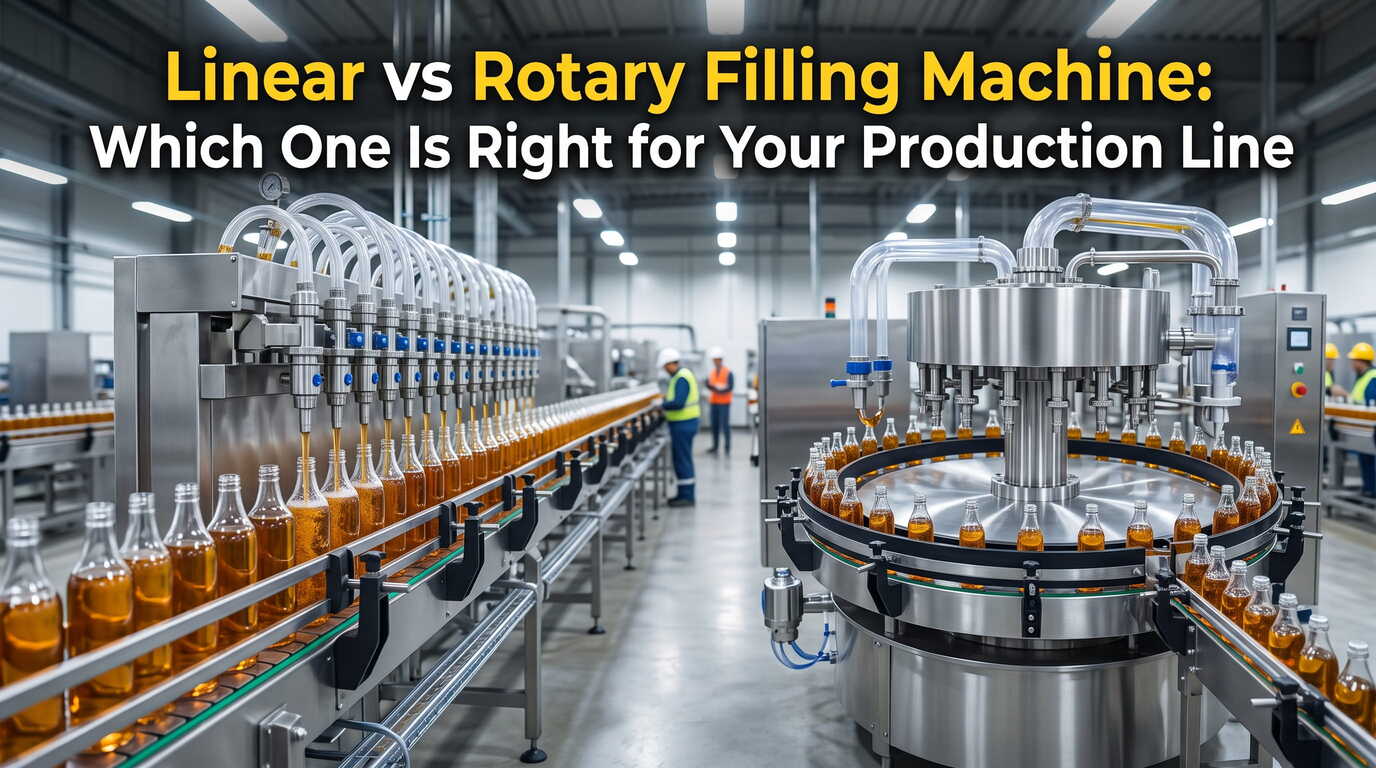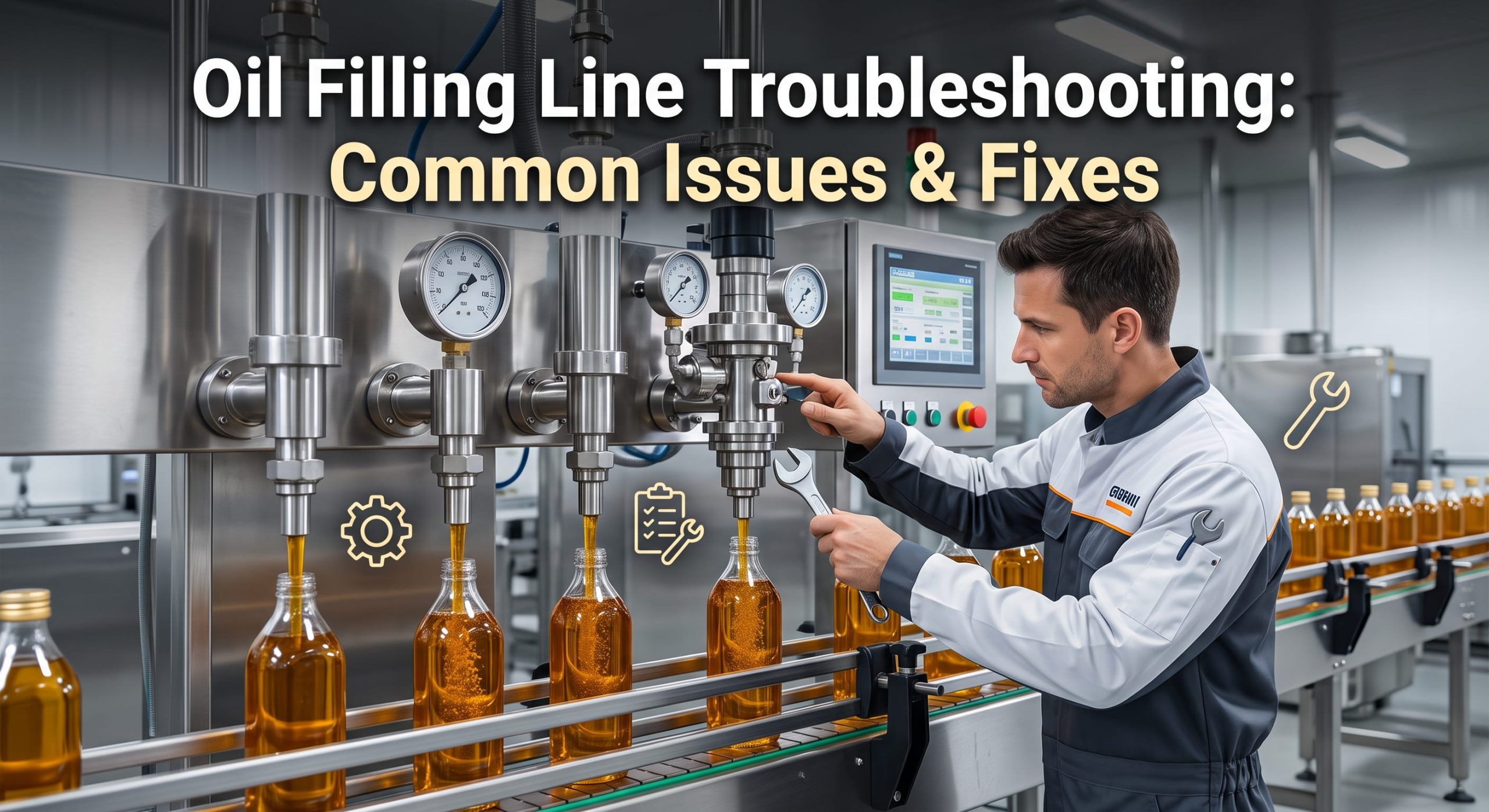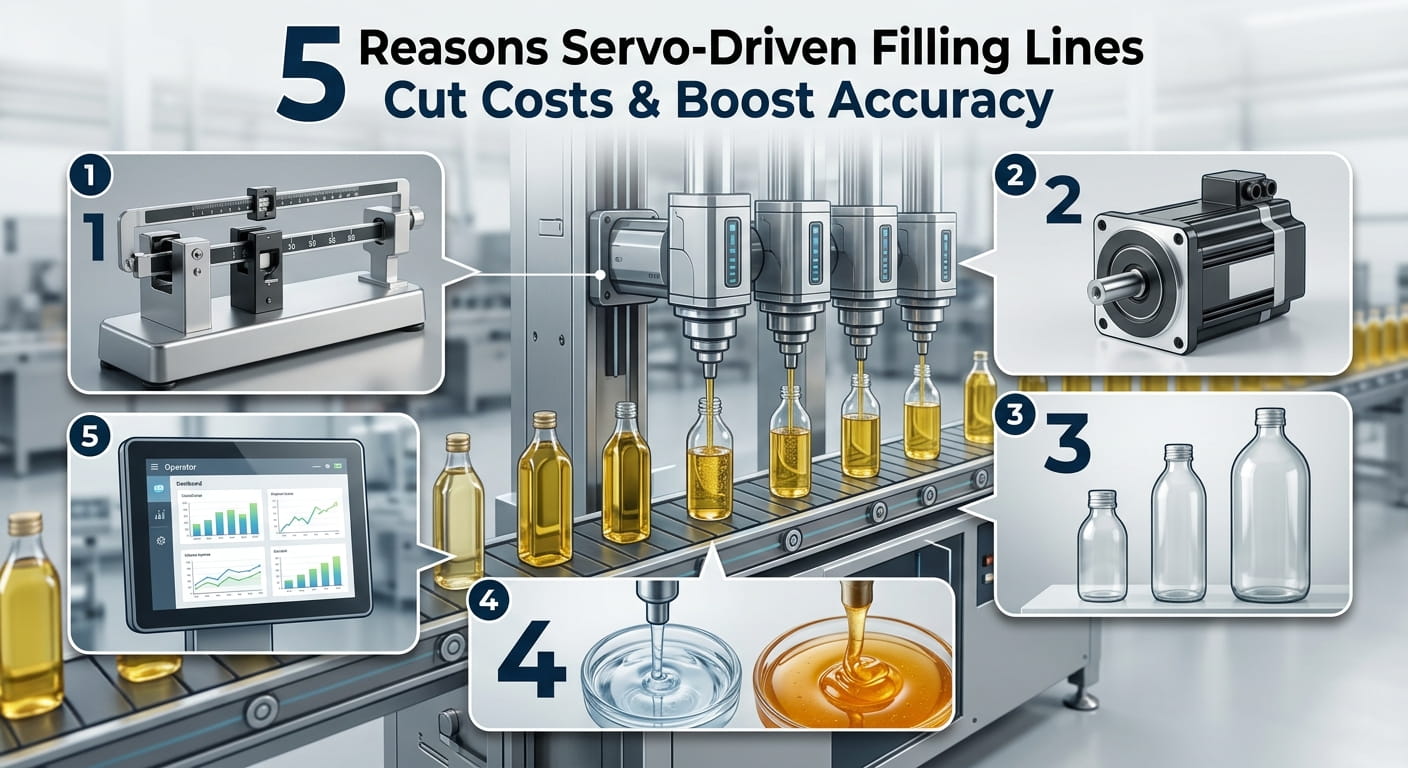
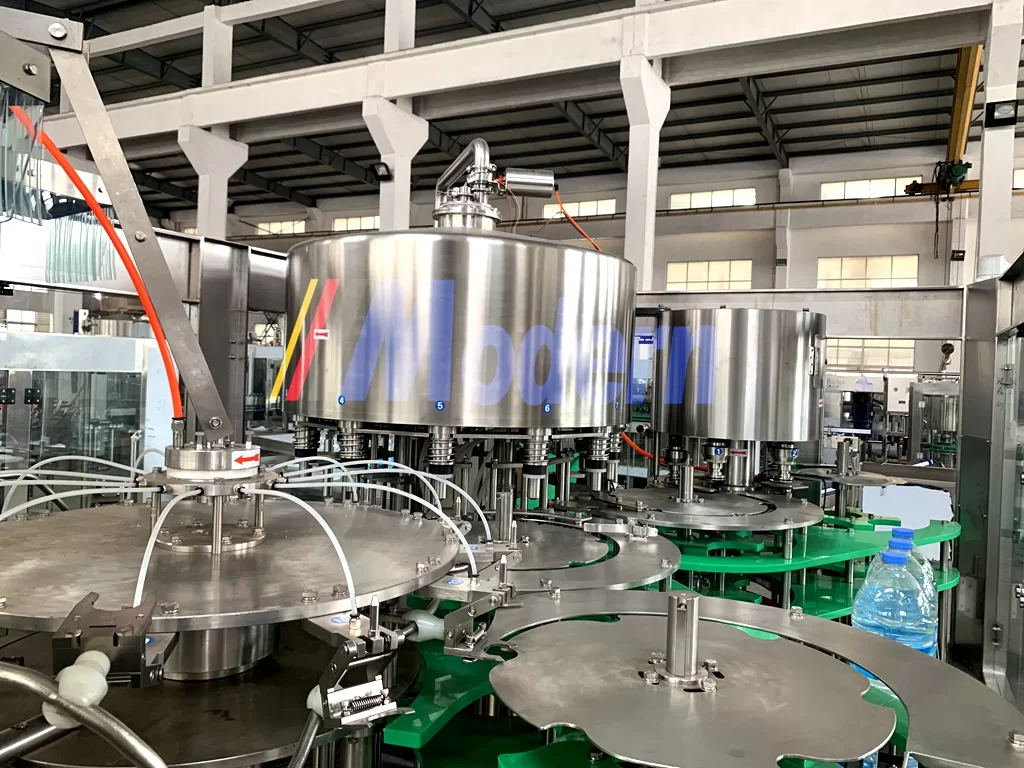
Les machines de remplissage de bouteilles sont essentielles dans diverses industries, de l'agroalimentaire à la pharmacie, en passant par les cosmétiques et la chimie. Ces machines garantissent que les produits sont remplis dans des contenants avec précision et hygiène à des vitesses élevées, permettant aux fabricants de répondre à la demande tout en maintenant la qualité du produit. Dans cet article, nous explorerons le principe d'une machine de remplissage de bouteilles, y compris son fonctionnement, ses fonctions et les principes connexes derrière les machines de scellage et de lavage de bouteilles.
1. Quel est le principe d'une machine de remplissage de bouteilles ?
Le principe de base principe d'une machine de remplissage de bouteilles repose sur automatiser le processus de remplissage de liquides en distribuant un volume précis de produit dans des contenants avec un minimum de déversement ou de gaspillage. Le processus de remplissage est conçu pour être efficace, hygiénique et précis, garantissant que chaque bouteille est remplie à un niveau constant, quelle que soit sa taille ou le type de liquide.
La fonction principale d'une machine de remplissage de bouteilles est de transférer le produit d'un réservoir de stockage vers des bouteilles individuelles, en utilisant l'un des nombreux mécanismes pour contrôler le débit de liquide. Ces machines fonctionnent selon les principes suivants :
1.1 Contrôle du volume: La machine mesure la quantité exacte de liquide requise pour chaque bouteille, évitant ainsi le sur-remplissage ou le sous-remplissage.
1.2 Régulation du débit: En contrôlant le débit de liquide dans la bouteille, la machine garantit que le produit est distribué de manière uniforme et fluide, évitant les déversements.
1.3 Automatisation: Les machines de remplissage de bouteilles modernes fonctionnent avec des systèmes automatisés pour gérer les lignes de production à haute vitesse, réduisant ainsi le besoin de main-d'œuvre manuelle.
Le principe derrière ces machines varie en fonction de la méthode de remplissage utilisée, qui est généralement choisie en fonction de la viscosité du liquide et de la vitesse de production requise.
2. Types de méthodes de remplissage de bouteilles
Différentes méthodes de remplissage sont utilisées dans les machines de remplissage de bouteilles en fonction des propriétés du liquide et des exigences de production :
2.1 Remplissage par gravité
Le remplissage par gravité repose sur le principe selon lequel les liquides s'écoulent naturellement sous l'effet de la gravité. Cette méthode est idéale pour les liquides fluides et non visqueux comme l'eau ou le jus. Dans ce système, le liquide est conservé dans un réservoir surélevé, et lorsque la bouteille est placée sous la buse de remplissage, la gravité permet au liquide de s'écouler dans le contenant jusqu'à ce que le volume souhaité soit atteint.
- Avantage: Simple, rentable et idéal pour la production à grand volume.
- Limitation: Moins efficace pour les liquides visqueux ou épais.
2.2 Remplissage sous pression
Les machines de remplissage sous pression utilisent de l'air comprimé pour pousser le liquide dans la bouteille. Cette méthode est couramment utilisée pour les boissons gazeuses comme les sodas, où le liquide doit être rempli rapidement sans perdre sa carbonatation.
- Avantage: Fonctionne bien pour les boissons gazeuses ou les liquides plus épais qui nécessitent une force pour se déplacer.
- Limitation: Nécessite un équipement spécialisé pour gérer la pression et les niveaux de gaz.
2.3 Remplissage à piston
Dans le remplissage à piston, la machine utilise un piston pour mesurer un volume spécifique de liquide avant de l'injecter dans la bouteille. Cette méthode est idéale pour les liquides à haute viscosité comme les sirops, les gels ou les crèmes.
- Avantage: Offre un contrôle précis du volume et fonctionne aussi bien avec des liquides fluides qu'épais.
- Limitation: Peut être plus lente que d'autres méthodes mais offre une précision supérieure.
2.4 Remplissage sous vide
Le remplissage sous vide fonctionne en créant un vide à l'intérieur de la bouteille, permettant au liquide d'être aspiré dans le récipient jusqu'à ce qu'il atteigne un niveau prédéfini. Cette méthode est couramment utilisée pour les produits sensibles à l'air, tels que les parfums et certains produits chimiques.
- Avantage: Idéal pour les produits nécessitant un environnement contrôlé pendant le remplissage.
- Limitation: Nécessite des bouteilles parfaitement étanches pour maintenir le vide pendant le remplissage.
3. Quelle est la fonction d'une machine de remplissage de liquide ?
La la fonction d'une machine de remplissage de liquide est de remplir avec précision des bouteilles ou des récipients avec des liquides de manière cohérente, efficace et hygiénique. Ces machines remplissent de multiples fonctions sur la ligne de production :
3.1 Précision du volume: Garantir que chaque bouteille est remplie au niveau ou au volume correct, réduisant ainsi le gaspillage de produit et assurant la satisfaction du client.
3.2 Production à haute vitesse: L'automatisation du processus de remplissage permet la production de masse de liquides, ce qui augmente l'efficacité et réduit le besoin d'intervention manuelle.
3.3 Contrôle de l'hygiène: Dans des secteurs comme l'agroalimentaire, les boissons et l'industrie pharmaceutique, le maintien de l'hygiène des produits est essentiel. Les machines de remplissage de liquide sont conçues pour minimiser le contact humain avec le produit et utilisent des composants stérilisés pour éviter toute contamination.
3.4 Cohérence: Les machines de remplissage de liquide garantissent que chaque bouteille, quelle que soit sa taille ou sa forme, est remplie de manière cohérente, répondant aux normes de l'industrie et aux exigences réglementaires.
4. Comment fonctionne une machine de remplissage de bouteilles ?
Le principe de fonctionnement d'une une remplisseuse de bouteilles implique l'intégration de divers composants pour automatiser le processus de remplissage. Voici une analyse du fonctionnement typique de ces machines :
4.1 Alimentation en bouteilles: Les bouteilles vides sont chargées sur un système de convoyeur, qui les déplace à travers la machine.
4.2 Étape de remplissage: Les bouteilles sont alignées sous les buses de remplissage. Selon la méthode de remplissage (gravité, pression, piston ou vide), la machine distribue une quantité précise de liquide dans chaque bouteille. Des capteurs peuvent être utilisés pour détecter le niveau de remplissage correct.
4.3 Bouchage: Une fois les bouteilles remplies, elles sont automatiquement bouchées par la machine. Cela garantit que le produit reste scellé et protégé contre la contamination.
4.4 Étiquetage et emballage: Après le bouchage, les bouteilles passent à l'étape de l'étiquetage, où elles sont marquées avec les informations de marque et de produit avant d'être emballées pour la distribution.
Chaque étape est soigneusement contrôlée par un automate programmable industriel (API), permettant à la machine de fonctionner de manière fluide et efficace, avec une supervision humaine minimale.
5. Quel est le principe d'une machine de scellage de bouteilles ?
A machine de scellage de bouteilles est une partie essentielle du processus d'embouteillage qui garantit que les bouteilles sont scellées en toute sécurité après le remplissage. Le principe derrière une machine de scellage de bouteilles repose sur l'application de la bonne quantité de pression ou de chaleur pour fixer une fermeture (telle qu'un bouchon à vis, un couvercle à pression ou un sceau d'inviolabilité) sur la bouteille.
Les méthodes de scellage courantes incluent :
- Scellage thermique: Pour les bouteilles nécessitant un scellage hermétique, le scellage thermique est utilisé pour lier une doublure en aluminium ou en plastique à l'ouverture de la bouteille. Cette méthode est courante dans pharmaceutique et notre emballage alimentaire.
- Capsulage à vis: Les visseuses appliquent un couple de serrage aux bouchons à vis, garantissant une fermeture hermétique. Cette méthode est largement utilisée dans les industries des boissons, comme la production d'eau en bouteille et de sodas.
- Scellage par induction: Le scellage par induction utilise l'induction électromagnétique pour chauffer et sceller un opercule en aluminium sur le goulot d'une bouteille, créant ainsi un sceau inviolable. Cette méthode est populaire pour l'emballage de produits pharmaceutiques et de compléments alimentaires.
Le processus de scellage garantit que le contenu reste stérile et notre non contaminé jusqu'à ce que le produit atteigne le consommateur.
6. Quel est le principe d'une laveuse de bouteilles ?
A laveuse de bouteilles garantit que les bouteilles sont nettoyées et stérilisées avant le début du processus de remplissage. Le principe derrière une laveuse de bouteilles est simple : jets d'eau haute pression ou des vapeur sont utilisés pour laver l'intérieur et l'extérieur des bouteilles afin d'éliminer la poussière, les contaminants et les résidus.
Le processus comprend :
6.1 Rinçage: Les bouteilles sont rincées à l'eau claire ou avec une solution de nettoyage pour éliminer les particules et les débris.
6.2 Stérilisation: De la vapeur ou des désinfectants chimiques peuvent être utilisés pour stériliser les bouteilles, garantissant qu'elles sont exemptes de bactéries ou d'autres micro-organismes nocifs.
6.3 Séchage: Après le lavage et la stérilisation, les bouteilles sont séchées avant de passer à l'étape de remplissage pour éviter toute dilution du produit.
Les laveuses de bouteilles sont essentielles pour maintenir les normes d'hygiène dans des secteurs comme l'agroalimentaire, où la sécurité des produits est primordiale.
7. L'importance des machines de remplissage de bouteilles dans la fabrication moderne
Les machines de remplissage de bouteilles sont essentielles pour garantir que les lignes de production sont efficaces, hygiéniques, et cohérentes. Ces machines permettent aux fabricants de répondre à une forte demande de production sans sacrifier la qualité. Que vous embouteilliez de l'eau, du jus, des produits chimiques ou pharmaceutiques, ces machines rationalisent le processus de production, réduisant ainsi les coûts de main-d'œuvre et augmentant le rendement.
En plus du remplissage, des technologies complémentaires comme les machines de scellage de bouteilles et notre les laveuses de bouteilles garantissent que chaque bouteille est propre, scellée et prête pour la distribution, préservant l'intégrité du produit de l'usine jusqu'au consommateur.
8. Conclusion
La principe d'une machine de remplissage de bouteilles repose sur le remplissage précis et automatisé de liquides dans des contenants, en utilisant diverses méthodes adaptées aux différentes viscosités des liquides et aux exigences de production. Ces machines, ainsi que les technologies de scellage et de lavage des bouteilles, font partie intégrante des processus de fabrication modernes, garantissant la qualité, l'hygiène et l'efficacité des produits.
Pour les entreprises cherchant à optimiser leurs lignes de production, comprendre le fonctionnement des machines de remplissage de bouteilles — et la manière dont elles s'intègrent aux autres systèmes — est essentiel pour maintenir leur compétitivité sur le marché actuel. Si vous envisagez d'investir dans une machine de remplissage de bouteilles, il est important de sélectionner le modèle adapté à votre produit spécifique et à vos besoins en matière d'échelle de production.