
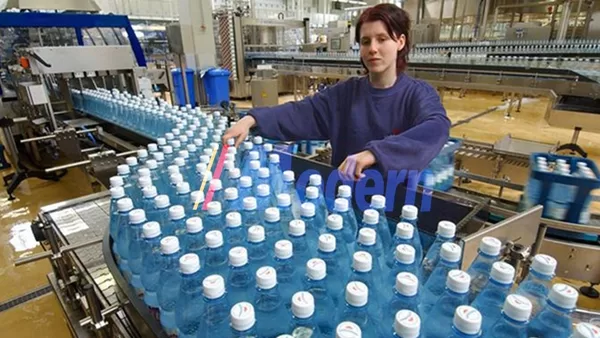
La stérilisation de l'eau est un processus critique dans la production d'eau en bouteille, garantissant que l'eau est propre à la consommation et exempte de contaminants nocifs. Il existe plusieurs techniques pour parvenir à la stérilisation de l'eau, chacune présentant ses propres avantages et considérations. Dans cet article, nous explorerons certaines des techniques de stérilisation de l'eau les plus courantes utilisées dans la production d'eau en bouteille, en soulignant leurs principales caractéristiques et avantages.
1. Stérilisation par ultraviolets (UV)
La stérilisation par UV est une technique largement utilisée dans l'industrie de l'eau en bouteille en raison de son efficacité à éliminer les micro-organismes nocifs. Dans ce processus, l'eau est exposée à une lumière UV qui perturbe l'ADN des bactéries, virus et autres agents pathogènes, les rendant inactifs et incapables de se reproduire. La stérilisation par UV est une méthode sans produits chimiques qui n'altère ni le goût ni l'odeur de l'eau.
Avantages de la stérilisation par UV :
- Processus rapide et efficace
- Respectueux de l'environnement (aucun produit chimique utilisé)
- Rentable à long terme
- Faibles besoins en maintenance
2. Ozonation
L'ozonation est une autre technique de stérilisation de l'eau populaire qui implique l'utilisation de gaz ozone pour désinfecter l'eau. L'ozone est un oxydant puissant capable de détruire un large éventail de contaminants, notamment les bactéries, les virus et les composés organiques. Le gaz ozone est dissous dans l'eau, où il réagit avec les micro-organismes nocifs pour les neutraliser.
Avantages de l'ozonation :
- Forte capacité de désinfection
- Efficace contre une variété de contaminants
- Améliore le goût et l'odeur de l'eau
- Ne laisse aucun résidu nocif
3. Osmose inverse (OI)
L'osmose inverse est un processus de filtration qui élimine les impuretés de l'eau en la faisant passer à travers une membrane semi-perméable. L'OI est efficace pour éliminer les contaminants tels que les bactéries, les virus, les métaux lourds et les produits chimiques, produisant ainsi une eau propre et pure adaptée à la mise en bouteille. L'OI est souvent utilisée en conjonction avec d'autres techniques de stérilisation pour une qualité d'eau améliorée.
Avantages de l'osmose inverse :
- Très efficace pour éliminer les contaminants
- Améliore la qualité globale de l'eau
- Réduit le risque de maladies d'origine hydrique
- Processus économe en énergie
4. Chloration
La chloration est une méthode traditionnelle de stérilisation de l'eau qui consiste à ajouter du chlore à l'eau pour tuer les bactéries et autres agents pathogènes. Le chlore est un désinfectant puissant largement utilisé dans les installations de traitement de l'eau. Bien qu'efficace pour éliminer les micro-organismes, la chloration peut parfois entraîner la formation de sous-produits de désinfection, ce qui peut affecter la qualité de l'eau.
Avantages de la chloration :
- Efficacité prouvée en matière de désinfection
- Coût relativement faible
- Méthode de traitement facilement disponible
5. Filtration
La filtration est un processus mécanique utilisé pour éliminer les particules et les impuretés de l'eau. Diverses méthodes de filtration, telles que la filtration sur charbon, la filtration micronique et la filtration multimédia, sont employées dans la production d'eau en bouteille pour améliorer la qualité de l'eau. La filtration peut aider à réduire les sédiments, le chlore, la matière organique et d'autres contaminants présents dans l'eau.
Avantages de la filtration :
- Élimine les particules et impuretés visibles
- Améliore la clarté et le goût de l'eau
- Peut être utilisée en combinaison avec d'autres méthodes de stérilisation
Conclusion
La stérilisation de l'eau est une étape cruciale dans la production d'eau en bouteille pour garantir sa sécurité et sa qualité. En mettant en œuvre des techniques de stérilisation efficaces telles que la stérilisation par UV, l'ozonation, l'osmose inverse, la chloration et la filtration, les entreprises d'embouteillage peuvent produire une eau propre et pure qui répond aux normes réglementaires et aux attentes des consommateurs. Chaque méthode de stérilisation a ses propres avantages et considérations, et le choix de la technique peut dépendre de facteurs tels que la qualité de l'eau, le volume de production et les considérations de coût.
Il est essentiel pour les producteurs d'eau en bouteille d'évaluer soigneusement l'adéquation de chaque technique de stérilisation à leurs besoins spécifiques et d'assurer la conformité aux normes de l'industrie afin de fournir une eau en bouteille sûre et fiable aux consommateurs du monde entier.


