
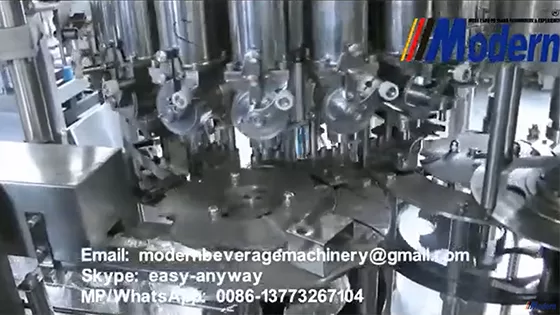
Dans le paysage manufacturier moderne, l'efficacité et la précision sont essentielles à la réussite. Pour les industries engagées dans la production de produits liquides, la machine de lavage, de remplissage et de bouchage joue un rôle crucial pour garantir la qualité du produit tout en maximisant l'efficacité opérationnelle. Cet article explore les subtilités de ces machines, fournissant aux fabricants des informations exploitables pour améliorer leurs processus et rester compétitifs sur le marché mondial.
L'importance des machines de lavage, de remplissage et de bouchage
Le processus de lavage, de remplissage et de bouchage est un aspect fondamental de plusieurs industries, notamment l'agroalimentaire, la pharmacie, la cosmétique et la chimie. Ces machines automatisent l'ensemble de la procédure, réduisant l'intervention humaine et minimisant le risque de contamination. L'importance de ces machines dépasse la simple automatisation ; elles contribuent également à maintenir l'intégrité du produit, à optimiser l'utilisation des ressources et à se conformer aux réglementations de l'industrie.
Automatisation de l'assurance qualité
Dans les secteurs où l'assainissement est primordial, comme la pharmacie et la production alimentaire, les machines à laver garantissent que les contenants, bouteilles et autres matériaux d'emballage sont soigneusement nettoyés avant le remplissage. Cette étape est cruciale pour prévenir toute contamination susceptible de compromettre la sécurité du produit. Les machines à laver modernes utilisent des technologies avancées, notamment le nettoyage par ultrasons et le rinçage à haute pression, qui non seulement améliorent la propreté, mais réduisent également la consommation d'eau et de produits chimiques, favorisant ainsi la durabilité.
Systèmes de remplissage efficaces
Le processus de remplissage lui-même doit être méticuleusement contrôlé pour maintenir la précision et préserver la qualité du produit. Selon la viscosité du produit, diverses technologies de remplissage, telles que le remplissage par gravité, le remplissage sous vide et le remplissage à piston, peuvent être utilisées. Comprendre les caractéristiques du produit aide les fabricants à sélectionner la méthode de remplissage la plus adaptée. De plus, l'intégration de capteurs et de technologies d'automatisation peut être utilisée pour garantir des volumes de remplissage constants et minimiser les déchets.
Le rôle des machines de bouchage
Les machines de bouchage servent de dernière ligne de défense contre les contaminants. Avec le système et les réglages de bouchage appropriés, les fabricants peuvent garantir l'intégrité du produit tout au long de sa durée de conservation. Le choix du type de bouchon est influencé par plusieurs facteurs, notamment la nature du produit et sa durée de conservation prévue. Les options incluent les bouchons à vis, les bouchons à pression et les bouchons en liège. En outre, des mécanismes de contrôle qualité doivent être utilisés pour vérifier le scellage approprié et la fermeture sécurisée, qui sont essentiels à la longévité du produit.
Choisir la bonne machine de lavage, de remplissage et de bouchage
La sélection de la machinerie appropriée est essentielle pour optimiser la production. Voici les facteurs critiques à prendre en compte lors d'un tel choix :
Capacité de production
Les fabricants doivent évaluer méticuleusement leurs besoins de production. Les machines sont disponibles dans diverses capacités, et comprendre le rendement attendu peut aider à sélectionner une machine qui équilibre efficacité et coût. Une machine capable de gérer des charges de production de pointe sans compromettre la vitesse ou la qualité peut éviter à un fabricant des goulots d'étranglement et des temps d'arrêt.
Caractéristiques du produit
Différents produits ont des exigences uniques en termes de manipulation et de stockage. Par exemple, les liquides visqueux peuvent nécessiter des techniques de remplissage spécifiques qui diffèrent de celles utilisées pour les liquides fluides. Mener des recherches approfondies sur les paramètres du produit peut aider à sélectionner la configuration de machine la plus appropriée. Cette considération s'étend aux types de matériaux utilisés dans les machines elles-mêmes, en particulier lors de la manipulation de substances corrosives.
Caractéristiques technologiques
Investir dans des machines dotées de capacités technologiques avancées peut générer des avantages significatifs à long terme. Des fonctionnalités telles que les interfaces à écran tactile, la surveillance à distance et l'automatisation peuvent améliorer l'efficacité opérationnelle et fournir des informations exploitables sur les données. Ces données peuvent éclairer les calendriers de maintenance préventive, prolongeant ainsi la durée de vie de la machine et réduisant les temps d'arrêt imprévus.
Maintenance et dépannage
L'entretien des machines de lavage, de remplissage et de bouchage est essentiel pour une efficacité opérationnelle durable. Des contrôles de maintenance réguliers peuvent aider à identifier les problèmes potentiels avant qu'ils ne s'aggravent, évitant ainsi des temps d'arrêt coûteux. Voici quelques conseils d'entretien pratiques :
Nettoyage de routine
Bien que ces machines soient conçues pour le nettoyage et le remplissage, elles nécessitent également un nettoyage régulier. L'accumulation de résidus peut affecter les performances et l'intégrité du produit. La mise en œuvre d'un calendrier de nettoyage approfondi qui s'aligne sur les délais de production peut aider à maintenir une fonctionnalité optimale.
Systèmes de surveillance
Les machines modernes sont souvent équipées de systèmes de surveillance dotés d'alarmes ou d'alertes en cas de fonctionnement incorrect. L'examen régulier des analyses de la machine peut aider à identifier des modèles qui pourraient indiquer des problèmes potentiels. Cette approche proactive permet des interventions opportunes et réduit les perturbations de la production.
Formation du personnel
L'efficacité des machines de lavage, de remplissage et de bouchage dépend grandement du personnel qui les utilise. Les fabricants devraient consacrer du temps à fournir des programmes de formation complets qui abordent non seulement le fonctionnement de base, mais aussi les techniques de dépannage. Donner au personnel les moyens d'agir grâce aux connaissances améliore considérablement la réponse de l'exploitation aux défis imprévus.
Conformité réglementaire et durabilité
La conformité aux réglementations de l'industrie n'est pas négociable pour les fabricants. Chaque secteur a des directives stipulées auxquelles les opérateurs doivent adhérer, et ne pas le faire peut entraîner des revers opérationnels importants. Comprendre ces réglementations peut guider les fabricants dans la conception de processus qui non seulement sont conformes aux lois existantes, mais anticipent également les futurs changements réglementaires. De plus, l'adoption de pratiques durables dans l'utilisation de ces machines peut réduire l'impact environnemental et favoriser la conformité aux normes internationales.
Pratiques durables
Alors que le monde s'oriente de plus en plus vers la durabilité, les fabricants doivent réfléchir à la manière dont leur choix de machines s'aligne sur des objectifs environnementaux plus larges. Une utilisation efficace de l'eau dans les processus de lavage, un approvisionnement approprié en matériaux et des conceptions économes en énergie peuvent aider à réduire l'empreinte carbone d'une installation.
Boucles de rétroaction
Enfin, l'établissement d'une boucle de rétroaction — où les opérateurs, les équipes d'assurance qualité et le personnel de maintenance communiquent — peut améliorer l'efficacité opérationnelle. Un retour d'information régulier aide à identifier les domaines à améliorer et peut inspirer des solutions innovantes aux défis opérationnels.
Conclusion
La machine de lavage, de remplissage et de bouchage est plus qu'un simple accessoire de chaîne de montage ; c'est une pierre angulaire de la fabrication moderne qui garantit l'intégrité du produit et l'efficacité opérationnelle. En sélectionnant soigneusement les bonnes machines, en investissant dans la formation du personnel et en adoptant des pratiques durables, les fabricants peuvent se positionner favorablement sur un marché de plus en plus concurrentiel. Une maintenance proactive et le respect des normes de l'industrie renforcent encore les avantages de ces machines. Sur un marché dynamique, l'adaptation aux technologies et méthodologies en évolution est cruciale, ce qui rend une compréhension diligente des machines de lavage, de remplissage et de bouchage indispensable pour le succès futur.


