
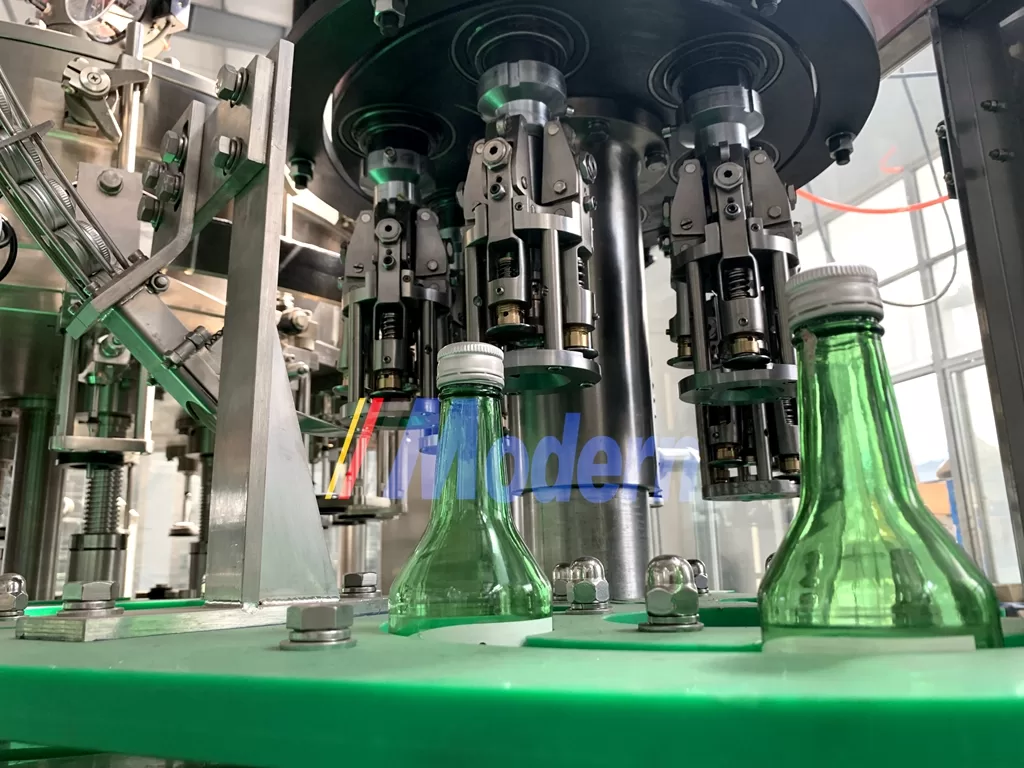
Ces dernières années, la demande en boissons gazeuses a considérablement augmenté, entraînant un besoin croissant de machines de remplissage d'eau gazeuse de haute qualité. Ces machines jouent un rôle essentiel dans le processus de fabrication des boissons en garantissant un remplissage efficace, précis et sûr. Ce guide vise à fournir une compréhension complète des machines de remplissage d'eau gazeuse, de leurs types, de leurs fonctionnalités et des meilleures pratiques pour une utilisation optimale.
Comprendre les machines de remplissage d'eau gazeuse
Une machine de remplissage d'eau gazeuse est spécifiquement conçue pour remplir des bouteilles ou des contenants avec un liquide gazéifié. Le processus de carbonatation consiste à dissoudre du dioxyde de carbone dans l'eau sous haute pression, créant ainsi l'effervescence rafraîchissante que de nombreux consommateurs apprécient. Ces machines sont cruciales dans l'industrie des boissons, où des niveaux variables de carbonatation, d'hygiène et de précision doivent être maintenus pour répondre aux attentes des consommateurs.
Types de machines de remplissage d'eau gazeuse
1. Machines de remplissage par gravité
Les machines de remplissage par gravité fonctionnent selon un principe simple, utilisant la gravité pour remplir les contenants. La machine libère l'eau gazeuse à partir d'un réservoir de stockage, permettant au liquide de s'écouler dans les bouteilles sous l'effet de la force gravitationnelle. Bien que cette méthode soit appréciée pour sa simplicité et sa rentabilité, elle ne permet pas toujours d'obtenir le remplissage le plus précis, en particulier avec des produits fortement gazéifiés.
2. Machines de remplissage sous pression
Les machines de remplissage sous pression utilisent une pression élevée pour transférer l'eau gazeuse d'un réservoir vers les contenants. Cette méthode est souvent privilégiée pour les produits ayant des niveaux de carbonatation élevés, car elle minimise la perte de gaz pendant le remplissage. En maintenant la pression dans le système, ces machines peuvent réduire considérablement la formation de mousse, permettant un remplissage précis sans compromettre la teneur en dioxyde de carbone.
3. Machines de remplissage volumétrique
Les machines de remplissage volumétrique sont conçues pour mesurer et distribuer des volumes spécifiques d'eau gazeuse dans les contenants. Ces machines sont équipées de capteurs et de commandes avancés pour garantir la précision et la cohérence du processus de remplissage. Elles sont très efficaces pour les lignes de production à haute vitesse où des mesures précises sont critiques, contribuant ainsi à réduire le gaspillage et à améliorer l'efficacité.
Composants clés des machines de remplissage d'eau gazeuse
Comprendre les composants des machines de remplissage d'eau gazeuse permet d'obtenir des informations précieuses sur leur fonctionnement et leurs exigences opérationnelles. Voici quelques composants essentiels :
1. Buses de remplissage
Les buses de remplissage sont cruciales pour diriger le flux d'eau gazeuse dans les bouteilles. Il existe divers modèles, tels que les buses anti-goutte et en forme de cloche, chaque conception répondant à des défis de remplissage spécifiques, comme la minimisation de la mousse et la prévention des déversements.
2. Systèmes de contrôle
Les machines modernes sont équipées de systèmes PLC (Automate Programmable Industriel) pour automatiser le processus de remplissage. Ces commandes aident les opérateurs à définir les paramètres, à surveiller les opérations en temps réel et à résoudre efficacement les problèmes potentiels.
3. Systèmes de carbonatation
Le contrôle des niveaux de carbonatation est vital pour la qualité du produit. Les systèmes de carbonatation mélangent des volumes précis de dioxyde de carbone avec de l'eau, tout en maintenant les conditions de température et de pression idéales pour obtenir l'effet de carbonatation souhaité.
4. Systèmes de convoyage
Les systèmes de convoyage facilitent le mouvement des bouteilles à travers les différentes étapes de production, permettant des transitions fluides entre le remplissage, le bouchage et l'étiquetage. Une conception efficace du convoyeur minimise les temps d'arrêt et améliore la productivité globale.
Facteurs à prendre en compte lors du choix d'une machine de remplissage d'eau gazeuse
Le choix de la bonne machine de remplissage d'eau gazeuse nécessite une attention particulière à plusieurs facteurs pour garantir qu'elle réponde à vos besoins opérationnels :
1. Capacité de production
Évaluez vos besoins de production en fonction des prévisions de la demande. Choisissez une machine capable de gérer les niveaux de production actuels tout en ayant le potentiel d'évoluer pour une croissance future.
2. Type de produit
Différents produits peuvent nécessiter des technologies de remplissage spécifiques en raison des variations de viscosité, de niveau de carbonatation et de taille d'emballage. Déterminez si vous avez besoin d'une machine pour l'eau plate, l'eau gazeuse ou les boissons gazeuses aromatisées.
3. Contraintes budgétaires
L'établissement d'un budget est crucial, car les machines sont proposées dans une large gamme de prix, des modèles de base aux systèmes avancés dotés de fonctionnalités complexes. Calculez votre retour sur investissement en tenant compte de l'efficacité de la production, des coûts énergétiques et des économies potentielles de main-d'œuvre grâce à l'automatisation.
4. Maintenance et support
Assurez-vous que le fabricant ou le fournisseur fournit un support de maintenance et une formation adéquats pour vos opérateurs. Un entretien régulier est vital pour la longévité et la performance de la machine, et disposer d'une équipe de support réactive peut minimiser les temps d'arrêt en cas de problèmes techniques.
Meilleures pratiques pour l'utilisation des machines de remplissage d'eau gazeuse
Pour maximiser l'efficacité et la longévité de votre machine de remplissage d'eau gazeuse, tenez compte des meilleures pratiques suivantes :
1. Entretien régulier
La mise en place d'un calendrier de maintenance régulier est essentielle pour maintenir la machine en parfait état de fonctionnement. Les contrôles réguliers doivent inclure l'inspection des composants, la lubrification des pièces mobiles et le nettoyage du système pour éviter toute contamination.
2. Formation des opérateurs
Investissez dans une formation complète pour les opérateurs afin de vous assurer qu'ils comprennent comment utiliser la machine en toute sécurité et efficacement. Cette formation doit couvrir tous les aspects, y compris les procédures d'utilisation, les techniques de dépannage et les tâches de maintenance.
3. Surveiller le contrôle qualité
Des contrôles de qualité constants sont nécessaires pour garantir que le processus de remplissage répond aux normes de l'industrie. Des tests réguliers sur les niveaux de carbonatation, l'intégrité des bouteilles et la précision du remplissage peuvent éviter les retouches et garantir la satisfaction du client.
4. Optimiser les réglages
Le réglage des paramètres de la machine pour correspondre aux caractéristiques de votre produit, au volume de remplissage et à la vitesse de production peut améliorer l'efficacité. Travaillez avec le fabricant pour déterminer les réglages optimaux qui réduisent le gaspillage et maintiennent la qualité du produit.
Tendances futures de la technologie de remplissage d'eau gazeuse
L'industrie des boissons est en constante évolution, la technologie jouant un rôle important dans la définition des tendances futures. Voici quelques tendances anticipées pour les machines de remplissage d'eau gazeuse :
1. Intégration de technologies intelligentes
L'avènement de l'Industrie 4.0 met l'accent sur l'automatisation et l'analyse des données. Les futures machines de remplissage pourraient intégrer des algorithmes basés sur l'IA qui surveillent les opérations en temps réel, optimisant la vitesse et l'efficacité tout en réduisant l'erreur humaine.
2. Innovations respectueuses de l'environnement
Face aux préoccupations environnementales croissantes, les fabricants développent des machines de remplissage plus économes en énergie et respectueuses de l'environnement. Des innovations telles que la réduction de la consommation d'eau, l'utilisation de matériaux recyclables et des modes d'économie d'énergie devraient gagner du terrain.
3. Personnalisation et flexibilité
À mesure que les préférences des consommateurs évoluent vers des expériences de boissons personnalisées, les machines de remplissage d'eau gazeuse devront s'adapter aux formulations de produits, aux tailles d'emballage et aux conceptions écologiques variées, permettant aux fabricants de pivoter rapidement en réponse aux demandes du marché.
Conclusion
Les machines de remplissage d'eau gazeuse jouent un rôle inestimable dans l'industrie des boissons, permettant aux producteurs de répondre à la demande croissante de boissons gazeuses tout en garantissant qualité et efficacité. Comprendre les types de machines disponibles, leurs composants et les meilleures pratiques d'utilisation peut contribuer de manière significative au succès d'une ligne de production. À mesure que la technologie continue d'évoluer, rester informé des tendances et des innovations garantira aux fabricants de rester compétitifs sur ce marché dynamique.


