
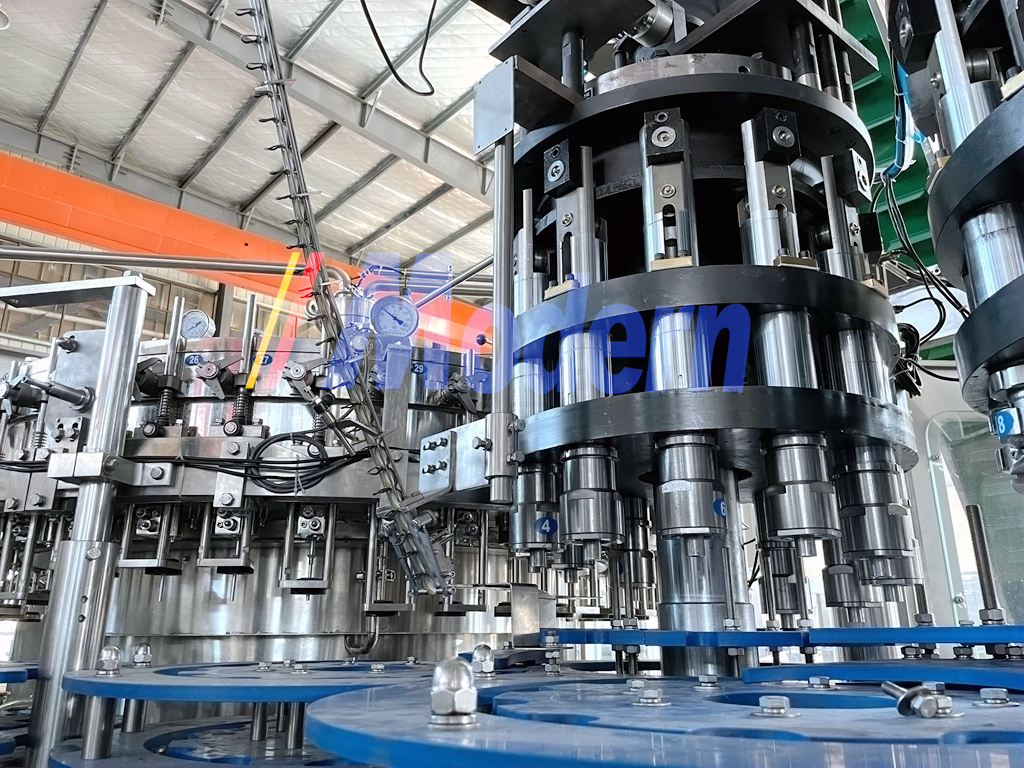
Dans le paysage concurrentiel de la fabrication de boissons, les machines d'embouteillage jouent un rôle essentiel pour garantir l'efficacité, la qualité et la sécurité de la production. À mesure que les demandes des consommateurs évoluent et que les défis de fabrication s'intensifient, l'importance de ces machines n'a jamais été aussi marquée. Cet article explore l'évolution des machines d'embouteillage de boissons gazeuses, leurs composants, leurs types et les tendances qui façonnent leur avenir.
Comprendre les machines d'embouteillage de boissons gazeuses
À la base, les machines d'embouteillage de boissons gazeuses sont conçues pour remplir, boucher et étiqueter des bouteilles contenant des boissons gazeuses ou non gazeuses. Ces machines rationalisent le processus de production, permettant aux fabricants de produire efficacement de grands volumes de produits finis.
Les machines d'embouteillage modernes intègrent une technologie de pointe, permettant des opérations à haute vitesse tout en maintenant des normes strictes d'hygiène et de contrôle qualité. Alors que les préférences des consommateurs s'orientent vers des options plus saines et la durabilité, les machines d'embouteillage se sont adaptées pour prendre en charge divers types de bouteilles, matériaux et méthodes de production.
Les composants des machines d'embouteillage de boissons gazeuses
Comprendre les différents composants d'une machine d'embouteillage de boissons gazeuses est crucial pour les fabricants souhaitant optimiser leur production. Les principaux composants comprennent :
- Système de remplissage : Le système de remplissage est le cœur du processus d'embouteillage. Ce composant assure un remplissage précis des bouteilles au volume spécifié. Il peut s'agir de mécanismes par gravité, par pression ou par vide, chacun étant adapté à différents types de boissons.
- Système de bouchage : Après le processus de remplissage, les bouteilles sont transportées vers le système de bouchage, qui fixe les bouchons. Cela peut impliquer des bouchons à vis, des capsules couronnes ou des bouchons à pression, selon le type de boisson et les exigences du marché.
- Système d'étiquetage : Les étiquettes fournissent des informations essentielles aux consommateurs et aux organismes de réglementation, telles que les valeurs nutritionnelles, les listes d'ingrédients et les codes-barres. Les systèmes d'étiquetage s'intègrent parfaitement à la ligne de production, garantissant cohérence et précision.
- Systèmes de convoyage : Le mouvement efficace des bouteilles à travers les différentes étapes de l'embouteillage est assuré par des tapis roulants. Ils sont conçus pour minimiser les temps d'arrêt et assurer un flux fluide dans la production.
- Systèmes de contrôle : Les machines d'embouteillage de boissons gazeuses avancées sont équipées de systèmes PLC (Automate Programmable Industriel) pour surveiller et contrôler les processus. Le reporting de données en temps réel permet aux fabricants de résoudre rapidement les problèmes.
Types de machines d'embouteillage de boissons gazeuses
Il existe plusieurs types de machines d'embouteillage de boissons gazeuses, chacune adaptée à des exigences de production spécifiques. Comprendre ces variations peut aider les fabricants à choisir la machine la plus adaptée à leurs besoins :
1. Machines d'embouteillage automatiques
Les machines d'embouteillage automatiques fonctionnent avec une intervention humaine minimale, utilisant des capteurs et des commandes avancés. Elles sont idéales pour la production à haut volume et peuvent considérablement améliorer la productivité. Les fabricants bénéficient d'une réduction des coûts de main-d'œuvre et d'une efficacité opérationnelle accrue.
2. Machines d'embouteillage semi-automatiques
Les machines semi-automatiques nécessitent une certaine intervention manuelle mais offrent tout de même un degré d'automatisation. Ces systèmes conviennent aux opérations à plus petite échelle où les opérateurs peuvent superviser plusieurs machines, équilibrant productivité et contrôle du processus.
3. Machines d'embouteillage manuelles
Les machines d'embouteillage manuelles sont plus exigeantes en main-d'œuvre et sont généralement utilisées par des startups ou des fabricants de boissons artisanales. Bien que moins efficaces que les systèmes automatiques, elles offrent une flexibilité et permettent une plus grande personnalisation du processus d'embouteillage.
Facteurs influençant le choix de la machinerie d'embouteillage
Le choix de la machine d'embouteillage de boissons gazeuses appropriée implique de prendre en compte plusieurs facteurs critiques, notamment :
- Capacité de production : Évaluez le volume de boissons produites pour déterminer la vitesse et l'échelle requises de la machine d'embouteillage.
- Type de boisson : La nature gazeuse ou non gazeuse de la boisson influe sur le type de système de remplissage requis. De plus, différentes boissons peuvent nécessiter des solutions de bouchage ou d'étiquetage uniques.
- Contraintes budgétaires : Évaluez le coût total de possession, y compris la maintenance, les pièces et les accessoires. Un investissement initial plus élevé peut conduire à une meilleure efficacité et à des coûts d'exploitation inférieurs.
- Espace disponible : Les machines d'embouteillage de boissons gazeuses existent en différentes tailles. Tenez compte de l'agencement et de l'espace disponible dans votre installation de production avant de faire un choix.
- Conformité réglementaire : Assurez-vous que la machine choisie est conforme aux normes de sécurité et de qualité locales et internationales pour la production d'aliments et de boissons.
Tendances qui remodèlent l'industrie de l'embouteillage
L'industrie de l'embouteillage connaît des changements importants motivés par les préférences des consommateurs, les avancées technologiques et les préoccupations liées à la durabilité. Les tendances clés influençant le marché comprennent :
1. Durabilité et pratiques respectueuses de l'environnement
Alors que les consommateurs se tournent vers des marques soucieuses de l'environnement, les fabricants de boissons se concentrent sur des pratiques durables. Cela inclut l'utilisation de matériaux recyclables, la réduction des déchets et l'adoption de machines économes en énergie. Les machines d'embouteillage évoluent pour s'adapter à des solutions d'emballage plus légères et écologiques, réduisant ainsi l'empreinte carbone globale.
2. Technologie d'embouteillage intelligente
Avec l'essor de l'Industrie 4.0, les machines d'embouteillage de boissons gazeuses deviennent plus intelligentes. Les machines compatibles IoT offrent une surveillance en temps réel, une maintenance prédictive et un contrôle qualité amélioré. En collectant et en analysant les données tout au long du processus de production, les fabricants peuvent identifier les inefficacités et rationaliser leurs opérations.
3. Personnalisation et diversification des produits
La demande pour des boissons personnalisées est en hausse, poussant les fabricants à proposer des saveurs uniques, des ingrédients biologiques et des options diététiques. Les machines d'embouteillage modernes sont conçues pour être adaptables, permettant aux entreprises de passer d'un produit à l'autre avec un temps d'arrêt minimal.
Conseils pratiques pour des opérations d'embouteillage optimales
Pour maximiser l'efficacité et la performance de vos opérations d'embouteillage, tenez compte des conseils pratiques suivants :
- Maintenance régulière : Planifiez des inspections et une maintenance régulières des machines d'embouteillage pour éviter les temps d'arrêt imprévus et prolonger leur durée de vie.
- Investissez dans la formation du personnel : Des opérateurs bien formés garantissent le fonctionnement efficace des machines. Offrez une formation continue pour tenir le personnel informé des dernières technologies et des meilleures pratiques.
- Réalisez des études de marché : Restez informé des tendances émergentes et des demandes des consommateurs pour adapter votre production aux attentes du marché.
- Utilisez l'analyse de données : Mettez en œuvre des outils d'analyse de données pour obtenir des informations sur l'efficacité et la qualité de la production, permettant ainsi des processus de prise de décision éclairés.
- Collaborez avec les fournisseurs : Établissez des relations solides avec les fournisseurs d'équipements d'embouteillage et de matériaux d'emballage pour garantir la qualité et la ponctualité des livraisons.
Conclusion
Les machines d'embouteillage de boissons gazeuses sont à la pointe de l'industrie de la production de boissons, favorisant l'efficacité et garantissant la qualité dans un paysage caractérisé par des changements rapides. En comprenant les différents types de machines d'embouteillage, leurs composants et les tendances qui façonnent l'industrie, les fabricants peuvent prendre des décisions éclairées qui améliorent l'efficacité opérationnelle et répondent aux préférences des consommateurs. Grâce à une approche stratégique de l'embouteillage, les entreprises peuvent rester compétitives et réactives sur un marché en constante évolution.


