
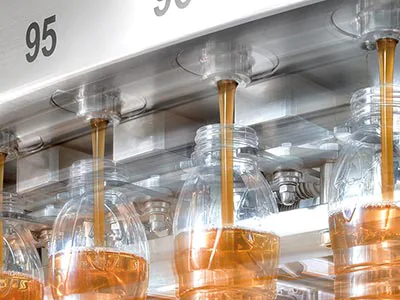
Le jus de mangue, un délice tropical apprécié dans le monde entier, a connu une hausse de la demande ces dernières années. Les consommateurs se tournant de plus en plus vers des produits naturels prêts à boire, les entreprises du secteur des boissons saisissent l'opportunité de produire et de conditionner le jus de mangue de manière efficace. C'est là qu'intervient la machine de remplissage de jus de mangue. Cet article propose un aperçu complet de l'importance, des types, du fonctionnement et des critères de sélection des machines de remplissage de jus de mangue, ainsi que des meilleures pratiques pour améliorer l'efficacité de la production.
La demande croissante pour le jus de mangue
L'industrie des boissons a connu des changements importants, avec une transition évidente vers des options plus saines. Le jus de mangue s'est imposé comme un choix privilégié en raison de sa douceur naturelle, de son goût rafraîchissant et de ses bienfaits pour la santé, notamment ses vitamines et antioxydants. Face à la hausse de la demande mondiale, les fabricants doivent s'adapter pour répondre aux attentes des consommateurs tout en maintenant leur efficacité.
Pour tirer parti de cette tendance, les entreprises doivent intégrer des machines de remplissage de jus de mangue dans leurs lignes de production. Ces machines sont conçues pour automatiser le processus de remplissage, garantissant une qualité constante et réduisant les risques de gaspillage, ce qui améliore la rentabilité.
Comprendre les machines de remplissage de jus de mangue
Les machines de remplissage de jus de mangue sont des équipements spécialisés conçus pour la mise en bouteille et le conditionnement du jus de mangue. Ces machines sont cruciales dans le processus de fabrication et se déclinent en plusieurs types, chacun adapté à différentes échelles de production et exigences. Les catégories générales comprennent :
1. Machines de remplissage manuelles
Ces machines basiques nécessitent une intervention humaine pour les processus de remplissage et de bouchage. Bien qu'elles soient rentables et idéales pour les opérations à petite échelle, elles peuvent ne pas satisfaire aux exigences d'efficacité des grands fabricants.
2. Machines de remplissage semi-automatiques
Les machines semi-automatiques combinent des processus manuels et automatisés. Les opérateurs sont responsables de tâches spécifiques tandis que la machine gère les fonctions principales de remplissage et de bouchage. Ce type est adapté aux installations de production de taille moyenne qui nécessitent un équilibre entre efficacité et coût.
3. Machines de remplissage entièrement automatiques
Les machines entièrement automatiques représentent le summum de la technologie en matière de remplissage de jus de mangue. Ces machines peuvent gérer l'ensemble du processus, du remplissage au bouchage et à l'étiquetage, sans intervention humaine. Elles sont idéales pour les opérations à grande échelle, offrant une production à haute vitesse, une précision accrue et des coûts de main-d'œuvre minimisés.
Comment fonctionnent les machines de remplissage de jus de mangue
Le fonctionnement d'une machine de remplissage de jus de mangue implique plusieurs étapes clés :
1. Préparation du jus
Le processus commence par la préparation du jus de mangue, qui implique généralement le lavage, l'épluchage et l'extraction du jus à partir de mangues mûres. Ce jus est ensuite filtré pour éliminer toute pulpe ou particule solide afin d'assurer une consistance lisse.
2. Mécanisme de remplissage
Une fois préparé, le jus est pompé dans la machine de remplissage. La plupart des machines de remplissage de jus sont équipées de systèmes de remplissage volumétriques ou gravimétriques. Les systèmes volumétriques remplissent les bouteilles en fonction d'un volume prédéfini, tandis que les systèmes gravimétriques mesurent le poids pour plus de précision.
3. Bouchage et étiquetage
Après le remplissage, les bouteilles passent aux stations de bouchage, où les bouchons sont fixés solidement pour préserver la fraîcheur. De nombreuses machines incluent également des systèmes d'étiquetage automatique qui appliquent des étiquettes sur les bouteilles, ce qui est crucial pour l'image de marque et la conformité aux lois sur l'étiquetage.
Choisir la bonne machine de remplissage de jus de mangue
Choisir la bonne machine de remplissage de jus de mangue est essentiel pour optimiser l'efficacité de la production. Voici plusieurs considérations pour aider les entreprises à prendre des décisions éclairées :
1. Capacité de production
Évaluez vos besoins de production : combien de bouteilles visez-vous à produire par heure ? Sélectionnez une machine capable d'atteindre ou de dépasser cette capacité pour vous assurer de pouvoir gérer les pics de demande sans sacrifier la qualité.
2. Types de bouteilles
Différentes machines sont compatibles avec différents types de bouteilles, tels que les contenants en verre, en plastique ou Tetra Pak. Assurez-vous que la machine choisie peut s'adapter à l'emballage souhaité.
3. Considérations d'espace
Tenez compte de la disposition de votre ligne de production. Certaines machines à haute capacité peuvent nécessiter plus d'espace au sol. Assurez-vous d'avoir suffisamment de place pour la machine et les systèmes supplémentaires nécessaires, tels que les zones de préparation et de stockage du jus.
4. Niveau d'automatisation
Considérez le niveau d'automatisation dont vous avez besoin. Si les coûts de main-d'œuvre sont élevés ou si vous souhaitez minimiser les erreurs humaines, investir dans une machine de remplissage entièrement automatique peut en valoir la peine. Cependant, si vous opérez à plus petite échelle, des machines semi-automatiques ou manuelles peuvent être plus rentables.
5. Contraintes budgétaires
Établir un budget est vital. Les machines entièrement automatiques, bien qu'efficaces, peuvent être nettement plus coûteuses que les options manuelles ou semi-automatiques. Effectuez une analyse coûts-avantages pour vous assurer que l'investissement initial correspond aux rendements projetés.
Meilleures pratiques pour l'utilisation des machines de remplissage de jus de mangue
L'utilisation d'une machine de remplissage de jus de mangue nécessite le respect des meilleures pratiques pour maximiser l'efficacité et maintenir la qualité :
1. Entretien de routine
Un entretien régulier est essentiel à la longévité et à l'efficacité des machines de remplissage. Créez un calendrier pour le nettoyage, l'inspection et l'entretien de l'équipement. Cela évitera les temps d'arrêt imprévus et les retards de production.
2. Contrôle qualité
Mettez en œuvre des mesures de contrôle qualité strictes tout au long du processus de remplissage. Des tests réguliers de la viscosité, de la saveur et de la teneur microbienne du jus garantissent que le produit final répond aux normes de sécurité et de qualité.
3. Formation des employés
Assurez-vous que votre personnel est correctement formé à l'utilisation et à l'entretien des machines de remplissage. La formation améliore non seulement l'efficacité opérationnelle, mais favorise également une culture de sécurité et de sensibilisation à la qualité.
4. Surveillez les indicateurs de production
Utilisez la technologie pour surveiller les indicateurs de production tels que les niveaux de remplissage, la vitesse de production et la gestion des déchets. Les données peuvent aider à identifier les domaines à améliorer et à optimiser les opérations.
Conclusion
Alors que la demande mondiale pour le jus de mangue continue d'augmenter, investir dans la bonne machine de remplissage de jus de mangue devient crucial pour l'efficacité de la production et la croissance de l'entreprise. Comprendre les différents types de machines de remplissage, leurs processus opérationnels et les meilleures pratiques est essentiel pour les fabricants qui s'efforcent de répondre aux demandes du marché tout en maintenant la qualité du produit et la rentabilité. En suivant les idées et les conseils présentés dans cet article, les entreprises peuvent se positionner pour prospérer sur le marché concurrentiel des boissons.


