
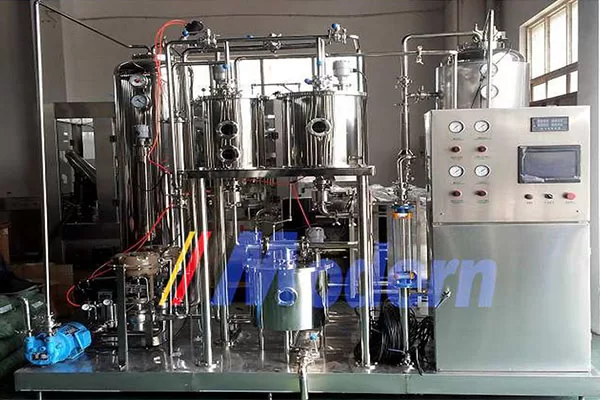
Dans le monde dynamique de la fabrication agroalimentaire, un emballage efficace est primordial. Parmi les différentes formes de conditionnement, les gourdes de jus ont gagné une immense popularité en raison de leur commodité, de leur portabilité et de leur facilité d'utilisation. Cet article explore les subtilités des machines de remplissage et de scellage de gourdes de jus, en abordant leur fonctionnement, leurs avantages, leurs types et les considérations essentielles pour les entreprises souhaitant investir dans ces équipements.
Comprendre les machines de remplissage et de scellage de gourdes de jus
Les machines de remplissage et de scellage de gourdes de jus sont des équipements spécialisés conçus pour automatiser le remplissage de jus liquides dans des gourdes et les sceller pour éviter les fuites et la contamination. Ces machines sont essentielles dans les lignes de production des fabricants cherchant à améliorer l'efficacité et la qualité de leur processus de conditionnement.
Comment fonctionnent ces machines
Le processus opérationnel des machines de remplissage et de scellage de gourdes de jus comprend généralement plusieurs étapes :
- Alimentation en gourdes : La machine alimente automatiquement la station de remplissage en gourdes vides à partir d'un rouleau ou d'une pile.
- Remplissage : Une fois la gourde correctement positionnée, elle est remplie de jus liquide. Cela peut être réalisé par divers mécanismes, tels que des méthodes de remplissage volumétrique, gravimétrique ou temporisée.
- Scellage : Après le remplissage, la gourde subit un processus de scellage. Cela peut se faire par thermoscellage, où la chaleur est appliquée sur les bords de la gourde, ou par des méthodes de scellage à froid.
- Codage et inspection : Enfin, de nombreuses machines sont équipées de modules d'étiquetage ou de codage qui impriment les dates de péremption ou les codes-barres, garantissant la conformité aux réglementations et améliorant la traçabilité.
Avantages de l'utilisation de machines de remplissage et de scellage de gourdes de jus
L'implémentation d'une machine de remplissage et de scellage de gourdes de jus offre de nombreux avantages aux fabricants :
1. Efficacité et productivité accrues
L'automatisation du processus de remplissage et de scellage réduit considérablement les coûts de temps et de main-d'œuvre associés aux opérations manuelles. Les machines à haute vitesse sont capables de remplir et de sceller des milliers de gourdes par heure, permettant aux entreprises de répondre à la demande croissante du marché.
2. Constance de la qualité
Grâce à une technologie de pointe et une ingénierie de précision, ces machines assurent des quantités de remplissage uniformes et des scellages constants, minimisant le risque de gaspillage et de détérioration du produit. Cette cohérence est vitale pour la crédibilité de la marque et la satisfaction du client.
3. Polyvalence
Les machines de remplissage et de scellage de gourdes de jus sont conçues pour traiter divers types de liquides, y compris les jus purs, les concentrés et même les boissons avec pulpe. Cette adaptabilité en fait un atout précieux pour les fabricants explorant différentes gammes de produits.
4. Solution d'emballage rentable
Les gourdes sont légères et nécessitent moins d'espace de stockage que les bouteilles en verre ou les cartons, ce qui entraîne des économies de transport et de logistique. De plus, la réduction des matériaux d'emballage peut également contribuer positivement aux efforts de durabilité environnementale.
Types de machines de remplissage et de scellage de gourdes de jus
Comprendre les différents types de machines disponibles peut aider les entreprises à choisir l'équipement adapté à leurs besoins spécifiques :
1. Machines verticales de formage, remplissage et scellage (VFFS)
Les machines VFFS sont les plus couramment utilisées dans le conditionnement en gourdes. Elles créent des gourdes à partir d'un film plat, les remplissent de jus et les scellent, le tout en une seule opération continue. Ces machines sont très flexibles et adaptées à diverses tailles et formes de gourdes.
2. Machines horizontales de formage, remplissage et scellage (HFFS)
Les machines HFFS fonctionnent différemment des VFFS en formant la gourde à partir d'un rouleau continu de film placé horizontalement. Elles sont idéales pour remplir des gourdes contenant des liquides plus épais et visqueux, tels que des smoothies ou des mélanges de jus lactés.
3. Remplisseuses rotatives
Pour les lignes de production à haute vitesse, les remplisseuses rotatives offrent une efficacité accrue. Elles utilisent plusieurs têtes de remplissage disposées de manière circulaire, permettant le remplissage simultané de plusieurs gourdes. Cette conception est parfaite pour les grandes entités manufacturières ayant des exigences de production importantes.
Considérations clés pour investir dans des machines de remplissage et de scellage de gourdes de jus
Lors de l'investissement dans des machines de remplissage et de scellage de gourdes de jus, les entreprises doivent prendre en compte les facteurs suivants :
1. Capacité de production
Évaluez le volume de production attendu pour choisir une machine capable de répondre à vos exigences de production sans compromettre la qualité. Il est essentiel d'analyser votre potentiel de croissance pour vous assurer que la machine choisie peut s'adapter à une demande accrue.
2. Spécifications des gourdes
Le type et la taille des gourdes que vous avez l'intention d'utiliser jouent un rôle important dans votre décision d'achat. Assurez-vous que la machine est compatible avec les dimensions et les matériaux de gourdes souhaités, qu'il s'agisse d'options en plastique, laminées ou biodégradables.
3. Technologie et fonctionnalités
Des fonctionnalités avancées telles que des commandes programmables, des interfaces à écran tactile et des systèmes d'inspection intégrés peuvent améliorer l'efficacité opérationnelle et réduire les temps d'arrêt. Évaluez les machines pour tout avantage supplémentaire comme la facilité d'utilisation et les exigences de maintenance.
4. Coût et retour sur investissement (ROI)
Bien qu'il soit tentant de choisir l'option la moins chère, il est crucial de mener une analyse du coût total, incluant non seulement le prix d'achat initial, mais aussi les coûts opérationnels et la maintenance potentielle. Visez une solution qui offre un retour sur investissement favorable sur toute sa durée de vie.
5. Réputation et support du fournisseur
Choisissez des fournisseurs ayant fait leurs preuves et une bonne réputation dans l'industrie. Examinez les avis des clients et demandez des recommandations pour vous assurer de recevoir un équipement fiable et un support après-vente de qualité.
Tendances futures de l'emballage de jus
L'industrie de l'emballage de jus est en constante évolution. Voici quelques tendances à surveiller :
1. Matériaux respectueux de l'environnement
Avec les préoccupations environnementales croissantes, la demande pour des matériaux d'emballage durables et biodégradables est en hausse. Les entreprises investissent dans des innovations d'emballage visant à réduire les déchets plastiques.
2. Technologie d'emballage intelligent
L'intégration de la technologie dans les machines d'emballage, telle que la connectivité IoT pour une surveillance en temps réel, aide les fabricants à optimiser leurs processus de production et à assurer le contrôle qualité.
3. Personnalisation
La tendance vers des produits individualisés est en pleine croissance ; par conséquent, les machines capables de s'adapter facilement à différents designs de sachets et exigences d'étiquetage deviennent de plus en plus précieuses.
Conclusion
Sur le marché concurrentiel des jus, investir dans des machines de remplissage et de scellage de sachets de jus de haute qualité n'est pas seulement une décision opérationnelle ; c'est une décision stratégique. En tenant compte de la capacité de production, des spécifications des sachets et des innovations technologiques, les fabricants peuvent améliorer leur efficacité et la qualité de leurs produits tout en répondant aux demandes du marché. À mesure que la durabilité et la personnalisation gagnent du terrain, rester informé des tendances en évolution sera crucial pour maintenir un avantage concurrentiel. Avec l'équipement adéquat, les entreprises peuvent s'assurer que leurs produits à base de jus ne se distinguent pas seulement en rayon, mais qu'ils trouvent également un écho auprès des consommateurs de plus en plus soucieux de la qualité et de la durabilité.


