
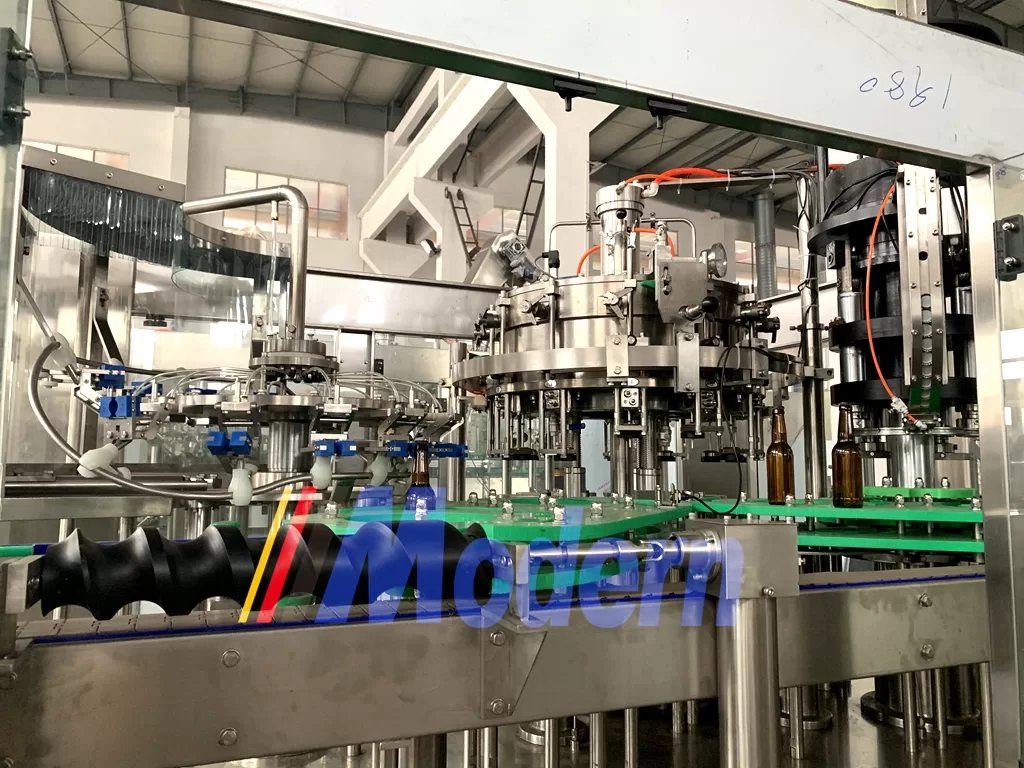
L'industrie des boissons connaît une croissance rapide, alimentée par la demande croissante des consommateurs pour une variété de boissons, notamment les jus, l'eau en bouteille et les boissons gazeuses. À mesure que cette demande augmente, les fabricants cherchent à accroître l'efficacité de leur production et à garantir la qualité. Un élément essentiel de ce processus est la machine d'embouteillage de boissons, un équipement spécialisé qui a transformé la manière dont les boissons sont conditionnées et distribuées. Dans cet article, nous explorerons les différents types de machines d'embouteillage, leur fonctionnement, leurs avantages, les facteurs à prendre en compte lors du choix d'une machine et l'avenir de la technologie d'embouteillage.
Comprendre les machines d'embouteillage de boissons
Les machines d'embouteillage de boissons sont des systèmes automatisés conçus pour remplir, boucher et sceller des contenants avec divers types de boissons. Ces machines garantissent que les produits sont conditionnés de manière efficace et sécurisée, éliminant le besoin d'un emballage manuel, qui peut être exigeant en main-d'œuvre et sujet aux erreurs. Les fonctions principales d'une machine d'embouteillage comprennent :
- Le lavage et la stérilisation des bouteilles ou des contenants
- Le remplissage des bouteilles avec la boisson
- Le bouchage ou le scellage des bouteilles
- L'étiquetage des bouteilles (dans certains cas)
Types de machines d'embouteillage de boissons
Il existe plusieurs types de machines d'embouteillage de boissons, chacune adaptée à des applications spécifiques. Voici une présentation des plus courantes :
1. Machines d'embouteillage par gravité
Les machines par gravité utilisent la pesanteur pour remplir les contenants de liquide. Elles sont idéales pour les produits non gazeux, tels que les jus ou l'eau. Ces machines sont simples à utiliser et souvent plus rentables que les alternatives de haute technologie. Cependant, elles peuvent ne pas offrir le même niveau de précision dans les niveaux de remplissage que d'autres systèmes.
2. Machines d'embouteillage sous pression
Pour les boissons gazeuses comme les sodas ou l'eau pétillante, les machines d'embouteillage sous pression sont essentielles. Elles maintiennent les niveaux de carbonatation en utilisant la pression pour introduire la boisson dans les bouteilles. Il est crucial de garantir que la pression appropriée est maintenue tout au long du processus pour éviter la perte de gaz carbonique et obtenir des niveaux de remplissage précis.
3. Machines d'embouteillage sous vide
Les systèmes sous vide sont parfaits pour les produits sensibles à l'oxydation, tels que certains jus et vins. Le vide créé aide à remplir les bouteilles tout en minimisant l'exposition du liquide à l'air. Ce processus améliore la durée de conservation et la qualité des boissons.
4. Machines d'embouteillage rotatives
Les machines d'embouteillage rotatives sont plus sophistiquées et efficaces, comportant plusieurs stations pour le lavage, le remplissage, le bouchage et l'étiquetage. Ces machines sont capables de traiter un volume élevé de produits, ce qui les rend adaptées aux installations de production de moyenne à grande échelle.
Les avantages de l'utilisation des machines d'embouteillage
Investir dans des machines d'embouteillage de boissons avancées apporte de nombreux avantages aux fabricants :
1. Efficacité accrue
L'automatisation du processus d'embouteillage réduit le temps écoulé entre la production et la distribution. Les machines peuvent fonctionner à grande vitesse et remplir des milliers de bouteilles par heure, accélérant ainsi considérablement les délais de production.
2. Constance de la qualité
Les machines d'embouteillage garantissent que chaque bouteille est remplie à un niveau constant et scellée correctement, ce qui réduit la variabilité du produit. Une qualité constante est cruciale pour maintenir la satisfaction des clients et la réputation de la marque.
3. Réduction des coûts de main-d'œuvre
En automatisant le processus d'embouteillage, les entreprises peuvent minimiser les coûts de main-d'œuvre tout en réduisant le risque d'erreur humaine. Cela permet aux employés de se concentrer sur des tâches plus stratégiques au sein de la ligne de production, améliorant ainsi l'efficacité globale de la main-d'œuvre.
4. Propreté et hygiène améliorées
Les machines d'embouteillage sont souvent équipées de systèmes de nettoyage intégrés, garantissant que les bouteilles sont lavées et désinfectées avant le remplissage. Ceci est particulièrement important dans la production alimentaire et de boissons, où les normes d'hygiène sont critiques.
Considérations lors du choix d'une machine d'embouteillage
Choisir la bonne machine d'embouteillage pour vos besoins de production est une décision qui nécessite une réflexion approfondie. Voici plusieurs facteurs à prendre en compte :
1. Type de boisson
Tenez compte du type spécifique de boisson que vous avez l'intention d'embouteiller. Différentes machines répondent à différents produits (par exemple, gazeux vs non gazeux), ce qui influence le choix de l'équipement.
2. Volume de production
Évaluez vos besoins de production. Une production à haut volume peut bénéficier de machines rotatives ou sous pression, tandis que des volumes plus faibles peuvent être adéquatement servis par des options plus simples par gravité.
3. Budget
Investir dans des machines d'embouteillage peut nécessiter un investissement en capital substantiel. Il est essentiel d'évaluer votre budget pour l'achat initial ainsi que pour les coûts opérationnels continus. Considérez le retour sur investissement (ROI) en termes d'efficacité accrue et d'économies potentielles.
4. Flexibilité et évolutivité
À mesure que les demandes du marché changent, vos besoins de production peuvent également évoluer. Choisissez une machine d'embouteillage qui offre une flexibilité en termes de tailles et de types de contenants. Les machines qui peuvent être facilement adaptées ou mises à niveau soutiendront votre croissance à long terme.
5. Exigences de maintenance
Évaluez les besoins de maintenance de la machine. Une machine facile à entretenir minimisera les temps d'arrêt, assurant ainsi des opérations fluides. Vérifiez si le fabricant fournit un support continu et la disponibilité des pièces de rechange.
L'avenir des machines d'embouteillage de boissons
Le paysage de la production de boissons évolue rapidement, tout comme la technologie derrière les machines d'embouteillage. Voici quelques tendances et avancées à anticiper :
1. Intégration de technologies intelligentes
L'automatisation pilotée par l'intelligence artificielle (IA) et l'Internet des objets (IoT) améliore les opérations d'embouteillage. Les machines intelligentes peuvent surveiller les performances en temps réel, diagnostiquer les problèmes et alerter les opérateurs avant qu'ils ne s'aggravent. Ce virage vers la technologie intelligente améliore l'efficacité et réduit les coûts de maintenance.
2. Solutions respectueuses de l'environnement
Face à la sensibilisation croissante des consommateurs à la durabilité, les entreprises recherchent activement des solutions d'emballage respectueuses de l'environnement. Les machines d'embouteillage s'adaptent en intégrant des technologies qui réduisent le gaspillage et la consommation d'énergie. Cette tendance aide non seulement les fabricants à s'aligner sur les préférences des consommateurs, mais renforce également leur profil de responsabilité sociétale.
3. Options de personnalisation
Alors que la demande pour des expériences personnalisées augmente, les fabricants explorent des options de personnalisation dans l'embouteillage. Les machines capables de gérer facilement différentes formes et tailles de bouteilles seront très demandées, faisant de la flexibilité un critère important.
Conclusion
Investir dans une machine d'embouteillage de boissons est crucial pour les fabricants qui cherchent à améliorer leur efficacité opérationnelle, à garantir la qualité de leurs produits et à rester réactifs face aux demandes du marché. En comprenant les différents types de machines disponibles et les facteurs influençant leur sélection, les entreprises peuvent prendre des décisions éclairées qui stimulent la productivité et la croissance. À mesure que la technologie continue d'évoluer, les acteurs de l'industrie des boissons doivent rester attentifs aux innovations dans les machines d'embouteillage qui peuvent optimiser davantage leurs opérations et répondre aux besoins en constante évolution des consommateurs.


