
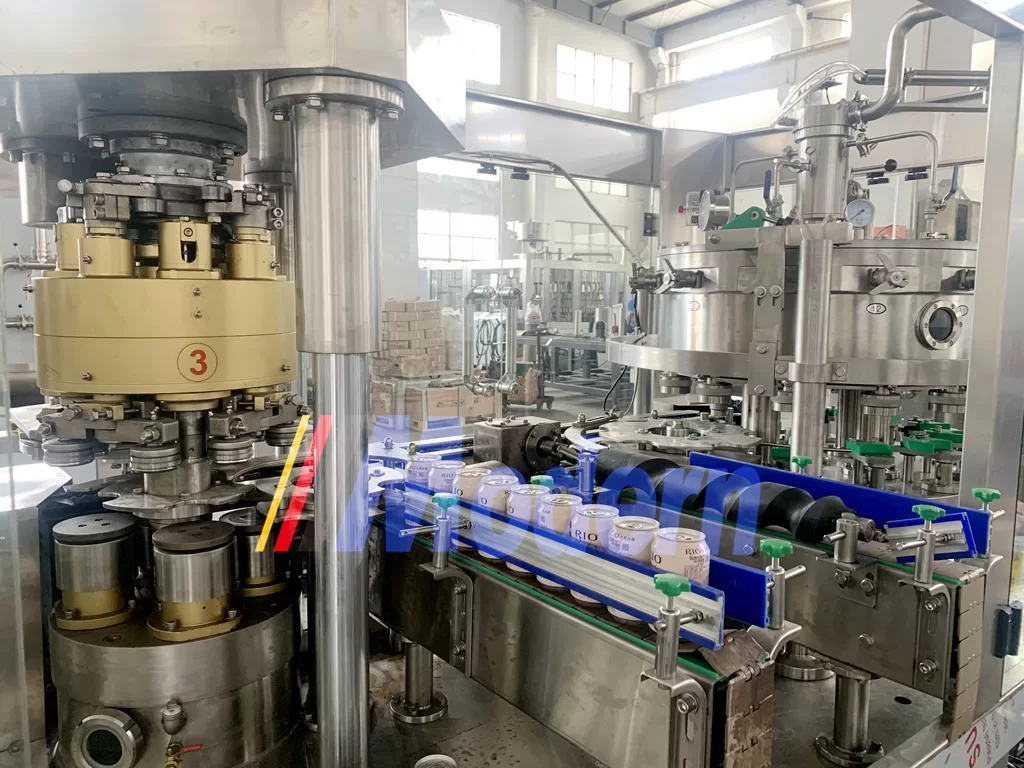
Dans le monde en constante évolution de la production de boissons, garantir une efficacité élevée, une qualité constante et un rendement exceptionnel est primordial, en particulier pour les boissons gazeuses. Pour les fabricants qui cherchent à développer leurs opérations et à améliorer leur productivité, il est crucial de s'associer à un fournisseur fiable de machines de remplissage de canettes pour boissons gazeuses. Cet article examine les différents facteurs à prendre en compte lors du choix d'un fournisseur, les avancées technologiques des machines de remplissage et les tendances futures qui façonnent l'industrie.
Comprendre les machines de remplissage de boissons gazeuses
Les machines de remplissage de canettes pour boissons gazeuses jouent un rôle essentiel dans la ligne de production de boissons. Ces machines sont responsables du remplissage des canettes avec des liquides gazeux tout en préservant l'intégrité et la qualité globale des boissons. Le processus de remplissage comprend généralement plusieurs étapes, notamment le nettoyage, le remplissage, le scellage et l'étiquetage. Les fabricants peuvent opter pour des machines entièrement automatiques ou semi-automatiques, chacune étant adaptée à différentes échelles de production et capacités opérationnelles.
Choisir le bon fournisseur
Identifier le bon fournisseur de machines de remplissage de canettes pour boissons gazeuses peut avoir un impact significatif sur votre efficacité de production et la qualité de vos produits. Voici les facteurs critiques à évaluer lors de la sélection d'un fournisseur :
1. Expérience et réputation dans l'industrie
L'une des premières étapes de l'évaluation des fournisseurs potentiels consiste à prendre en compte leur expérience dans l'industrie. Un fournisseur bien établi avec une solide réputation est plus susceptible de fournir des machines fiables et un support après-vente efficace. Recherchez des fournisseurs qui servent l'industrie des boissons avec succès depuis plusieurs années et qui disposent de témoignages positifs ou d'études de cas mettant en avant leur travail.
2. Avancées technologiques
L'industrie de la production de boissons est très compétitive, d'où la nécessité pour les fournisseurs de rester à la pointe des innovations technologiques. Lors de l'évaluation des fournisseurs, renseignez-vous sur la technologie intégrée à leurs machines de remplissage. Des fonctionnalités avancées telles que le contrôle de vitesse variable, les cycles de nettoyage automatisés et les systèmes de surveillance intelligents peuvent considérablement améliorer la productivité et l'efficacité.
3. Options de personnalisation
Différents fabricants ont des besoins uniques basés sur leurs capacités de production, les types de boissons et les préférences d'emballage. Un bon fournisseur doit offrir des options de personnalisation flexibles pour adapter les machines à vos exigences spécifiques. Cela peut inclure des ajustements du volume de remplissage, la compatibilité avec la taille des canettes et l'intégration avec d'autres systèmes de production.
4. Assurance qualité et conformité
L'assurance qualité est essentielle dans la production de boissons, où la cohérence affecte directement la satisfaction du consommateur. Évaluez les fournisseurs potentiels pour leur engagement envers le contrôle qualité et leur conformité aux réglementations internationales en matière de sécurité et de santé. Les certifications de qualité telles que ISO ou CE peuvent fournir une assurance supplémentaire de la fiabilité d'un fournisseur.
5. Support client et service après-vente
Le niveau de service après-vente et de support client offert par le fournisseur est tout aussi important que l'achat initial. Les temps d'arrêt des machines peuvent entraîner des pertes importantes, et un support rapide pour la maintenance et les réparations est essentiel. Un fournisseur doit fournir un support technique continu, une formation à l'utilisation des machines et un accès facile aux pièces de rechange.
Caractéristiques clés des machines de remplissage de canettes pour boissons gazeuses
L'efficacité et la performance des machines de remplissage de canettes peuvent varier considérablement en fonction de leurs caractéristiques. Lors de la sélection de l'équipement, les fabricants doivent prendre en compte les attributs essentiels suivants :
1. Mécanisme de remplissage
Les mécanismes de remplissage peuvent affecter à la fois la vitesse et la précision du processus de remplissage. Les méthodes de remplissage courantes incluent le remplissage à contre-pression et le remplissage volumétrique. Le remplissage à contre-pression est idéal pour les boissons gazeuses, car il minimise la mousse et la perte de gazéification pendant le processus de remplissage.
2. Technologie de capsulage et de scellage
L'intégrité de la canette est cruciale pour maintenir la qualité du produit. Des mécanismes de capsulage et de scellage efficaces garantissent que la canette reste hermétique, empêchant toute fuite ou contamination. Recherchez des machines dotées de technologies de scellage avancées capables de produire des joints hermétiques.
3. Normes d'hygiène
Compte tenu de la nature de l'industrie des boissons, l'hygiène est primordiale. Les machines de remplissage modernes doivent être conçues pour un nettoyage facile, avec des matériaux résistants à la corrosion et faciles à stériliser. Les équipements dotés de systèmes de nettoyage automatisés peuvent réduire considérablement les temps d'arrêt et améliorer les normes d'hygiène.
Tendances et innovations dans la technologie de remplissage de canettes
L'industrie des boissons subit des transformations continues dictées par la technologie et les demandes des consommateurs. Rester informé des tendances et des innovations peut aider les fabricants à rester compétitifs :
1. Initiatives de durabilité
Face aux préoccupations croissantes concernant la durabilité environnementale, les fabricants de boissons cherchent des moyens de réduire les déchets et l'empreinte carbone. Les fournisseurs de machines de remplissage de boissons gazeuses réagissent en développant des équipements économes en énergie et en utilisant des matériaux durables. L'incorporation de matériaux de canettes recyclables et la conception de machines pour une consommation d'énergie minimale deviennent des pratiques courantes.
2. Technologie intelligente et automatisation
L'intégration de la technologie intelligente et de l'automatisation révolutionne les lignes de production. Les machines de remplissage de canettes avancées dotées de capacités IoT permettent une surveillance en temps réel des indicateurs de production, une maintenance prédictive et des analyses améliorées. Ces technologies aident les fabricants à optimiser les processus et à augmenter l'efficacité opérationnelle.
3. Augmentation des vitesses de production
À mesure que les demandes des consommateurs augmentent, le besoin de vitesses de production plus élevées est devenu critique. Les fournisseurs innovent pour développer des machines capables de supporter des cadences de remplissage plus rapides sans sacrifier la qualité. Des conceptions améliorées facilitent le capsulage et l'étiquetage simultanés, rationalisant ainsi le flux de travail de production.
Évaluation des prix et du coût total de possession
Bien que les coûts d'achat initiaux soient une considération essentielle, les fabricants doivent également évaluer le coût total de possession (TCO). Le TCO comprend les coûts de maintenance, la consommation d'énergie et les économies potentielles réalisées grâce à une efficacité accrue. Il est conseillé d'obtenir des devis détaillés auprès des fournisseurs qui ventilent tous les coûts associés sur la durée de vie prévue de la machine.
Conclusion
La sélection du bon fournisseur de machines de remplissage de canettes pour boissons gazeuses nécessite une attention particulière à divers facteurs, notamment l'expérience du fournisseur, les avancées technologiques, la personnalisation et les services de support. Alors que l'industrie continue d'évoluer, il est essentiel de rester au courant des tendances d'innovation et de s'adapter aux demandes des consommateurs. En investissant dans des machines de qualité et en favorisant des partenariats avec des fournisseurs réputés, les fabricants de boissons peuvent améliorer leurs capacités de production et assurer leur durabilité sur un marché de plus en plus concurrentiel.
En conclusion, prenez des décisions éclairées basées sur des recherches approfondies et une communication avec les fournisseurs potentiels pour garantir que votre ligne de production de boissons fonctionne de manière efficace et efficiente, répondant aux attentes des clients ainsi qu'aux normes de l'industrie.


