
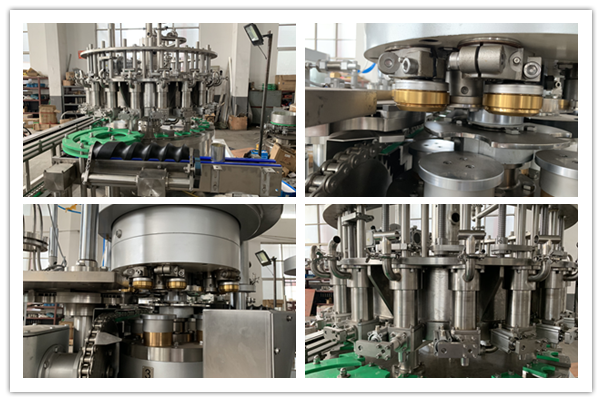
Dans le monde en évolution rapide de la fabrication agroalimentaire, l'efficacité et la précision sont primordiales. L'un des composants les plus critiques de ce processus est la machine de remplissage de canettes. Ces machines sont conçues pour automatiser le remplissage des canettes avec divers liquides, allant des boissons gazeuses aux huiles et sauces. Alors que la demande de produits emballés continue d'augmenter à l'échelle mondiale, l'importance de choisir le bon fabricant de machines de remplissage de canettes ne peut être surestimée. Cet article explorera les divers aspects des machines de remplissage de canettes, en examinant le paysage du marché, les facteurs à prendre en compte lors du choix d'un fabricant et les tendances futures du secteur.
Comprendre les machines de remplissage de canettes
Les machines de remplissage de canettes sont des équipements spécialisés utilisés pour remplir les canettes de produits de manière cohérente et efficace. On les trouve dans plusieurs secteurs, notamment les boissons non alcoolisées, les jus, les boissons alcoolisées et même les articles non alimentaires, tels que les produits chimiques et pharmaceutiques. Les machines fonctionnent généralement en cycle continu, garantissant des cadences de production rapides, ce qui est essentiel pour répondre aux fortes demandes des consommateurs.
Les types de machines de remplissage de canettes
Les machines de remplissage de canettes peuvent être classées en plusieurs types en fonction de la technique de remplissage qu'elles utilisent :
- Machines de remplissage volumétrique : Ces machines remplissent les canettes selon un volume défini. Cette méthode est très précise et idéale pour des produits comme les jus et les sauces.
- Soutireuses par gravité : Utilisant la gravité pour remplir les canettes, ces machines sont généralement plus abordables et plus faciles à utiliser. Elles conviennent aux produits plus visqueux mais peuvent manquer de précision.
- Soutireuses à pression : Conçues pour les boissons gazeuses, ces machines maintiennent un environnement contrôlé pour éviter la formation de mousse pendant le processus de remplissage.
- Machines de remplissage à piston : Très précises et polyvalentes, ces machines peuvent traiter une variété de produits, des liquides fluides aux pâtes épaisses.
Le paysage du marché des machines de remplissage de canettes
Le marché mondial des machines de remplissage de canettes se développe rapidement, alimenté par des facteurs tels que l'augmentation de la consommation de plats préparés et la croissance de l'industrie des boissons. Selon les études de marché, la demande de machines de remplissage de canettes devrait croître de manière significative dans les années à venir, portée par les investissements dans les nouvelles technologies et l'accent croissant mis sur la durabilité.
Les marchés émergents, en particulier en Asie-Pacifique et en Afrique, connaissent une croissance substantielle en raison de la hausse du revenu disponible et de l'urbanisation. Les entreprises tirent parti de ces tendances pour introduire des solutions de remplissage évolutives qui répondent aux besoins locaux, renforçant ainsi leur présence sur le marché et leur compétitivité. De plus, avec la sensibilisation croissante des consommateurs aux questions environnementales, les fabricants adoptent de plus en plus de pratiques durables dans leurs opérations.
Facteurs à prendre en compte lors du choix d'un fabricant de machines de remplissage de canettes
Choisir le bon fabricant de machines de remplissage de canettes est crucial pour atteindre l'efficacité opérationnelle et atteindre les objectifs de production. Voici les facteurs clés à prendre en compte :
1. Expertise industrielle
Sélectionnez un fabricant possédant une expertise avérée dans votre secteur spécifique. La compréhension des exigences uniques des secteurs de l'alimentation, des boissons ou de la chimie peut affecter considérablement les performances et la fiabilité de la machine.
2. Technologie et innovation
Mettez l'accent sur les fabricants qui investissent dans des technologies de pointe. Des innovations telles que l'automatisation, l'intégration de l'IoT et le contrôle qualité avancé peuvent améliorer la productivité et réduire les coûts opérationnels. Un fabricant qui suit les avancées technologiques répondra mieux à l'évolution de vos besoins de production.
3. Options de personnalisation
Chaque ligne de production est différente, et la capacité de personnaliser les machines peut faire une différence significative. Choisissez des fabricants qui proposent des solutions sur mesure adaptées à vos exigences de production spécifiques, notamment les tailles de canettes, les formes et les types de produits.
4. Assurance qualité et normes
Assurez-vous que le fabricant adhère aux normes de qualité internationales, telles que la certification ISO. Des processus d'assurance qualité doivent être en place pour garantir la fiabilité et la longévité des machines de remplissage de canettes. Des audits réguliers et des tests rigoureux doivent faire partie du système de gestion de la qualité.
5. Support client et maintenance
Les services de support après-vente et de maintenance sont des facteurs critiques pour garantir une production ininterrompue. Un fabricant réputé doit offrir un support complet, incluant l'installation, la formation et des programmes de maintenance réguliers, ce qui peut aider à prévenir des temps d'arrêt coûteux.
Tendances façonnant l'avenir des machines de remplissage de canettes
L'industrie des machines de remplissage de canettes subit des transformations importantes, influencées par diverses tendances :
1. Automatisation et Industrie 4.0
La montée de l'automatisation dans les processus de fabrication est une tendance majeure, car les entreprises cherchent à améliorer leur efficacité et à réduire leurs coûts de main-d'œuvre. Les technologies de l'Industrie 4.0, notamment l'Internet des objets (IoT) et l'analyse de données massives, sont intégrées dans les machines de remplissage de canettes, permettant une surveillance en temps réel et une maintenance prédictive.
2. Pratiques de durabilité
Avec l'examen croissant des questions environnementales, les fabricants adoptent des pratiques durables dans leurs opérations. Cela inclut l'utilisation de matériaux respectueux de l'environnement, la minimisation de la production de déchets et l'optimisation de la consommation d'énergie, ce qui peut entraîner une baisse des coûts d'exploitation tout en séduisant les consommateurs soucieux de l'environnement.
3. Fonctionnalités de sécurité améliorées
La sécurité est primordiale dans toute installation de fabrication. Les dernières machines de remplissage de canettes intègrent des fonctionnalités de sécurité avancées conçues pour protéger les opérateurs et garantir la conformité aux réglementations industrielles strictes. Cela inclut des capteurs pour détecter les dysfonctionnements et des fonctions d'arrêt d'urgence, améliorant ainsi la sécurité globale sur le lieu de travail.
Conclusion
Le choix d'un fabricant de machines de remplissage de canettes a des implications importantes pour l'efficacité opérationnelle, la qualité des produits et le succès global de l'entreprise. En comprenant les types de machines disponibles, la dynamique du marché et les critères de sélection critiques, vous pouvez prendre une décision éclairée qui s'aligne sur vos objectifs de production.
Alors que le marché continue d'évoluer, garder une longueur d'avance sur les tendances telles que l'automatisation, la durabilité et la sécurité sera essentiel pour les fabricants des secteurs de l'alimentation, des boissons et de la chimie. Sélectionnez un partenaire qui non seulement répond aux demandes actuelles, mais qui est également prêt pour une croissance future, garantissant que votre ligne de production reste efficace et compétitive dans un paysage en évolution rapide.


