
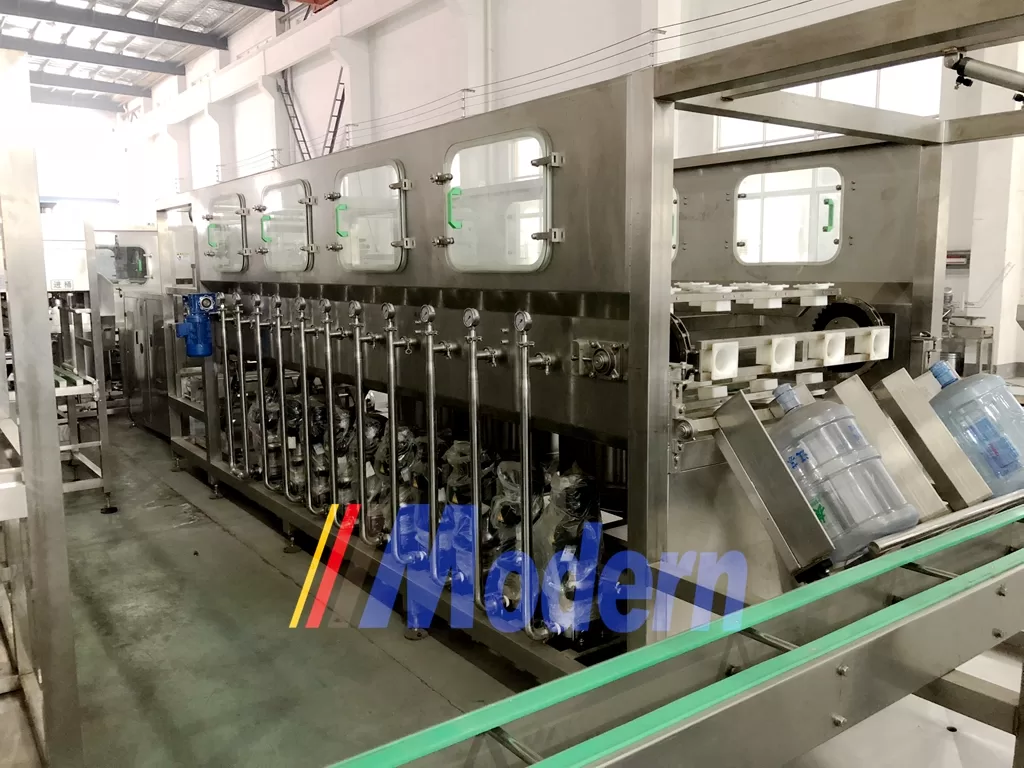
Bienvenue dans cette exploration approfondie des composants clés qui constituent une ligne d'embouteillage d'eau moderne. Alors que la demande mondiale en eau embouteillée ne cesse de croître, des processus d'embouteillage efficaces et de haute qualité sont devenus essentiels pour permettre aux fabricants de répondre aux besoins des consommateurs. Dans cet article, nous examinerons les divers éléments qui composent une ligne d'embouteillage d'eau à la pointe de la technologie, en soulignant leurs fonctions et leur importance pour garantir une exploitation fluide et productive.
1. Système de traitement de l'eau
Au début du processus d'embouteillage, l'eau est soumise à un système de traitement complet pour garantir qu'elle répond aux normes de qualité nécessaires. Ce système comprend généralement des processus tels que la filtration, la purification et la désinfection afin d'éliminer les impuretés, les bactéries et les contaminants présents dans l'eau.
2. Équipement de lavage des bouteilles
Avant le remplissage, les bouteilles doivent être soigneusement nettoyées et désinfectées pour préserver l'intégrité et la sécurité du produit. L'équipement de lavage des bouteilles se compose généralement de laveuses haute pression, de pulvérisateurs de désinfectant et de tunnels de rinçage pour garantir que les bouteilles sont exemptes de tout débris ou contaminant.
3. Machine de remplissage
La machine de remplissage est un composant crucial de la ligne d'embouteillage, responsable du remplissage précis des bouteilles nettoyées avec de l'eau. Les machines de remplissage modernes sont équipées d'une technologie avancée pour contrôler les niveaux de remplissage, éviter les déversements et maintenir la cohérence des volumes, garantissant ainsi que chaque bouteille est remplie précisément au niveau souhaité.
4. Capsuleuse
Après le remplissage, les bouteilles sont scellées avec des bouchons pour éviter toute contamination et garantir la fraîcheur du produit. La capsuleuse joue un rôle essentiel dans le scellage sécurisé des bouteilles, avec des options adaptées à divers styles de bouchons tels que les bouchons à vis, les bouchons à pression ou les bouchons sport, selon les exigences du produit.
5. Systèmes d'étiquetage et de codage
Les systèmes d'étiquetage et de codage sont utilisés pour apposer des étiquettes contenant des informations importantes sur le produit, telles que les ingrédients, les dates de péremption et la marque. Les étiqueteuses avancées peuvent gérer diverses tailles, formes et matériaux d'étiquettes, tandis que les systèmes de codage assurent la traçabilité en imprimant les numéros de lot et les codes de date sur les bouteilles.
6. Équipement de conditionnement
Une fois les bouteilles remplies, scellées et étiquetées, elles sont acheminées vers l'équipement de conditionnement pour le regroupement et l'emballage final. Cet équipement comprend des encaisseuses, des fardeleuses sous film rétractable et des palettiseurs qui automatisent le processus d'emballage et préparent les bouteilles pour l'expédition et la distribution.
7. Systèmes de contrôle qualité
Des systèmes de contrôle qualité sont intégrés tout au long de la ligne d'embouteillage pour surveiller et garantir la qualité du produit à chaque étape de la production. Cela inclut des capteurs, des caméras et des systèmes d'inspection automatisés qui détectent les défauts, les contaminants ou les incohérences dans les bouteilles, permettant ainsi de prendre des mesures correctives en temps opportun.
8. Systèmes de convoyage
Les systèmes de convoyage jouent un rôle crucial dans le transport efficace des bouteilles entre les différentes étapes de la ligne d'embouteillage. Les systèmes de convoyage modernes sont conçus pour être modulaires, flexibles et économes en énergie, permettant un mouvement fluide des bouteilles tout en minimisant les temps d'arrêt et les pertes de produit.
9. Automatisation et intégration
L'automatisation et l'intégration ont révolutionné l'efficacité et la productivité des lignes d'embouteillage d'eau. En intégrant de manière transparente divers composants et systèmes, l'automatisation réduit le travail manuel, minimise les erreurs et augmente la capacité de production, conduisant finalement à une exploitation rationalisée et rentable.
10. Initiatives de développement durable
Avec l'accent croissant mis sur le développement durable, les lignes d'embouteillage d'eau modernes intègrent des pratiques et des technologies respectueuses de l'environnement pour réduire leur impact écologique. Cela inclut l'utilisation de matériaux recyclés pour l'emballage, la mise en œuvre de machines économes en énergie et l'optimisation de la consommation d'eau afin de minimiser les déchets et de promouvoir la durabilité dans le processus de production.
Conclusion
En conclusion, la ligne d'embouteillage d'eau moderne comprend une multitude de composants et de systèmes avancés qui travaillent ensemble pour assurer une production efficace, hygiénique et de haute qualité de l'eau embouteillée. En investissant dans des équipements de pointe, en intégrant l'automatisation et en adoptant des pratiques durables, les fabricants peuvent répondre à la demande croissante en eau embouteillée tout en maintenant l'excellence opérationnelle et en répondant aux attentes des consommateurs en matière de produits sûrs et fiables.


