
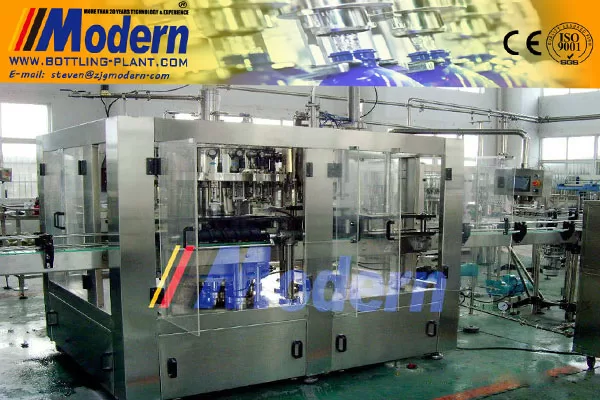
Les machines de remplissage de bouteilles en verre sont des équipements essentiels pour toute ligne de production traitant des boissons ou des liquides. La machine adaptée peut considérablement améliorer l'efficacité, la précision et la productivité globale. Cependant, avec la variété d'options disponibles sur le marché, choisir la meilleure machine de remplissage de bouteilles en verre pour vos besoins de production spécifiques peut s'avérer une tâche ardue. Dans ce guide, nous vous fournirons des conseils pratiques et des informations pour vous aider à prendre une décision éclairée.
Évaluation de la capacité de production
L'une des premières considérations lors du choix d'une remplisseuse de bouteilles en verre est l'évaluation de votre capacité de production. Déterminez le volume de bouteilles que vous devez remplir par heure ou par jour. Cela vous aidera à choisir une machine capable de répondre à vos exigences de production sans être surdimensionnée ou sous-dimensionnée. Assurez-vous que la vitesse et le rendement de la machine correspondent à vos besoins de production actuels et futurs.
Types de technologie de remplissage
Il existe diverses technologies de remplissage pour les machines de remplissage de bouteilles en verre, telles que le remplissage par gravité, le remplissage à piston, le remplissage sous vide et le remplissage sous pression. Chaque technologie présente ses avantages et ses inconvénients, et la pertinence dépend du type de liquide que vous remplissez, de sa viscosité, de la formation de mousse et de la précision requise. Effectuez des recherches approfondies sur les différentes technologies pour choisir celle qui convient le mieux à votre produit et à votre processus de production.
Considérez la taille et la forme des bouteilles
Un autre facteur crucial à prendre en compte est la taille et la forme des bouteilles en verre que vous allez remplir. Assurez-vous que la machine que vous choisissez peut s'adapter à la gamme de tailles et de formes de bouteilles avec lesquelles vous travaillez. Certaines machines peuvent être limitées dans les types de bouteilles qu'elles peuvent traiter, il est donc essentiel d'en sélectionner une qui offre une flexibilité à cet égard.
Niveau d'automatisation
L'automatisation peut considérablement améliorer l'efficacité et réduire les erreurs humaines dans le processus de remplissage. Considérez le niveau d'automatisation dont vous avez besoin en fonction de votre volume de production et de votre budget. Les machines entièrement automatiques sont plus coûteuses mais offrent une grande efficacité, tandis que les machines semi-automatiques peuvent nécessiter plus d'intervention manuelle mais sont rentables pour les petites opérations.
Compatibilité des matériaux
Lors du choix d'une remplisseuse de bouteilles en verre, assurez-vous qu'elle est compatible avec le type de liquide que vous allez remplir. Certains liquides peuvent nécessiter des matériaux ou des revêtements spéciaux pour éviter la corrosion ou la contamination. Vérifiez si les composants de la machine qui entrent en contact avec le liquide sont fabriqués à partir de matériaux de qualité alimentaire et sont faciles à nettoyer et à entretenir.
Qualité et durabilité
Investir dans une remplisseuse de bouteilles en verre durable et de haute qualité est crucial pour la productivité et la rentabilité à long terme. Recherchez des machines de fabricants réputés pour leur fiabilité et la qualité de leur construction. Tenez compte de facteurs tels que les exigences de maintenance, la disponibilité des pièces de rechange et la qualité globale de fabrication pour garantir une longue durée de vie à votre machine.
Support après-vente et services
Choisissez un fournisseur qui offre un excellent support après-vente et des services pour votre remplisseuse de bouteilles en verre. Avoir accès à une assistance technique, à des services de maintenance et à des pièces de rechange peut aider à minimiser les temps d'arrêt et à assurer le bon fonctionnement de vos opérations. Tenez compte de la réputation du fournisseur, des offres de garantie et des avis des clients lors de votre décision.
Coût et retour sur investissement
Bien que le coût soit un facteur important dans le choix d'une remplisseuse de bouteilles en verre, il est essentiel de considérer également le retour sur investissement (ROI) à long terme. Évaluez le coût d'achat initial, les dépenses opérationnelles, les coûts de maintenance et les économies potentielles en termes d'efficacité de production. Calculez le ROI en fonction de l'augmentation de la productivité, de la réduction des déchets et de l'amélioration de la qualité du produit pour prendre une décision éclairée.
Tests et essais
Avant de finaliser votre achat, envisagez d'effectuer des tests et des essais avec la remplisseuse de bouteilles en verre. Cela vous permettra d'évaluer ses performances, sa précision et sa compatibilité avec vos exigences de production spécifiques. Travaillez en étroite collaboration avec le fournisseur pour optimiser les réglages de la machine et assurer une intégration transparente dans votre ligne de production.
Conclusion
Choisir la meilleure remplisseuse de bouteilles en verre pour votre ligne de production nécessite une attention particulière à divers facteurs, de la capacité de production et de la technologie de remplissage au niveau d'automatisation et à la compatibilité des matériaux. En évaluant ces aspects et en effectuant des recherches approfondies, vous pouvez sélectionner une machine qui répond à vos besoins spécifiques et améliore votre efficacité de production. N'oubliez pas de privilégier la qualité, la durabilité et le support après-vente pour maximiser les avantages à long terme de votre investissement.
Avec la bonne remplisseuse de bouteilles en verre en place, vous pouvez rationaliser vos processus de production, assurer la cohérence des produits et stimuler la croissance globale de votre entreprise.


