
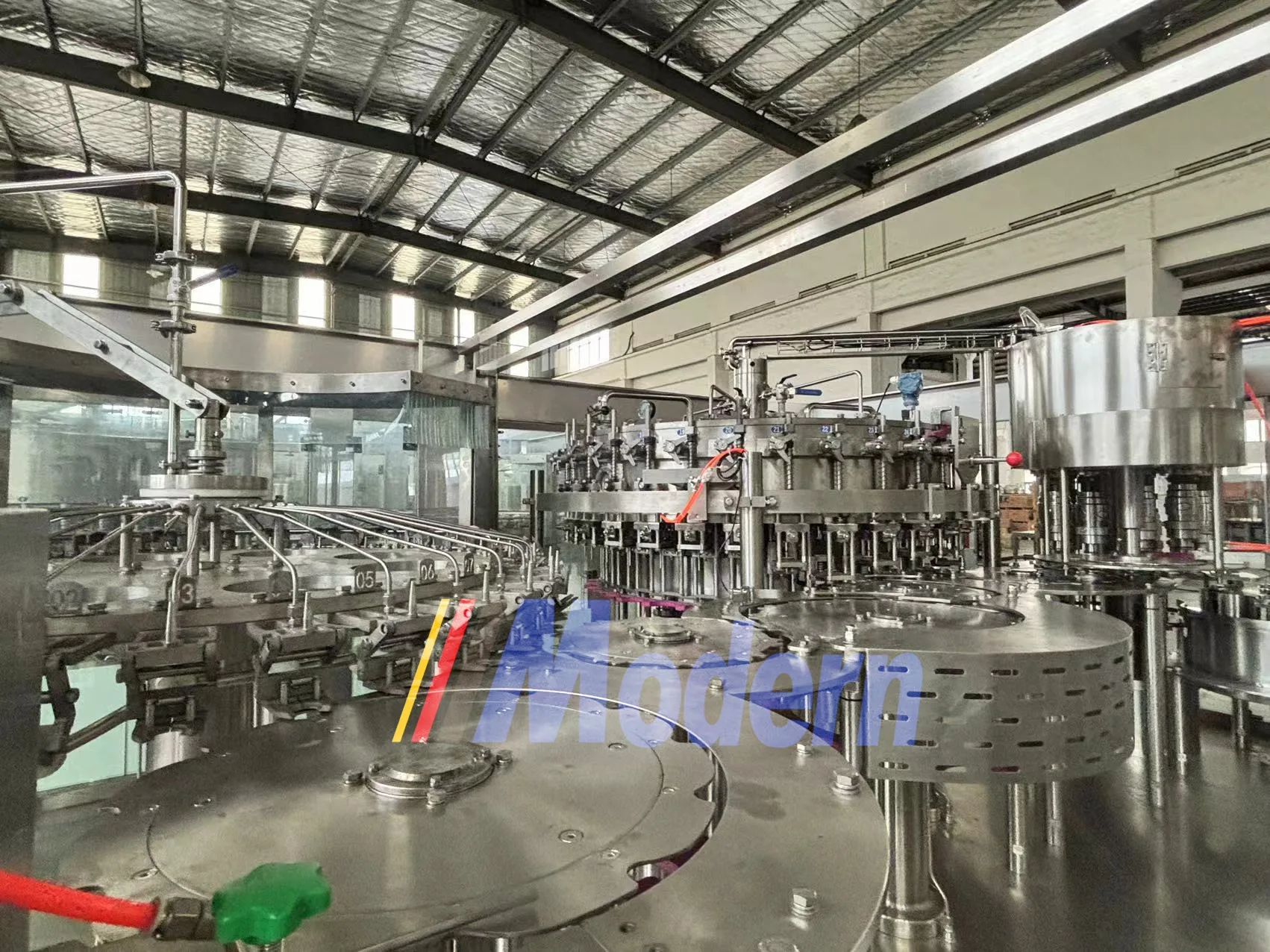
Vue d'ensemble et introduction
Dans le paysage industriel actuel en évolution rapide, l'intégration de la robotique a révolutionné l'efficacité et la productivité des lignes de conditionnement de boissons. Alors que l'automatisation devient de plus en plus essentielle pour optimiser les opérations, l'utilisation de la robotique dans le conditionnement des boissons a pris une ampleur considérable. Cet article explore l'impact profond de la robotique sur la rationalisation des lignes de conditionnement de boissons, en examinant ses avantages, ses applications, ses subtilités techniques et ses perspectives d'avenir.
Avantages et bénéfices
L'utilisation de la robotique dans les lignes de conditionnement de boissons offre une myriade d'avantages aux fabricants, notamment une vitesse, une précision et une cohérence accrues dans les processus de conditionnement. En automatisant les tâches répétitives, la robotique réduit considérablement les besoins en main-d'œuvre manuelle, ce qui permet d'augmenter le débit et de réduire les coûts opérationnels. De plus, l'intégration de la robotique garantit une meilleure qualité des produits et minimise le risque d'erreurs, améliorant ainsi l'efficacité globale de la production et la satisfaction des clients.
Types et variantes de robotique dans le conditionnement des boissons
Il existe différents types de systèmes robotiques pouvant être déployés sur les lignes de conditionnement de boissons, allant des bras robotisés et des robots de prélèvement et de placement aux véhicules à guidage automatique (AGV) et aux robots collaboratifs (cobots). Chaque type offre des capacités et des fonctionnalités uniques, répondant à différentes exigences de conditionnement et échelles de production. Les fabricants peuvent choisir la solution robotique la plus adaptée en fonction de facteurs tels que la vitesse de la ligne, la capacité de charge utile et la flexibilité.
Applications et cas d'utilisation
La robotique joue un rôle crucial dans la rationalisation des lignes de conditionnement de boissons pour diverses applications, notamment l'embouteillage, la mise en conserve, l'étiquetage et la palettisation. Dans les opérations d'embouteillage, les systèmes robotisés peuvent gérer efficacement le tri, le remplissage et le bouchage des bouteilles avec précision et rapidité. Dans les applications de mise en conserve, les robots assurent des processus fluides de manipulation, de remplissage et de scellage des boîtes, contribuant ainsi à une qualité de produit constante et à une efficacité opérationnelle. De plus, la robotique est largement utilisée pour les tâches d'étiquetage et de palettisation, optimisant l'ensemble du flux de travail de la ligne de conditionnement.
Détails techniques et opérationnels
L'efficacité opérationnelle de la robotique dans les lignes de conditionnement de boissons est attribuée à ses caractéristiques techniques et capacités avancées. Ces systèmes sont équipés de capteurs, de systèmes de vision et de technologies de contrôle de mouvement qui permettent un mouvement précis et synchronisé, assurant une intégration transparente avec les équipements de conditionnement existants. De plus, la flexibilité et la programmabilité de la robotique permettent une personnalisation et une adaptation faciles aux exigences de production changeantes, améliorant ainsi la polyvalence opérationnelle et l'évolutivité.
Meilleures pratiques, conseils et directives de maintenance
Pour maximiser les avantages de la robotique dans les lignes de conditionnement de boissons, les fabricants doivent respecter les meilleures pratiques et les directives de maintenance. Des contrôles de maintenance réguliers, l'étalonnage et les mises à jour logicielles sont essentiels pour garantir des performances optimales et la longévité des systèmes robotiques. La formation des opérateurs aux techniques appropriées de programmation et de dépannage est cruciale pour une utilisation efficace de la robotique. De plus, la mise en œuvre de protocoles de sécurité et d'évaluations des risques peut atténuer les dangers potentiels associés aux opérations robotiques, garantissant ainsi un environnement de travail sûr.
Tendances du marché et perspectives de l'industrie
L'industrie du conditionnement des boissons est témoin de tendances et d'innovations dynamiques portées par la technologie robotique. L'accent croissant mis sur la durabilité et les solutions de conditionnement respectueuses de l'environnement a stimulé le développement de systèmes robotiques qui minimisent les déchets et la consommation d'énergie. Des innovations telles que les robots collaboratifs et les systèmes de vision robotique transforment les opérations de conditionnement des boissons, améliorant la précision, la vitesse et l'adaptabilité. À mesure que l'industrie évolue, la robotique continuera de jouer un rôle central dans le façonnement de l'avenir du conditionnement des boissons.
Défis et solutions
Bien que la robotique offre de nombreux avantages pour rationaliser les lignes de conditionnement de boissons, elle pose également certains défis tels que les coûts d'investissement initiaux, les complexités d'intégration et les exigences de maintenance. Les fabricants peuvent surmonter ces défis en effectuant des analyses coûts-avantages approfondies, en collaborant avec des intégrateurs robotiques expérimentés et en investissant dans des programmes de formation des employés. En mettant en œuvre des stratégies de maintenance proactive et une optimisation continue des processus, les entreprises peuvent relever les défis efficacement et maximiser le retour sur investissement de leurs investissements robotiques.
Durabilité et perspectives d'avenir
L'incorporation de la robotique dans les lignes de conditionnement de boissons s'aligne sur l'accent croissant mis par l'industrie sur la durabilité et la responsabilité environnementale. La robotique permet une utilisation efficace des ressources, une réduction des déchets et une consommation d'énergie optimisée dans les opérations de conditionnement, contribuant ainsi à une chaîne d'approvisionnement plus verte. À l'avenir, le conditionnement des boissons se caractérisera par une automatisation accrue, des systèmes robotiques intelligents et des processus de fabrication interconnectés qui privilégient la durabilité et l'excellence opérationnelle.
En conclusion, l'intégration de la robotique dans les lignes de conditionnement de boissons représente une avancée majeure qui favorise l'efficacité opérationnelle, l'assurance qualité et la durabilité dans l'industrie. En adoptant les technologies robotiques, les fabricants peuvent rationaliser leurs processus de conditionnement, améliorer leur productivité et rester compétitifs dans un paysage de marché en évolution rapide. À mesure que la robotique continue d'évoluer et d'innover, son impact transformateur sur les lignes de conditionnement de boissons continuera de redéfinir les normes de l'industrie et de propulser le secteur vers un avenir plus efficace et durable.


