
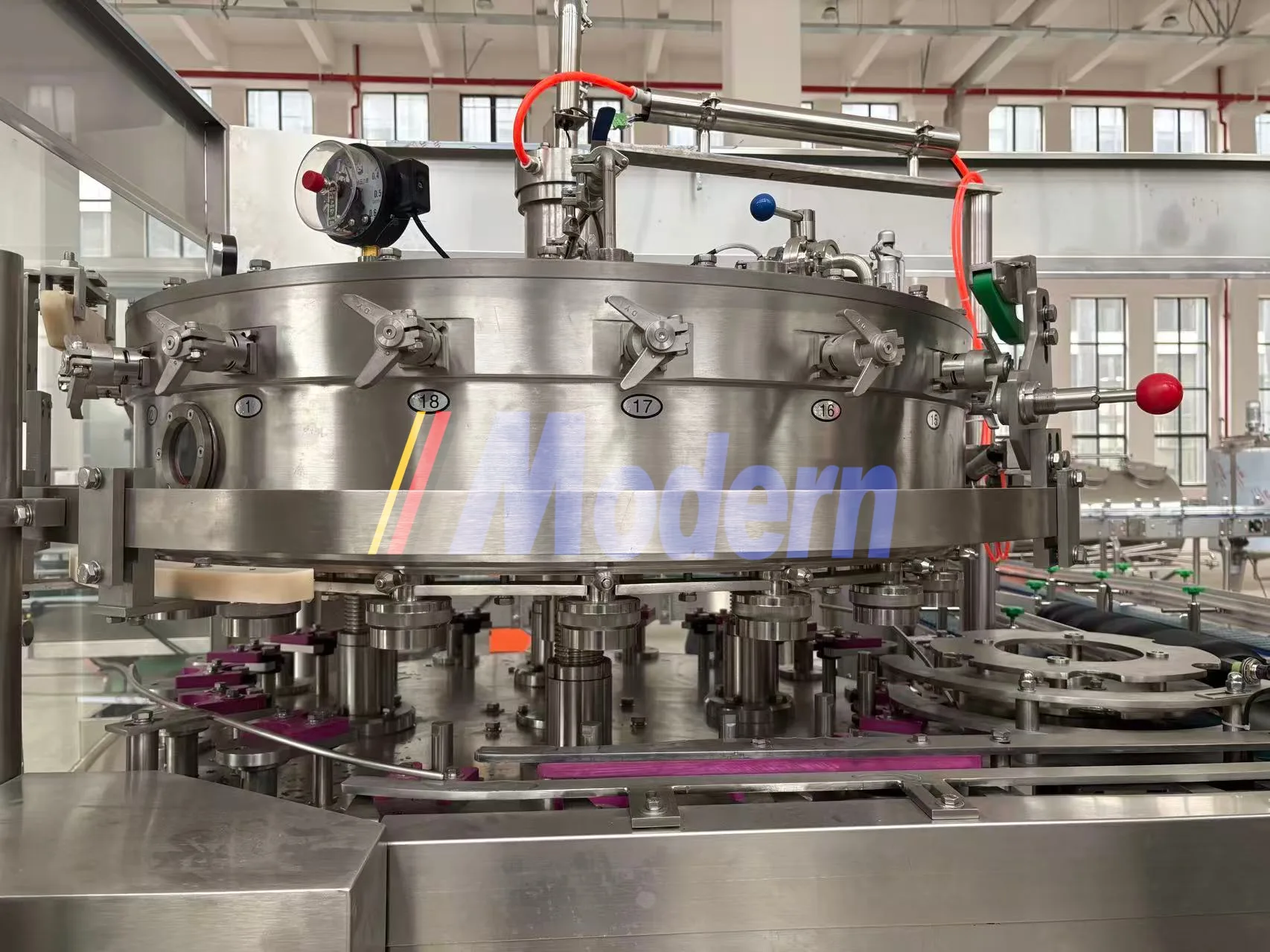
Dans le paysage manufacturier concurrentiel d'aujourd'hui, l'efficacité et la rentabilité sont primordiales. Les lignes de remplissage multifonctions sont devenues un atout majeur pour de nombreuses industries, offrant une solution polyvalente et rationalisée pour optimiser les processus de production. Dans cet article, nous examinerons les différentes manières dont les lignes de remplissage multifonctions peuvent réduire considérablement les coûts de production tout en améliorant l'efficacité opérationnelle.
Vue d'ensemble
Les lignes de remplissage multifonctions sont des systèmes avancés qui combinent plusieurs fonctions telles que le remplissage, le bouchage, l'étiquetage et l'emballage au sein d'une seule installation intégrée. Ces lignes sont conçues pour traiter divers types de contenants, de produits et de formats d'emballage, offrant aux fabricants une flexibilité et une polyvalence inégalées. En automatisant et en synchronisant plusieurs tâches, les lignes de remplissage multifonctions rationalisent les processus de production, minimisent les temps d'arrêt et augmentent l'efficacité globale.
Avantages des lignes de remplissage multifonctions
- Économies de coûts : En regroupant plusieurs opérations sur une seule ligne, les fabricants peuvent réduire les coûts de main-d'œuvre, minimiser le gaspillage de matériaux et optimiser le rendement de production.
- Productivité accrue : Les lignes de remplissage multifonctions fonctionnent à des vitesses plus élevées et avec une plus grande précision que les systèmes manuels ou semi-automatisés traditionnels, ce qui entraîne une augmentation de la productivité et du rendement.
- Contrôle qualité amélioré : Ces systèmes avancés garantissent une précision de remplissage constante, un scellage approprié et un étiquetage précis, ce qui se traduit par une meilleure qualité de produit et une plus grande satisfaction client.
- Flexibilité et adaptabilité : Les lignes de remplissage multifonctions peuvent être facilement personnalisées pour s'adapter aux exigences de production changeantes, aux lancements de nouveaux produits et à l'évolution des tendances du marché.
Types de lignes de remplissage multifonctions
Il existe plusieurs types de lignes de remplissage multifonctions sur le marché, chacune adaptée à des industries et des applications spécifiques. Voici quelques variantes courantes :
- Lignes de remplissage rotatives : Idéales pour les environnements de production à haute vitesse, les lignes de remplissage rotatives peuvent traiter une large gamme de produits et de contenants avec précision.
- Systèmes de remplissage en ligne : Ces configurations linéaires conviennent aux cycles de production de volume moyen à élevé, offrant des capacités efficaces et séquentielles de remplissage, de bouchage et d'étiquetage.
- Lignes de remplissage volumétrique : Utilisant des mécanismes de dosage volumétrique précis, ces lignes sont parfaites pour remplir avec précision des liquides, des pâtes et des produits visqueux dans des contenants.
Applications des lignes de remplissage multifonctions
Les lignes de remplissage multifonctions sont largement utilisées dans des secteurs tels que l'industrie pharmaceutique, les cosmétiques, l'agroalimentaire, les produits chimiques ménagers, et plus encore. Les applications courantes incluent :
- Mise en bouteille et bouchage : Automatisation du remplissage et du bouchage de bouteilles avec des liquides, des poudres ou des crèmes
- Emballage et étiquetage : Intégration des fonctions d'emballage et d'étiquetage pour une finition efficace des produits
- Scellage et emballage : Assurer le scellage et le conditionnement appropriés des produits pour la distribution et la vente au détail
Spécifications techniques et meilleures pratiques
Lors de la sélection d'une ligne de remplissage multifonction, il est essentiel de prendre en compte des spécifications clés telles que la vitesse, la précision, la compatibilité des contenants et la facilité d'entretien. De plus, le respect de ces meilleures pratiques peut optimiser les performances de la ligne de remplissage :
- Maintenance régulière : Planifiez des inspections et une maintenance de routine pour éviter les temps d'arrêt et garantir un fonctionnement constant.
- Formation des opérateurs : Offrez une formation complète aux opérateurs pour maximiser l'efficacité et minimiser les erreurs pendant le fonctionnement.
- Contrôles de qualité : Mettez en œuvre des mesures de contrôle qualité strictes pour maintenir la cohérence des produits et respecter les normes réglementaires.
Tendances du marché et perspectives d'avenir
Le marché des lignes de remplissage multifonctions connaît des avancées rapides en matière d'automatisation, d'intégration avec les technologies de l'Industrie 4.0 et d'initiatives de développement durable. Les fabricants adoptent de plus en plus des solutions de remplissage intelligentes qui offrent une surveillance en temps réel, une maintenance prédictive et un fonctionnement économe en énergie. Les perspectives d'avenir pour les lignes de remplissage multifonctions pointent vers une plus grande efficacité, un impact environnemental réduit et des capacités de personnalisation améliorées pour répondre aux demandes changeantes des consommateurs.
Conclusion
Les lignes de remplissage multifonctions représentent une avancée significative dans le secteur manufacturier, offrant une solution complète pour rationaliser les processus de production, réduire les coûts et améliorer la qualité des produits. En exploitant efficacement ces systèmes avancés et en restant informés des tendances de l'industrie, les fabricants peuvent garder une longueur d'avance sur la concurrence, améliorer leur efficacité opérationnelle et stimuler une croissance durable.


