
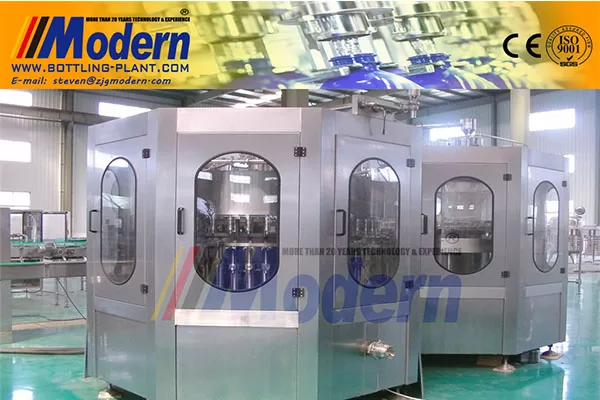
Dans le monde dynamique de la production de boissons, l'équipement d'embouteillage constitue un élément essentiel qui influe sur l'efficacité, la qualité du produit et la réussite globale de l'entreprise. Que vous soyez une petite start-up qui se lance dans sa première ligne de production ou un fabricant à grande échelle cherchant à optimiser son processus existant, il est essentiel de comprendre les différents types d'équipements d'embouteillage disponibles et leur fonctionnement. Cet article vise à fournir un aperçu approfondi du monde de l'équipement d'embouteillage de boissons, en couvrant ses types, ses avantages et les considérations cruciales pour choisir l'équipement adapté à vos besoins de production.
L'importance de l'équipement d'embouteillage de boissons
Le processus d'embouteillage est une étape décisive dans la production de boissons. Il est responsable non seulement du conditionnement du produit, mais aussi de garantir sa sécurité, sa qualité et sa fraîcheur. Des machines d'embouteillage de haute qualité peuvent améliorer l'efficacité de la production, minimiser les déchets et assurer la conformité aux réglementations en matière de santé et de sécurité. En tant que premier point de contact avec les consommateurs, l'emballage sert également d'outil marketing puissant, faisant du choix de l'équipement d'embouteillage une décision commerciale critique.
Types d'équipement d'embouteillage de boissons
L'équipement d'embouteillage de boissons peut être classé en plusieurs types en fonction de différents paramètres, notamment les niveaux d'automatisation, le type de boisson embouteillée et la capacité de production. Voici quelques catégories courantes :
1. Équipement d'embouteillage manuel
Pour les petits producteurs ou ceux qui débutent, l'équipement d'embouteillage manuel peut être une option économique. Ce type d'équipement nécessite des opérateurs humains pour le remplissage, le bouchage et l'étiquetage des bouteilles. Bien qu'il puisse impliquer des coûts de main-d'œuvre et un temps plus élevés, les systèmes d'embouteillage manuels peuvent être idéaux pour les marques artisanales cherchant à conserver une touche artisanale à leurs produits.
2. Lignes d'embouteillage semi-automatiques
Les systèmes semi-automatiques allient travail manuel et assistance mécanique. Ces systèmes peuvent améliorer considérablement l'efficacité tout en permettant un certain degré de contrôle par l'opérateur. En règle générale, une ligne d'embouteillage semi-automatique peut impliquer des machines de remplissage automatisées associées à des solutions de bouchage et d'étiquetage manuelles. Cette configuration est souvent adaptée aux entreprises de taille moyenne qui souhaitent augmenter leur production sans refonte complète de leur infrastructure.
3. Machines d'embouteillage entièrement automatiques
Pour les fabricants de boissons à grande échelle, les machines d'embouteillage entièrement automatiques offrent le plus haut niveau d'efficacité et de vitesse. Ces systèmes peuvent gérer toutes les étapes du processus d'embouteillage — du rinçage et du remplissage au bouchage et à l'étiquetage — sans intervention humaine significative. Les lignes entièrement automatiques permettent des capacités de production élevées, garantissant des délais d'exécution rapides et un temps d'arrêt minimal, maximisant ainsi le rendement et la rentabilité.
4. Équipement d'embouteillage spécialisé
Certains produits de boissons nécessitent un équipement d'embouteillage spécialisé. Par exemple, les boissons gazeuses nécessitent des machines de remplissage spécifiques pour gérer les différences de pression. De même, les boissons non gazeuses comme les jus peuvent avoir des exigences uniques en matière de pasteurisation et de méthodes de conservation qui dictent le choix de l'équipement. Comprendre les besoins uniques de votre boisson est crucial pour choisir la bonne machine.
Choisir le bon équipement d'embouteillage
Choisir l'équipement d'embouteillage approprié implique d'évaluer divers facteurs, notamment les exigences de production, le budget et le marché visé. Voici des considérations essentielles pour guider votre processus de prise de décision :
1. Capacité de production
Analysez votre volume de production attendu. Votre équipement d'embouteillage doit s'aligner sur vos objectifs de capacité de production, que vous prévoyiez une installation à petite, moyenne ou grande échelle. Une erreur courante consiste à investir dans des machines qui ne répondent pas aux demandes futures, ce qui entraîne des mises à niveau coûteuses par la suite.
2. Type de boisson
Comprenez les exigences spécifiques de la boisson que vous prévoyez d'embouteiller. Vérifiez si l'équipement choisi est compatible avec votre produit en termes de viscosité, de carbonatation et de sensibilité à la température. Des machines spécialisées peuvent être nécessaires pour certaines boissons afin d'assurer la préservation de la qualité.
3. Contraintes budgétaires
Le coût de l'équipement d'embouteillage peut varier considérablement. Bien que les options moins chères puissent sembler attrayantes, il est essentiel de prendre en compte le coût total de possession, y compris la maintenance, l'efficacité opérationnelle et les temps d'arrêt potentiels. Investir dans des machines de meilleure qualité peut offrir de meilleurs rendements à long terme, tandis qu'un équipement à faible coût peut parfois entraîner des coûts opérationnels plus élevés en raison d'inefficacités ou de pannes fréquentes.
4. Niveau d'automatisation
Déterminez le niveau d'automatisation que vous souhaitez pour votre exploitation. Une automatisation accrue se traduit généralement par des coûts initiaux plus élevés, mais peut entraîner des économies importantes en main-d'œuvre et en temps. Tenez compte de votre main-d'œuvre, ainsi que de la disposition et de l'infrastructure de votre installation lors de cette décision.
5. Normes de conformité et de sécurité
Assurez-vous que votre équipement est conforme à toutes les réglementations en matière de santé et de sécurité en vigueur. Cela peut varier en fonction de la situation géographique, alors familiarisez-vous avec les lois locales concernant la sécurité des produits et les réglementations des travailleurs. La non-conformité peut entraîner de lourdes amendes et nuire à la réputation de votre marque.
Maintenance de l'équipement d'embouteillage de boissons
Une fois que vous avez choisi et installé votre équipement d'embouteillage, une maintenance régulière est essentielle pour garantir sa longévité et son efficacité opérationnelle. Un système bien entretenu contribue à des taux de production optimaux et améliore la qualité du produit. Voici quelques conseils de maintenance clés :
1. Maintenance programmée
Établissez un calendrier de maintenance de routine qui comprend des vérifications régulières des composants de la machine, le nettoyage et l'étalonnage de l'équipement. Une maintenance programmée peut aider à identifier les problèmes potentiels avant qu'ils ne conduisent à des pannes coûteuses ou à des arrêts de production.
2. Formation des opérateurs
Assurez-vous que tous les opérateurs sont parfaitement formés à l'utilisation de l'équipement d'embouteillage. Un personnel bien formé peut faire fonctionner correctement les machines, effectuer des réparations mineures et détecter les problèmes rapidement, ce qui réduit les temps d'arrêt et augmente la productivité.
3. Inventaire des pièces de rechange
Le maintien d'un inventaire de pièces de rechange critiques peut minimiser les temps d'arrêt en cas de dysfonctionnement. Identifiez les articles les plus fréquemment remplacés et établissez une chaîne d'approvisionnement pour garantir des remplacements rapides si nécessaire.
Tendances futures de l'équipement d'embouteillage de boissons
L'industrie des boissons est en constante évolution, avec des innovations visant à accroître l'efficacité et la durabilité. Voici les tendances émergentes en matière d'équipement d'embouteillage que les fabricants devraient surveiller :
1. Solutions d'embouteillage respectueuses de l'environnement
Alors que les consommateurs exigent de plus en plus d'emballages durables, les fabricants se tournent vers des équipements d'embouteillage qui minimisent les déchets et réduisent la consommation d'énergie. Des solutions telles que les bouteilles légères, les matériaux recyclables et les contenants rechargeables gagnent en popularité. Investir dans de telles technologies répond non seulement aux demandes des consommateurs, mais renforce également la fidélité à la marque.
2. Intégration de technologies intelligentes
Avec l'essor de l'industrie 4.0, l'équipement d'embouteillage devient de plus en plus interconnecté et intelligent. La technologie intelligente peut surveiller les indicateurs de performance, prédire les besoins de maintenance et collecter des données pour éclairer les décisions de production. Cette approche axée sur les données peut conduire à des processus de production optimisés et à une réduction des coûts opérationnels.
3. Capacités de personnalisation
La demande de boissons personnalisées pousse les fabricants vers des solutions d'embouteillage flexibles. L'équipement capable de basculer facilement entre différentes tailles, formes et étiquettes de bouteilles devient de plus en plus précieux. La capacité de personnaliser les lignes de production favorise l'innovation et la réactivité aux tendances du marché.
Conclusion
En conclusion, l'équipement d'embouteillage de boissons est un élément vital de tout processus de production de boissons. Comprendre les différents types d'équipements disponibles et sélectionner soigneusement le système adapté à vos besoins peut avoir un impact significatif sur votre efficacité opérationnelle et la qualité de vos produits. Avec les avancées continues en matière de technologie, de durabilité et de possibilités de personnalisation, rester informé des tendances de l'industrie peut renforcer votre compétitivité sur le marché dynamique des boissons. En investissant dans un équipement de qualité et en l'entretenant avec diligence, les entreprises peuvent assurer leur succès dans l'industrie en constante évolution de la production de boissons.


