Lorsqu'il s'agit de choisir les meilleurs matériaux pour les pièces en contact avec le produit d'une machine de remplissage d'eau, l'une des décisions les plus cruciales consiste à sélectionner le matériau approprié qui garantit non seulement une production efficace et hygiénique, mais aussi une longévité accrue et un entretien minimal. Parmi les différentes options disponibles, l'acier inoxydable s'impose souvent comme un choix privilégié en raison de ses qualités supérieures. Cependant, il est essentiel de comparer l'acier inoxydable avec d'autres matériaux afin de déterminer celui qui correspond le mieux à vos besoins et exigences spécifiques.
Comprendre l'importance des matériaux des pièces en contact
Les pièces en contact dans une machine de remplissage d'eau entrent directement en contact avec le liquide traité. Ces pièces doivent être résistantes à la corrosion, faciles à nettoyer, durables et conformes aux réglementations en matière de sécurité alimentaire. Le choix du bon matériau pour les pièces en contact est crucial pour maintenir la qualité et la sécurité du produit conditionné et assurer le bon fonctionnement de la machine de remplissage.
Les avantages de l'acier inoxydable
L'acier inoxydable est un choix populaire pour les pièces en contact des machines de remplissage d'eau pour plusieurs raisons :
1. Résistance à la corrosion :
L'acier inoxydable est hautement résistant à la corrosion, ce qui le rend idéal pour les pièces en contact avec l'eau et d'autres liquides. Il est moins sujet à la rouille et à la détérioration, garantissant la longévité de la machine et le maintien des normes d'hygiène.
2. Propriétés hygiéniques :
L'acier inoxydable est non poreux et facile à nettoyer, ce qui en fait un choix hygiénique pour les pièces en contact. Sa surface lisse empêche l'accumulation de bactéries et garantit que l'eau ou le liquide traité reste exempt de toute contamination.
3. Durabilité :
L'acier inoxydable est un matériau durable capable de résister à une utilisation intensive et à des processus de nettoyage rigoureux. Il est résistant à l'usure, ce qui en fait un choix rentable à long terme.
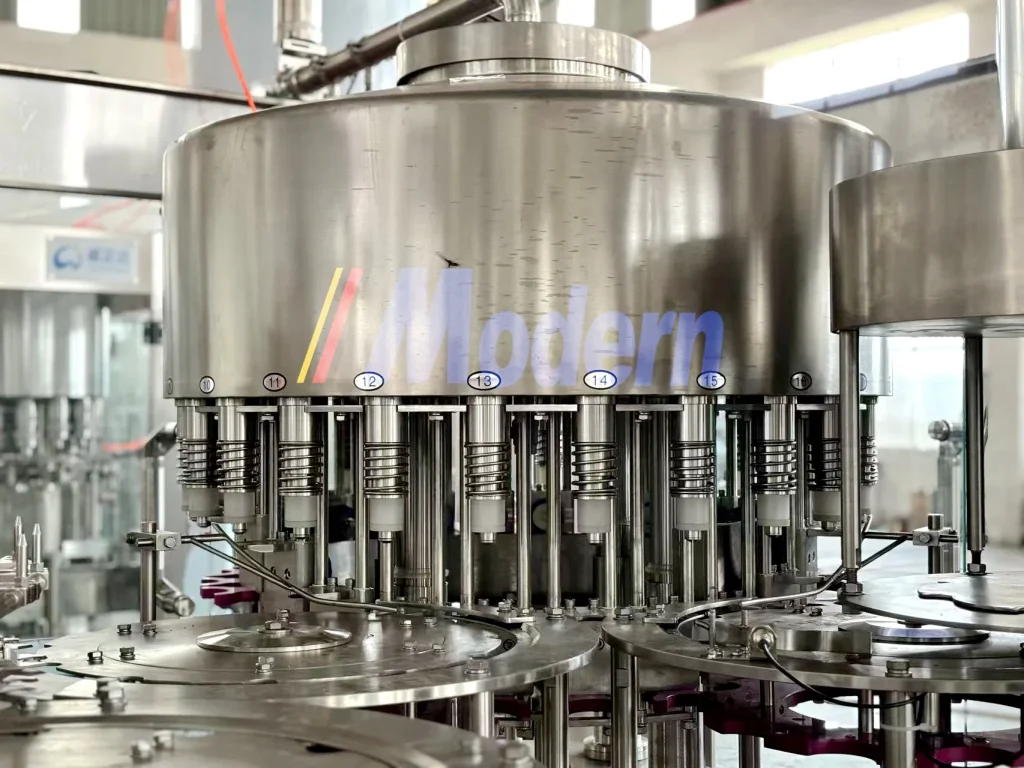
Comparaison de l'acier inoxydable avec d'autres matériaux
Bien que l'acier inoxydable offre de nombreux avantages, il est essentiel de prendre en compte d'autres matériaux couramment utilisés pour les pièces en contact des machines de remplissage d'eau :
1. Plastique :
Le plastique est une option légère et économique pour les pièces en contact. Cependant, il peut ne pas être aussi durable ou résistant aux températures élevées et aux produits chimiques de nettoyage agressifs que l'acier inoxydable. Les pièces en plastique sont également plus sujettes aux rayures, ce qui peut favoriser la prolifération bactérienne et compromettre l'hygiène de la machine de remplissage.
2. Aluminium :
L'aluminium est un autre matériau utilisé pour les pièces en contact, reconnu pour sa légèreté. Bien que l'aluminium soit résistant à la corrosion, il peut ne pas être aussi durable que l'acier inoxydable, en particulier dans les environnements de production à haut débit. Les pièces en aluminium peuvent également être plus difficiles à nettoyer en profondeur en raison de leur nature poreuse.
Facteurs à prendre en compte lors du choix du matériau
Lors du choix du meilleur matériau pour les pièces en contact d'une machine de remplissage d'eau, tenez compte des facteurs suivants :
1. Exigences de l'application :
Comprenez les besoins spécifiques de votre processus de production, notamment le type de liquide conditionné, le volume de production et les procédures de nettoyage. Choisissez un matériau capable de répondre aux exigences de votre application.
2. Conformité réglementaire :
Assurez-vous que le matériau choisi respecte les réglementations en matière de sécurité alimentaire et les normes de l'industrie. L'acier inoxydable est souvent privilégié pour sa conformité aux exigences d'hygiène et de salubrité.
3. Coût à long terme :
Prenez en compte les coûts à long terme associés à la maintenance, au remplacement et aux temps d'arrêt. Bien que l'acier inoxydable puisse avoir un coût initial plus élevé, sa durabilité et sa longévité peuvent entraîner des économies au fil du temps par rapport à d'autres matériaux.
Conclusion
Choisir le meilleur matériau pour les pièces en contact d'une machine de remplissage d'eau est une décision critique qui peut influencer l'efficacité, l'hygiène et la longévité de votre processus de production. Bien que l'acier inoxydable s'impose comme un choix fiable et hygiénique, il est essentiel d'évaluer d'autres matériaux en fonction de vos besoins spécifiques. En tenant compte de facteurs tels que la résistance à la corrosion, les propriétés hygiéniques, la durabilité et la conformité réglementaire, vous pouvez prendre une décision éclairée qui garantit des performances optimales et la qualité du produit.
En fin de compte, la sélection du bon matériau pour les pièces en contact de votre machine de remplissage d'eau est une étape clé pour améliorer l'efficacité de la production, maintenir les normes d'hygiène et assurer le succès global de vos opérations de fabrication.