En la industria cervecera, uno de los factores críticos para garantizar la seguridad, la calidad y la longevidad de la cerveza es el proceso de pasteurización. Los equipos de pasteurización de cerveza desempeñan un papel vital en el control del crecimiento microbiano, la estabilización del sabor y la preservación de la frescura del producto. Están diseñados para calentar la cerveza a una temperatura específica y luego enfriarla rápidamente, eliminando los microorganismos dañinos sin alterar el sabor ni la carbonatación de la cerveza. Este proceso es esencial para que muchas cervecerías comerciales aseguren que su cerveza pueda almacenarse durante largos períodos sin comprometer su calidad.
¿Qué es la pasteurización de la cerveza?
La pasteurización de la cerveza es un proceso de tratamiento térmico que consiste en calentar la cerveza a una temperatura específica durante un periodo determinado y luego enfriarla rápidamente. Este proceso elimina las bacterias, levaduras y otros microorganismos no deseados que podrían estropear la cerveza o afectar a su sabor. Aunque la pasteurización suele asociarse al aumento de la vida útil de la cerveza, también estabiliza su sabor y claridad.
¿Por qué es importante la pasteurización de la cerveza?
- Seguridad microbiana: La cerveza es naturalmente propensa a la contaminación por microorganismos, incluyendo levaduras salvajes, bacterias y mohos. La pasteurización asegura que estos microbios sean eliminados, reduciendo el riesgo de deterioro y contaminación.
- Vida útil prolongada: La pasteurización ayuda a prolongar la vida útil de la cerveza al detener la fermentación y prevenir una mayor actividad microbiana. Esto permite que la cerveza se almacene durante más tiempo sin alterar su sabor o calidad.
- Estabilización del sabor: La pasteurización ayuda a estabilizar el sabor de la cerveza. Previene sabores desagradables, el deterioro o cambios en el gusto que podrían ocurrir debido al crecimiento de bacterias o levaduras salvajes.
- Prevención de la refermentación: En la cerveza embotellada o enlatada, la pasteurización evita la fermentación posterior al envasado, lo que puede causar una carbonatación excesiva, explosión de botellas o cambios de sabor indeseables.
Tipos de equipos de pasteurización de cerveza:
Existen principalmente dos tipos de métodos de pasteurización utilizados en la industria cervecera: pasteurización por lotes y pasteurización continua. El equipo utilizado para cada método está diseñado para proporcionar condiciones específicas de temperatura y tiempo adecuadas para la cerveza que se está tratando.
1. Equipos de pasteurización por lotes (Pasteurizadores de túnel)
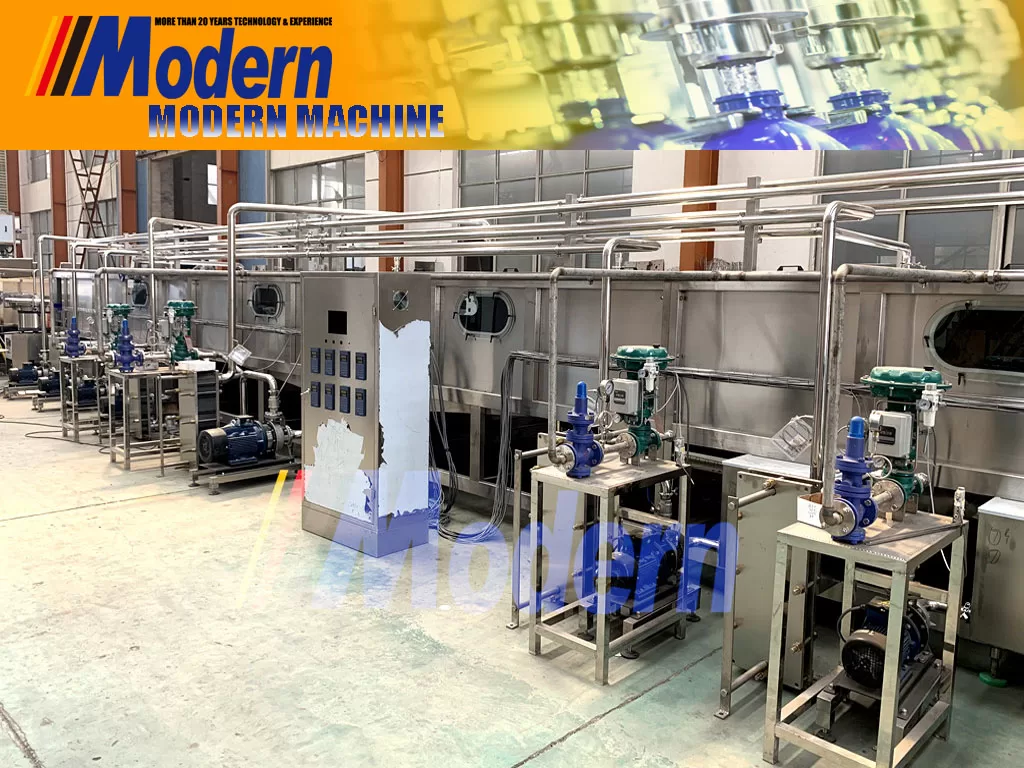
Los pasteurizadores de túnel se utilizan comúnmente para la pasteurización por lotes. En este sistema, las botellas o latas de cerveza pasan a través de una cámara larga (el túnel) donde se calientan gradualmente hasta la temperatura de pasteurización y luego se enfrían durante un período determinado.
- Principio de funcionamiento: En la pasteurización de túnel, los envases (botellas, latas) llenos de cerveza se mueven a través de una serie de zonas en el túnel. Cada zona aumenta gradualmente la temperatura de la cerveza hasta la temperatura de pasteurización deseada (generalmente entre 60°C y 75°C) y luego la enfría en un entorno controlado.
- Ventajas:
- Escalable: Los pasteurizadores de túnel pueden manejar grandes volúmenes de cerveza y a menudo se utilizan en grandes cervecerías o para la producción en masa.
- Eficiencia energética: Los sistemas modernos están diseñados para maximizar la eficiencia energética mientras mantienen una pasteurización constante.
- Tratamiento térmico suave: El proceso gradual de calentamiento y enfriamiento minimiza el riesgo de alteración del sabor.
- Desventajas:
- Tiempo de procesamiento más largo: La pasteurización de túnel suele tardar más que la pasteurización continua, lo que puede ser una limitación para las cervecerías que requieren un alto rendimiento.
- Tamaño y espacio: Los pasteurizadores de túnel pueden ocupar una gran cantidad de espacio, lo que los hace más adecuados para operaciones a mayor escala.
2. Equipos de pasteurización continua (Pasteurizadores de placas)
Los pasteurizadores de placas están diseñados para la pasteurización continua, donde la cerveza se bombea a través de una serie de placas de intercambio de calor para mantener una temperatura constante durante el tiempo requerido.
- Principio de funcionamiento: En un pasteurizador de placas, la cerveza fluye a través de una serie de placas o tubos que se calientan externamente mediante agua caliente o vapor. La cerveza se calienta rápidamente a la temperatura requerida y luego se enfría inmediatamente mediante una sección de agua fría, lo que permite una pasteurización eficiente y continua.
- Ventajas:
- Procesamiento más rápido: Los equipos de pasteurización continua funcionan rápidamente, lo que los hace adecuados para cervecerías con altos volúmenes de producción.
- Tamaño compacto: Los pasteurizadores de placas son generalmente más compactos que los pasteurizadores de túnel, lo que ahorra espacio y ofrece flexibilidad para cervecerías más pequeñas.
- Consistencia: La naturaleza continua del proceso garantiza que cada lote de cerveza reciba una pasteurización constante, reduciendo el riesgo de una pasteurización insuficiente o excesiva.
- Desventajas:
- Mayor costo: Los pasteurizadores de placas suelen ser más costosos de adquirir y mantener en comparación con los sistemas por lotes.
- Complejidad: Estos sistemas pueden requerir más conocimientos técnicos y supervisión para garantizar un funcionamiento adecuado.
Componentes clave de los equipos de pasteurización de cerveza:
- Intercambiador de calor: Este componente es responsable de transferir calor a la cerveza para alcanzar la temperatura de pasteurización requerida. En los pasteurizadores de placas, los intercambiadores de calor están diseñados con múltiples placas para maximizar el área de superficie para la transferencia de calor.
- Sistema de control de temperatura: La pasteurización de la cerveza depende en gran medida de un control preciso de la temperatura. La mayoría de los sistemas modernos cuentan con sensores de temperatura y sistemas de control avanzados para garantizar que la cerveza se caliente a la temperatura correcta durante el tiempo adecuado.
- Sistema de enfriamiento: Después de que la cerveza alcanza la temperatura de pasteurización deseada, debe enfriarse rápidamente para evitar cualquier posible sobrecocción o degradación del sabor. Las secciones de enfriamiento suelen utilizar agua fría o glicol para reducir la temperatura rápidamente.
- Sistemas de bombeo y transporte: Estos sistemas mueven la cerveza a través del proceso de pasteurización, ya sea bombeando la cerveza a través de tuberías en un sistema continuo o moviendo botellas y latas a través de un túnel en sistemas por lotes.
- Panel de control: Los equipos modernos de pasteurización de cerveza vienen con un panel de control que permite a los operadores establecer parámetros como la temperatura, los caudales y los tiempos de pasteurización, así como monitorear el rendimiento del sistema.
Beneficios de los equipos de pasteurización de cerveza:
- Seguridad mejorada del producto: Al eliminar los microorganismos dañinos, la pasteurización de la cerveza ayuda a garantizar que el producto final sea seguro para el consumo y esté libre de deterioro.
- Vida útil prolongada: La cerveza pasteurizada tiene una vida útil mucho más larga en comparación con la cerveza no pasteurizada, lo que permite a las cervecerías distribuir sus productos a mayores distancias o mantenerlos en existencia durante períodos prolongados sin riesgo de deterioro.
- Preservación del sabor: La pasteurización ayuda a mantener el perfil de sabor original de la cerveza al prevenir la actividad microbiana que puede provocar sabores desagradables o acidez.
- Consistencia en la calidad: Los equipos de pasteurización garantizan que cada botella o lata de cerveza sea tratada de la misma manera, manteniendo la uniformidad en la calidad del producto.
- Cumplimiento normativo: En muchos países, la pasteurización es requerida por ley para las cervezas que se venden en ciertos tipos de envases o se distribuyen a largas distancias. El uso de equipos de pasteurización garantiza el cumplimiento de estas regulaciones.
Aplicaciones de los equipos de pasteurización de cerveza:
- Cervecerías comerciales: Las cervecerías más grandes que producen volúmenes masivos de cerveza para distribución comercial suelen utilizar equipos de pasteurización para garantizar una calidad constante y una larga vida útil.
- Cervecerías artesanales: Algunas cervecerías artesanales optan por la pasteurización para ampliar su alcance de distribución manteniendo la calidad de la cerveza.
- Distribución internacional: La pasteurización es crucial para las cervecerías que exportan sus productos, ya que ayuda a preservar la calidad de la cerveza durante largos tiempos de envío y condiciones climáticas variables.
Conclusión
Los equipos de pasteurización de cerveza es una herramienta esencial para las cervecerías modernas que buscan producir cerveza segura, consistente y duradera. Ya sea utilizando pasteurización por lotes con sistemas de túnel o pasteurización continua con intercambiadores de calor de placas, estas máquinas están diseñadas para garantizar que la cerveza esté libre de deterioro microbiano mientras se preserva su calidad y sabor. A medida que la demanda de cerveza con una vida útil prolongada sigue creciendo, invertir en tecnología de pasteurización avanzada es un paso importante para cualquier cervecería que busque escalar sus operaciones y satisfacer las demandas del mercado global.